How much is siding installation on my house?
Average cost of siding installation in 2025
How much does siding installation actually cost—and why does the answer seem to change every time you search online? Many homeowners start this process expecting a simple number, only to realize that siding prices depend on far more than square footage alone. Material choice, labor requirements, home design, and even local conditions all play a role in determining the final cost.
For homeowners in St. Charles, Illinois, the question becomes even more specific. Midwest weather, local building codes, and neighborhood standards influence both material selection and installation methods. This is where working with a local contractor like Sunrise Exteriors makes a real difference. Instead of relying on generic national averages, homeowners receive guidance based on real homes, real conditions, and realistic pricing.
This guide explains siding installation costs clearly so you can understand what affects the price and what to expect before requesting a quote.
Siding Cost Per Square Foot by Material
Material choice has the greatest impact on siding installation costs. Each option offers a different balance of price, durability, and long-term performance especially important in climates with seasonal temperature swings like northern Illinois.
Vinyl siding
Installed costs generally range from $3 to $12 per square foot.
Vinyl
remains one of the most common choices due to its affordability, low maintenance requirements, and reliable performance when properly installed.
Fiber cement siding
Fiber cement typically costs between $5 and $15 per square foot installed. It is valued for its resistance to moisture, fire, insects, and temperature fluctuations, making it a strong option for Midwest homes.
Brick or stone veneer
Brick and stone veneer fall into the premium category. Installed costs usually exceed $15 per square foot and can rise significantly depending on design details and labor requirements. Many homeowners use veneer selectively as an accent rather than full coverage to manage costs.
Material pricing varies by manufacturer and availability, so local guidance is essential when comparing options.
How Home Size Affects Siding Installation Costs
Home size directly affects siding costs because larger exterior surfaces require more materials and more labor. As square footage increases, total project costs rise even when the same siding material is used.
Smaller homes around 1,000 square feet often remain more affordable, particularly with vinyl or fiber cement siding. Homes between 1,500 and 2,000 square feet typically see moderate cost increases as wall height and labor time grow. Larger homes of 2,500 square feet or more often experience sharper increases due to multiple stories, complex rooflines, and detailed trim work.
It is also important to note that two homes with identical square footage can have very different siding costs. Window placement, entryways, architectural details, and access challenges all influence installation time and labor requirements.
Real World Siding Cost Examples by Home Size
Looking at typical cost ranges can help homeowners understand how siding prices scale with home size. These examples are intended for general planning purposes.
- Approximately 1,000 square feet: Vinyl siding remains the most budget-friendly option, while fiber cement and veneer increase costs due to heavier materials and longer installation times.
- Approximately 1,500 to 2,000 square feet:
Costs
rise steadily as material quantities and labor hours increase. At this size, many homeowners prioritize durability and long-term value.
- 2,500 square feet and larger: Pricing varies widely depending on layout complexity, story height, and trim detail, resulting in the broadest cost ranges.
Because of these variables, estimates should always be viewed as guidelines rather than fixed prices.
What Factors Increase or Decrease the Final Cost
Several factors beyond material and square footage influence final siding costs:
- Labor and installation complexity: Multi-story homes, steep rooflines, and intricate architectural features require additional time and equipment.
- Removal of existing siding: Removing old or damaged siding adds to the project cost but helps prevent future moisture and structural problems.
- Insulation upgrades: Adding insulation during siding replacement increases upfront costs but can improve comfort and reduce long-term energy expenses.
- Local conditions: Seasonal weather, permitting requirements, and regional labor standards all affect pricing in St. Charles and surrounding areas.
Understanding these factors helps homeowners make informed decisions before committing to a project.
Can You Save Money on Siding Installation
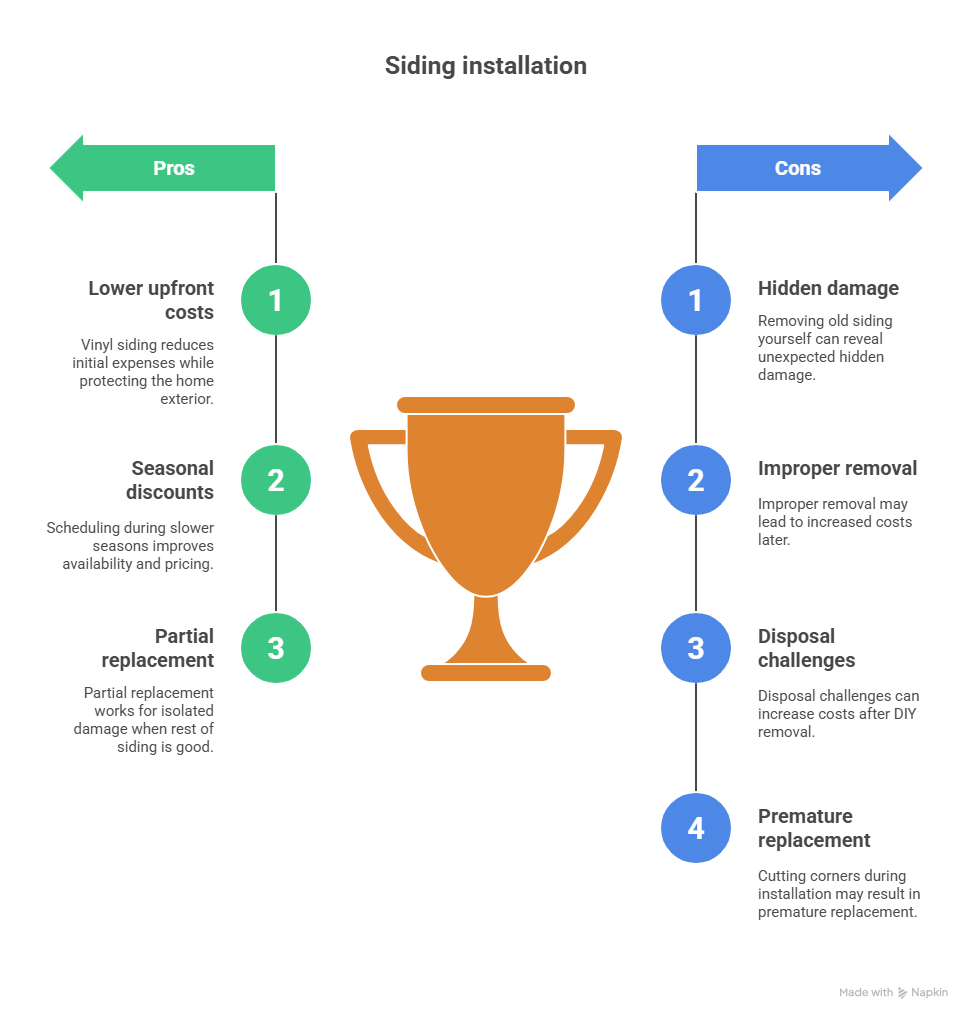
Many homeowners look for ways to reduce siding installation costs and some strategies can help when used carefully. Choosing vinyl siding is one of the most effective ways to keep upfront costs lower while still protecting the home exterior. Scheduling installation during slower seasons can also improve availability and pricing.
Removing old siding yourself may appear to save money but it often leads to unexpected issues. Hidden damage improper removal or disposal challenges can increase costs later. Partial siding replacement can work for isolated damage but only when the rest of the siding is still in good condition.
The biggest savings usually come from making informed decisions early rather than cutting corners during installation. A properly planned project reduces the risk of repairs, rework and premature replacement.
Why Local Experience Matters for Siding Projects in St. Charles Illinois
Siding installation in St. Charles requires an understanding of local climate conditions, building codes, and seasonal weather patterns. Materials that perform well in other regions may not deliver the same results in the Midwest.
Local experience also helps ensure projects are timed appropriately and permitted correctly, reducing delays and unexpected costs. Contractors familiar with the area can anticipate common challenges before they become problems.
How to Get an Accurate Siding Cost for Your Home
Online calculators provide rough estimates, but they cannot account for wall height, trim details, existing damage, or insulation needs. An accurate siding cost begins with a professional inspection that evaluates the full exterior of the home.
For homeowners in St. Charles, a local assessment ensures pricing reflects real installation conditions rather than generalized national averages. This approach leads to clearer expectations and smoother project execution.
Conclusion
Siding installation costs vary widely, but the process becomes easier to navigate once you understand what influences pricing. Material selection, home size, labor requirements, and local conditions all play a role. National averages provide helpful context, but they rarely represent the true cost of a specific home.
Focusing on long-term value instead of just upfront price helps ensure siding performs well for years to come. A properly installed siding system improves protection, efficiency, and durability—making it a worthwhile investment when planned carefully.
Call to Action
If you are planning a siding project and want clear, honest pricing, the next step is a professional evaluation. A local inspection provides accurate guidance tailored to your home and goals, helping you move forward with confidence.
Recent Posts