How long does it take to replace siding?
How long does it take to replace siding?
The Straight Answer Homeowners Actually Want
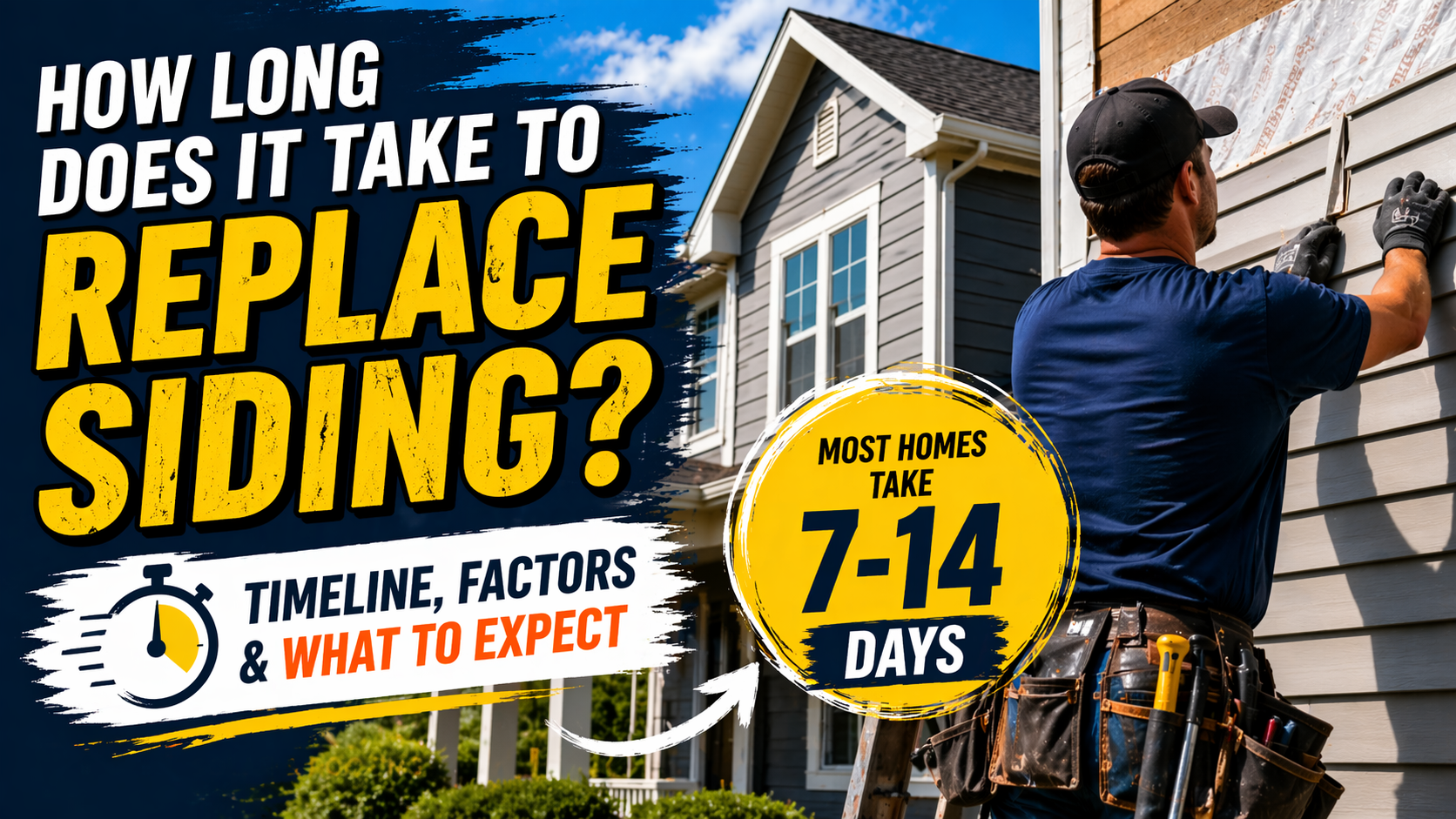
Here is the truth without the fluff. Most siding replacements take about one to two weeks once the work actually begins. Not months. Not endless disruption. Just a focused stretch of progress where your home transforms in real time.
Smaller homes can move fast. In some cases crews wrap things up in just a few days. Average homes usually land in that one to two week window. Larger homes or properties with more complex layouts can take longer, especially if there are details that demand precision.
What matters more than the number is how predictable that timeline feels. When the project is planned correctly from the start, the process runs with a rhythm. Materials show up when they should. Crews move with purpose. Each phase flows into the next without hesitation.
That is where experienced exterior teams separate themselves. A company like Sunrise Solar approaches siding projects with the same level of planning and execution you would expect from a full scale exterior upgrade. The timeline is not guessed. It is mapped out before the first panel comes off your home.
Why Siding Projects Rarely Have a One Size Fits All Timeline
If you ask ten homeowners how long their siding project took, you will hear ten slightly different answers. That is not confusion. That is reality.
Every home carries its own set of variables. Two houses may look similar from the street, yet one moves quickly while the other slows down once the old siding comes off. The difference lives beneath the surface. Structure condition, design complexity, material choices, even how the home was built years ago.
This is why siding timelines are not pulled from a template. They are built from inspection and experience. The more thoroughly a contractor evaluates the home before work begins, the fewer surprises show up later.
There is also a difference between a rough estimate and a professional projection. A rough estimate gives you a range. A professional projection gives you confidence. It accounts for the details most people never see coming.
In a climate like Illinois where weather can shift quickly and homes face real seasonal stress, that level of preparation matters even more. Companies like Sunrise Solar do not just show up and start installing. They study the structure, anticipate the variables, and build a plan that holds up when the project is underway.
That is the difference between a timeline that drifts and one that delivers.
The Key Factors That Control How Long It Takes
The timeline for siding replacement is not random. It is shaped by a handful of factors that quietly determine whether your project moves fast or stretches longer than expected.
Start with size. A smaller home can move quickly because there is simply less surface to cover. A larger home demands more labor, more material, and more time to execute cleanly.
Then comes material choice. Vinyl siding tends to move faster because it is lighter and more straightforward to install. Fiber cement and wood bring a different level of craftsmanship. They look premium, they perform well, but they take more time to cut, place, and finish correctly.
Weather plays its role too. In Illinois, conditions can shift without much warning. Rain, wind, and temperature swings can slow progress or pause work entirely. A well planned schedule accounts for this, but it is always part of the equation.
The biggest wildcard sits underneath your current siding. Once the old material comes off, crews may uncover rot, moisture damage, or structural issues. When that happens, the job shifts from simple replacement to necessary repair. It adds time, but it protects the long term integrity of the home.
Finally, finishing details matter. Painting, sealing, and trim work bring everything together, but they also extend the timeline slightly. These are not delays. They are the difference between a rushed job and a finished product that looks sharp and lasts.
Experienced contractors understand how these factors interact. They do not just react to them. They plan around them, keeping the project moving without sacrificing quality.
What Actually Happens During a Siding Replacement
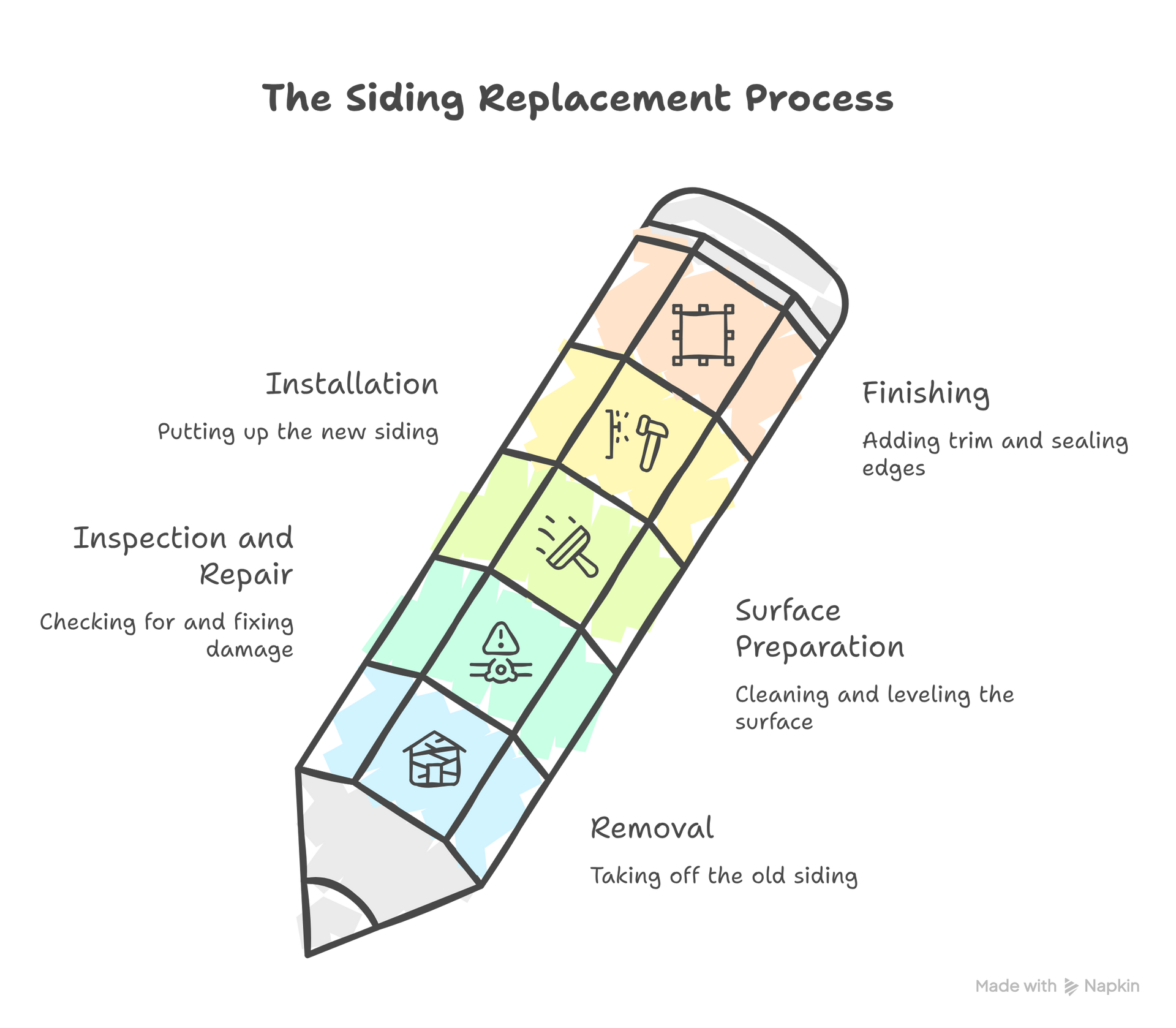
From the outside, siding replacement looks straightforward. Crews arrive, old siding disappears, new siding goes up. In reality, the process unfolds in distinct stages, each one setting up the next.
It begins with removal. The existing siding is carefully taken off, exposing the structure beneath. This phase often moves quickly, but it is where the first real look at the condition of the home begins.
Next comes inspection and repair. This is where professionals earn their keep. Any signs of damage are addressed before new materials go on. It is not the most visible part of the project, but it is one of the most important.
Then the surface is prepped. Barriers are installed, areas are leveled, and everything is set to create a clean foundation. Without this step, even the best siding will not perform the way it should.
Installation follows, and this is the longest phase of the project. Panel by panel, the new siding is placed, aligned, and secured. This is where precision matters. Small mistakes here can affect both appearance and durability.
The final stage is finishing. Trim is completed, edges are sealed, and any final touches are handled to bring the project together. It is the detail work that gives the home that finished, intentional look.
When each stage is handled with structure and discipline, the entire project feels controlled rather than chaotic. That is the difference between a job that drags and one that moves with purpose from start to finish.
Final Verdict: What Most Homeowners Should Expect
At the end of it all, the answer is refreshingly simple. Most siding replacements take about one to two weeks once work begins. That is the window most homeowners should plan around.
But the real story is not just the timeline. It is how that timeline feels while it is happening. A well run project moves with clarity. You know what is happening, when it is happening, and why. There are no long pauses, no confusion, no sense that things are drifting.
Smaller homes can wrap up quickly. Larger or more detailed homes may take a bit longer. Weather and hidden repairs can shift the pace. None of that is unusual. What matters is having a team that anticipates those moments and keeps the project moving forward without cutting corners.
In a place like Illinois where homes deal with real seasonal pressure, siding is more than an upgrade. It is protection. It is performance. It is curb appeal that actually lasts. And that makes the quality of the work just as important as the speed.
That is where working with an experienced exterior company makes the difference. Sunrise Solar approaches siding projects with a clear plan, a structured process, and the kind of attention that keeps timelines tight and results consistent.
If you are thinking about replacing your siding, the smartest next step is not guessing how long it will take. It is getting a real assessment of your home and a timeline you can trust. Because when the project is planned right from the start, one to two weeks feels less like a disruption and more like a turning point for your home.
Recent Posts