What is the Best time of year to replace siding?
What Is The Best Time Of Year To Replace Siding?
The Question That Comes Right Before a Big Project
It usually starts with something small.
A few loose panels. Fading color. Maybe a section that looks slightly warped after a long winter. At first, it is easy to ignore. Then it becomes harder to unsee.
That is when the question shows up.
When is the right time to replace siding
Most homeowners assume there is a perfect season. A window where everything lines up, prices are ideal, and the job goes smoothly without disruption. The reality is a bit more nuanced.
Timing does matter. It affects how materials perform, how efficiently crews can work, and how protected your home is during the process. But timing alone does not make or break the project. It works alongside condition, urgency, and planning.
In climates where weather swings are part of the equation, this decision becomes even more important. Heat, cold, moisture, and wind all play a role in how siding holds up and how it should be installed.
So the question is not just when is the best time.
It is when is the right time for your home.
The Straight Answer First What Season Works Best
If you want a clear answer, here it is.
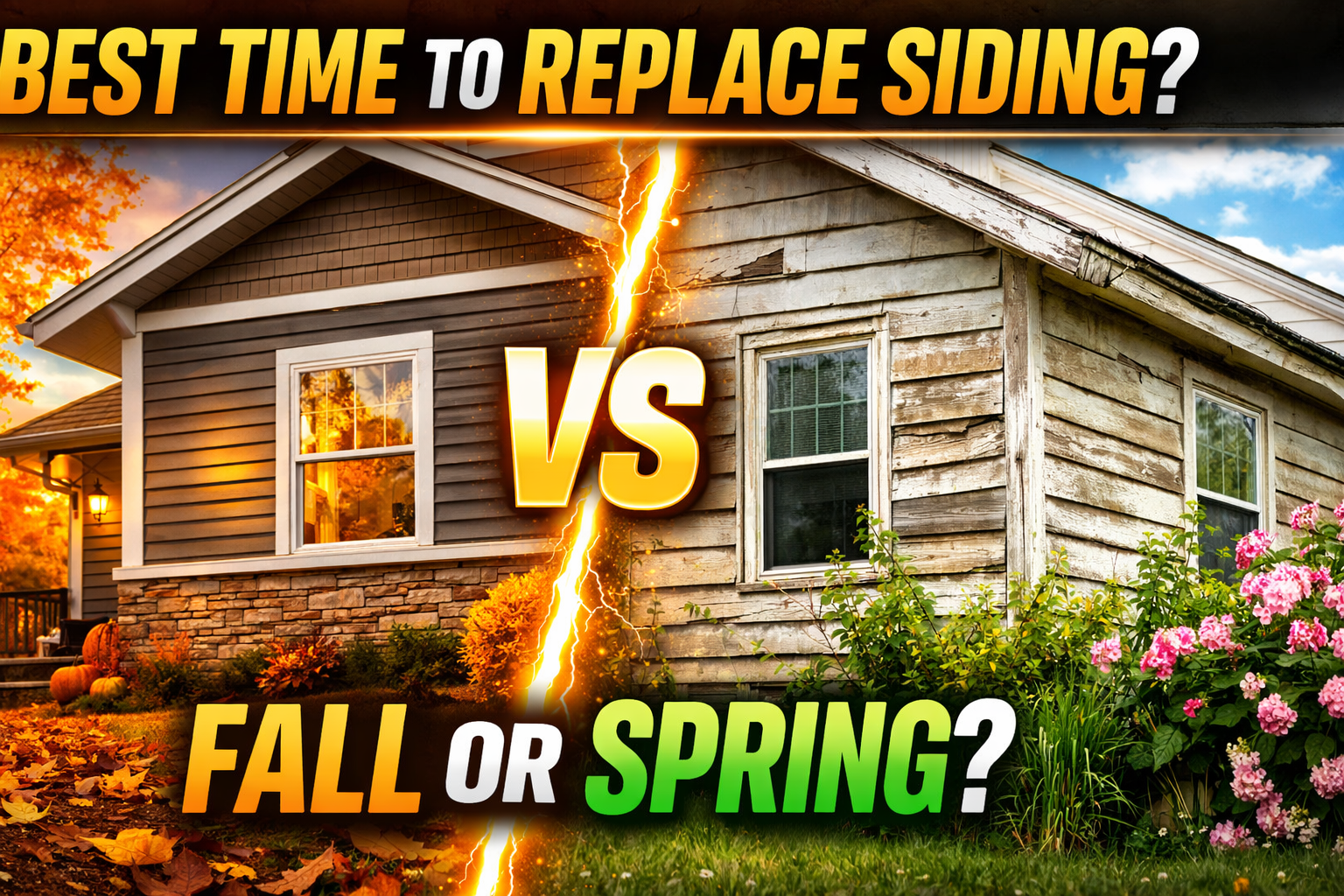
Fall is usually the best time of year to replace siding. Spring is a close second.
Fall tends to offer the most balanced conditions. Temperatures are moderate, which helps materials install correctly. Weather is generally more stable, which reduces the risk of delays or moisture exposure. It also gives your home a chance to be properly sealed and protected before winter arrives.
Spring works well for many of the same reasons. Temperatures are still mild, and it is a good opportunity to complete the project before the heat of summer. The main challenge is rain, which can create interruptions and slow progress.
The key idea is simple.
The best season is the one that provides steady weather, lower moisture risk, and enough time to complete the work properly. Fall often checks all of those boxes, which is why it is commonly recommended.
Why Fall Is Usually the Best Choice
There is a reason fall comes up again and again when people talk about siding replacement. It creates a set of conditions that are hard to beat.
Temperature is one of the biggest advantages. Most siding materials perform best when installed in moderate weather. Not too hot, not too cold. Fall tends to sit right in that range, which allows materials to fit and settle the way they are designed to.
Moisture is another factor. Compared to spring, fall often brings more predictable weather with a lower chance of heavy rain. That matters because during a siding project, parts of your home are temporarily exposed. Less moisture risk means fewer complications and a smoother installation process.
There is also the practical side. Crews can work more efficiently without dealing with extreme heat or freezing conditions. That efficiency often leads to better consistency from start to finish.
And then there is what comes next. Completing a siding project in the fall prepares your home for winter. It improves insulation, helps seal out moisture, and adds a layer of protection right before the harshest conditions arrive.
When Spring Makes the Most Sense
Spring is often the next best option, especially when fall schedules fill up or timing simply does not line up.
Like fall, spring offers milder temperatures that support proper installation. It is a natural time for homeowners to take on exterior projects and refresh the condition of their home after winter has taken its toll.
There is also a planning advantage. Finishing siding work in the spring means your home is ready heading into summer, both in appearance and performance.
The trade off is weather variability. Spring tends to bring more rain, and that can introduce delays. It can also increase the risk of moisture exposure during certain phases of the project.
That does not make spring a poor choice. It simply means the timeline may require a bit more flexibility.
For many homeowners, spring strikes a balance. It offers favorable conditions with a few variables to manage, making it a strong alternative when fall is not an option.
Summer and Winter What to Expect
Summer can work, but it is not always ideal.
Higher temperatures can make installation more demanding for crews and can affect how certain siding materials expand and settle. It is also one of the busiest times of year for exterior projects, which means schedules can fill quickly and timelines can stretch longer than expected.
That said, summer is still a viable option if the project is planned properly and handled by an experienced team that understands how to manage heat and timing.
Winter is generally the most challenging season.
Cold temperatures, snow, and frozen surfaces can slow down installation and create unpredictable conditions.
Some materials become less flexible in colder weather, and certain steps may take longer to complete.
While siding can be installed in winter under the right conditions, it is typically less convenient and requires more careful planning to avoid delays.
The Factors That Matter More Than the Season
While season plays a role, it is not the only factor that determines success.
The condition of your current siding is one of the most important considerations. If there are signs of damage, moisture intrusion, or structural issues, waiting for the ideal season can lead to bigger problems.
Contractor availability is another key piece. The best results often come from working with a team that has the time to plan and execute the project properly, rather than rushing to fit into a tight schedule.
Weather patterns in your specific area also matter. Even within the same season, conditions can vary. Stable weather over the course of the project is often more important than the label of the season itself.
When You Should Not Wait for the Perfect Season
There are times when timing becomes less of a choice and more of a necessity.
If your siding is cracked, warped, or allowing moisture into your home, delaying the project can lead to deeper issues. Water damage, insulation problems, and structural concerns can develop quickly when the exterior barrier is compromised.
In those cases, the best time to replace siding is as soon as possible.
Waiting for perfect conditions can increase both the scope and the cost of the project. Acting early helps protect the home and prevents small issues from turning into larger repairs.
The Real Rule Stable Conditions and the Right Plan
After looking at each season, the takeaway becomes clear.
The best time to replace siding is when conditions are stable, the work can be done properly, and the project is given enough time to be completed without pressure.
Fall often provides that balance, which is why it is commonly recommended. Spring offers a strong alternative with a few variables to manage. Summer and winter can still work, but they require more planning and flexibility.
In the end, the season matters, but the quality of the plan matters more.
Final Takeaway Plan Smart Act When Needed
If your siding is in good condition and you have the flexibility to plan ahead, aiming for fall or early spring is a smart approach. These seasons offer the most consistent conditions and allow the project to move forward with fewer complications.
If your siding is showing signs of failure, the priority shifts. Addressing the issue quickly is more important than waiting for a specific time of year.
The goal is not to find a perfect moment. It is to make a decision that protects your home and sets the project up for long term success.
Take the Next Step With Confidence
Every home is different, and timing decisions should be based on real conditions, not just general advice.
If you are considering replacing your siding, the best next step is to evaluate the current state of your home and understand your options. With the right plan in place, the project can be completed at the right time for your situation.
Because in the end, it is not just about choosing a season. It is about choosing a result that lasts.
Recent Posts