What is the 25% rule for roofing?

April 1, 2026

Share this article

What is the 25% rule for roofing?

Introduction: The Rule Everyone Mentions but Few Fully Understand


A storm rolls through. A few shingles lift. Maybe there is a small leak. Nothing dramatic. Then someone drops a line that changes the entire conversation: you might be over the 25% rule.


Suddenly, what felt like a simple repair starts sounding like a full replacement.


This is where most homeowners get caught off guard. The 25% rule sounds straightforward, but in reality, it sits in that uncomfortable space between building code, insurance interpretation, and real world roofing decisions. It is not just about how damaged your roof looks from the ground. It is about how much work has been done, how that work is measured, and how local regulations interpret it.


In other words, this is not a rule you want to guess your way through. It is one you want clearly explained before you make a decision that could impact your home and your wallet. That is why experienced contractors like Sunrise Exterior spend time breaking it down instead of throwing out quick answers.


The Simple Definition: What the 25% Rule Actually Means


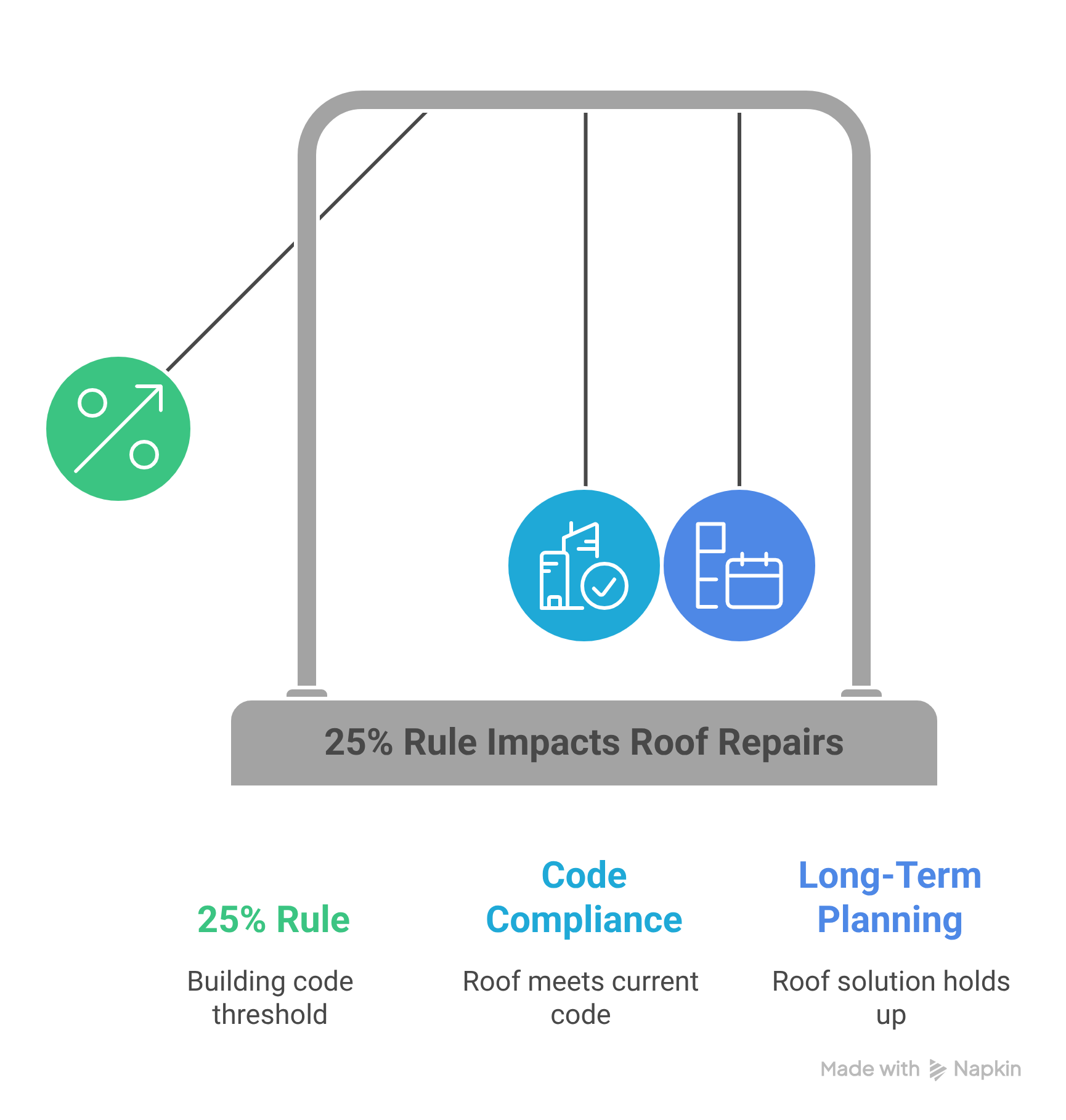
At its core, the 25% rule for roofing is a building code threshold, most commonly associated with Florida, that determines when a repair crosses the line into something bigger.


In plain terms, if more than 25% of a roof area or a specific roof section is repaired, replaced, or recovered within a 12 month period, that portion of the roof may need to be brought up to current building code instead of being patched.


The key detail most people miss is this: the rule is not based on how much damage you see. It is based on how much roofing work has been performed over time.


That means a series of smaller repairs can quietly add up. What starts as a quick fix after one storm can contribute to a threshold that changes the scope of the next project entirely.


It is also important to understand that this is not a universal rule applied the same way in every state. It is best understood as a code driven guideline that originated in Florida but is often discussed more broadly in the roofing world.


For homeowners, the takeaway is simple but important. The moment your roof work starts approaching that threshold, the conversation shifts. It is no longer just about fixing what is broken. It becomes about meeting code, planning long term, and making sure the solution actually holds up.


Breaking Down the Code: Why the Wording Matters More Than You Think


This is where the 25% rule stops sounding simple and starts getting real.


The language behind it does not focus on damage. It focuses on action. Words like repaired, replaced, and recovered carry weight because they define what actually counts toward that 25% threshold.


That distinction matters. A roof can look lightly damaged but still cross the line if enough work has been performed. On the flip side, a roof with visible wear might not trigger the rule if the amount of completed work stays below that threshold.


Then there is the timeline. The rule is measured over a rolling 12 month period. Not a single job. Not a single storm. A full year of activity.


That means separate repairs do not live in isolation. They stack. One service call in the spring, another after a summer storm, and a third heading into fall can quietly push a roof past the limit without it ever feeling like a major project in the moment.


This is where precision matters. Contractors who understand how to track and evaluate cumulative work can give homeowners a clear picture early. Without that clarity, it is easy to misjudge the situation and get blindsided later when a simple repair suddenly turns into a code driven upgrade.


Roof Sections vs Entire Roofs: The Detail That Changes Everything


Most people hear 25% and immediately think of the entire roof. That is not always how it works.


The rule can apply to a defined roof section, not just the full surface. And that one detail can completely change the outcome.


A roof section is essentially a portion of the roof that is separated by physical or structural features. This could be a change in height, a different roofing material, a break in slope, or elements like parapet walls and flashing that divide the surface into distinct areas.


What that means in practice is simple but powerful. One section can cross the 25% threshold even if the rest of the roof is untouched.


So while the front slope of a home might need significant work, the back portion could remain unaffected from a code standpoint. Or the opposite could happen. A smaller section might trigger a full replacement requirement for that area while the larger roof remains repairable.


This is where experience shows up in real ways. Identifying how a roof is divided, and how each section is evaluated, is not something you want guessed or generalized. It requires a trained eye and a clear understanding of how code applies to real structures.


For homeowners, this is the turning point. Once you understand sections, the 25% rule stops being a vague number and starts becoming a very specific calculation that can shape the entire scope of your roofing project.


The Real Takeaway Behind the 25% Rule


By now, one thing should be clear. The 25% rule is not a simple line in the sand. It is a trigger point that sits at the intersection of code, timing, and how roofing work is actually performed.


It is not just about how your roof looks after a storm. It is about what has been done to it over time, how those repairs add up, and whether a specific area crosses a threshold that changes everything.


That is why two homeowners with similar damage can end up with completely different outcomes. One gets a straightforward repair. The other is suddenly looking at a code driven replacement. The difference is rarely luck. It is usually understanding.


For homeowners in Illinois, the lesson is not to memorize a Florida specific rule. It is to recognize that roofing decisions are often shaped by building codes, technical definitions, and details that are easy to miss without guidance.


This is where working with an experienced contractor becomes less of a preference and more of a safeguard. A company like Sunrise Exterior does not just look at what is damaged. They look at the full picture. The history of work, how the roof is divided, and what local code actually requires before recommending a path forward.


Because in roofing, the most expensive mistake is not always the storm. It is making the wrong call after it.


Recent Posts

April 28, 2026
Does the color of a new roof increase home value?
April 23, 2026
How long does it take to replace siding?
April 11, 2026
How long does it take to replace a roof?
April 7, 2026
How old should a roof be before you replace it?
March 29, 2026
What Is The Best Time Of Year To Replace Siding?
March 29, 2026
How Much Does It Cost For Siding On A 2000sqft House?
March 27, 2026
What Is The Best Time Of Year To Replace A Roof?
March 15, 2026
Does Roof Pitch Affect Roof Replacement Cost?
March 1, 2026
What is The Most Durable Roofing Type?
February 15, 2026
Average cost of siding installation in 2025 How much does siding installation actually cost—and why does the answer seem to change every time you search online? Many homeowners start this process expecting a simple number, only to realize that siding prices depend on far more than square footage alone. Material choice, labor requirements, home design, and even local conditions all play a role in determining the final cost. For homeowners in St. Charles, Illinois, the question becomes even more specific. Midwest weather, local building codes, and neighborhood standards influence both material selection and installation methods. This is where working with a local contractor like Sunrise Exteriors makes a real difference. Instead of relying on generic national averages, homeowners receive guidance based on real homes, real conditions, and realistic pricing. This guide explains siding installation costs clearly so you can understand what affects the price and what to expect before requesting a quote. Siding Cost Per Square Foot by Material Material choice has the greatest impact on siding installation costs. Each option offers a different balance of price, durability, and long-term performance especially important in climates with seasonal temperature swings like northern Illinois. Vinyl siding Installed costs generally range from $3 to $12 per square foot. Vinyl remains one of the most common choices due to its affordability, low maintenance requirements, and reliable performance when properly installed. Fiber cement siding Fiber cement typically costs between $5 and $15 per square foot installed. It is valued for its resistance to moisture, fire, insects, and temperature fluctuations, making it a strong option for Midwest homes. Brick or stone veneer Brick and stone veneer fall into the premium category. Installed costs usually exceed $15 per square foot and can rise significantly depending on design details and labor requirements. Many homeowners use veneer selectively as an accent rather than full coverage to manage costs. Material pricing varies by manufacturer and availability, so local guidance is essential when comparing options. How Home Size Affects Siding Installation Costs Home size directly affects siding costs because larger exterior surfaces require more materials and more labor. As square footage increases, total project costs rise even when the same siding material is used.  Smaller homes around 1,000 square feet often remain more affordable, particularly with vinyl or fiber cement siding. Homes between 1,500 and 2,000 square feet typically see moderate cost increases as wall height and labor time grow. Larger homes of 2,500 square feet or more often experience sharper increases due to multiple stories, complex rooflines, and detailed trim work. It is also important to note that two homes with identical square footage can have very different siding costs. Window placement, entryways, architectural details, and access challenges all influence installation time and labor requirements. Real World Siding Cost Examples by Home Size Looking at typical cost ranges can help homeowners understand how siding prices scale with home size. These examples are intended for general planning purposes. Approximately 1,000 square feet: Vinyl siding remains the most budget-friendly option, while fiber cement and veneer increase costs due to heavier materials and longer installation times. Approximately 1,500 to 2,000 square feet: Costs rise steadily as material quantities and labor hours increase. At this size, many homeowners prioritize durability and long-term value. 2,500 square feet and larger: Pricing varies widely depending on layout complexity, story height, and trim detail, resulting in the broadest cost ranges. Because of these variables, estimates should always be viewed as guidelines rather than fixed prices. What Factors Increase or Decrease the Final Cost Several factors beyond material and square footage influence final siding costs: Labor and installation complexity: Multi-story homes, steep rooflines, and intricate architectural features require additional time and equipment. Removal of existing siding: Removing old or damaged siding adds to the project cost but helps prevent future moisture and structural problems. Insulation upgrades: Adding insulation during siding replacement increases upfront costs but can improve comfort and reduce long-term energy expenses. Local conditions: Seasonal weather, permitting requirements, and regional labor standards all affect pricing in St. Charles and surrounding areas. Understanding these factors helps homeowners make informed decisions before committing to a project. Can You Save Money on Siding Installation
Show More