How old should a roof be before you replace it?
How old should a roof be before you replace it?
The Question Every Homeowner Eventually Asks
It usually starts quietly. A small stain on the ceiling. A shingle in the yard after a storm. A passing comment from a neighbor who just replaced theirs. Suddenly the roof is no longer something that sits in the background. It becomes the question.
How old is it and how much time is left?
For most homeowners, this is not just about curiosity. It is about risk. A roof protects everything underneath it, yet it ages in a way that is easy to ignore until it cannot be ignored anymore. In places like Illinois where weather shifts from heavy snow to intense summer heat, that aging process tends to accelerate in ways that are not always visible from the ground.
This is where experience starts to matter. Companies like Sunrise Exterior approach roofs with a forward looking mindset. Not waiting for failure, but helping homeowners understand where they are in the lifespan before problems escalate. Because the truth is simple. The best time to think about replacing a roof is before it forces the decision for you.
The Short Answer It Is Not Just About Age
If you are looking for a clean straightforward answer, here it is. Most homeowners should start thinking seriously about roof replacement when the roof is approaching twenty years old, especially if it is made of standard asphalt shingles.
But that number on its own does not tell the full story.
Age is only meaningful when it is paired with condition. A fifteen to twenty year old roof may still be holding up, but it is close enough to the end of its expected life that it deserves attention. Inspections become more important. Small issues matter more. Planning ahead becomes smarter than waiting.
The real decision comes from the intersection of time and wear. A newer roof with serious damage may need replacement sooner. An older roof that has been well maintained may still have a few good years left. The key is not guessing. It is understanding where your roof stands today and where it is headed next.
That is why experienced roofing professionals focus on more than just age. They look at the full picture and help homeowners move from uncertainty to a clear plan.
Roof Lifespans Broken Down by
Material
Not all roofs age the same way, and this is where many homeowners get tripped up. The timeline for replacement depends heavily on what your roof is actually made of.
Standard asphalt shingles, which are the most common across Illinois, typically last about 15 to 25 years. That is why many homeowners start planning around the 15 year mark and become much more cautious once the roof approaches 20. Architectural asphalt shingles stretch that window further, often reaching 25 to 30 years or more, but even then, performance depends on maintenance and exposure to weather.
Wood shakes bring a different profile. They can last anywhere from 20 to 40 years, but they require consistent upkeep to stay in good shape. Metal roofs move into a longer horizon entirely, often lasting 40 to 70 years or more when installed correctly. Clay and concrete tile systems can reach 50 to 100 years, while slate sits at the very top, with lifespans that can exceed a century under the right conditions.
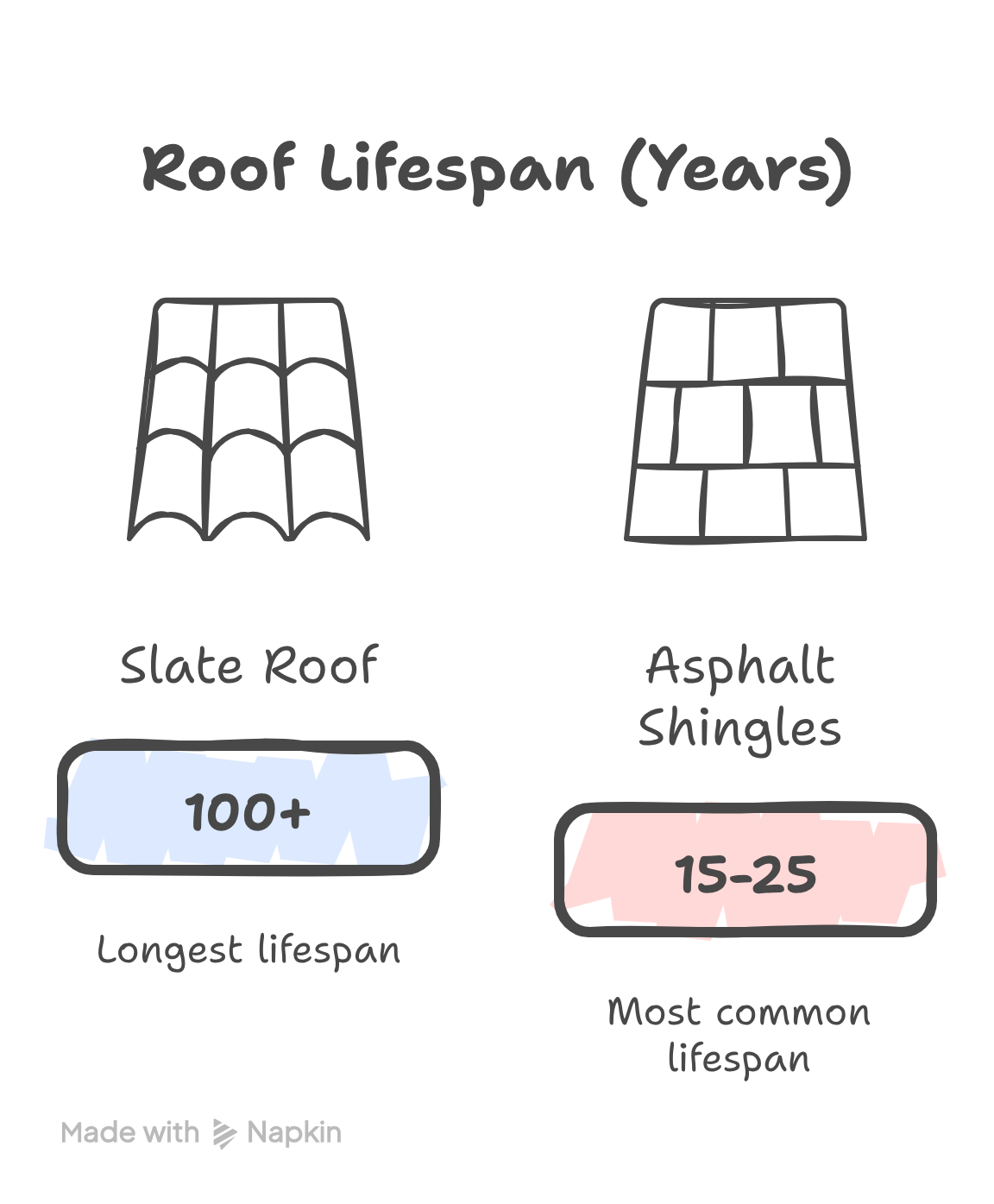
Here is the key insight. Most homes in Illinois are not running on slate or tile. They are running on asphalt. That means the real world replacement conversation for many homeowners starts sooner than they might expect.
This is also where professional evaluation becomes critical. Lifespan ranges are guidelines, not guarantees.
Weather, installation quality, and ventilation all influence how a roof actually performs over time. A thorough inspection translates those general timelines into a clear answer for your specific home.
When Age Alone Is Enough to Replace a Roof
There comes a point where the calendar itself becomes a deciding factor. Even if the roof has not completely failed, age can push it into a zone where replacement simply makes more sense than continued repairs.
For many asphalt roofs, that threshold sits somewhere beyond the 20 year mark. At that stage, materials begin to lose their resilience. Shingles become more brittle. Protective granules wear away. Small issues start showing up more often, and each repair becomes a temporary fix rather than a lasting solution.
This is where homeowners often fall into a costly cycle. Fix a leak this year. Replace a few shingles next year.
Patch another area after the next storm. Over time, those smaller expenses begin to stack up, often approaching or even exceeding the cost of a full replacement.
Insurance can also enter the picture. As roofs age, especially in the 15 to 25 year range, some insurers begin to tighten coverage or raise concerns about condition. Waiting too long can limit options and increase out of pocket risk.
In a climate like Illinois, where freeze and thaw cycles, heavy storms, and seasonal extremes put constant stress on roofing systems, age tends to catch up faster than expected. That is why many experienced contractors recommend a proactive approach. Replacing a roof before it fails is not just about avoiding damage. It is about controlling cost, timing, and peace of mind.
The smarter approach is planning. Understanding when a roof is nearing the end of its useful life and making a decision before failure forces one. This is where experienced roofing professionals make a measurable difference. A thorough inspection provides clarity, not guesswork. It turns uncertainty into a clear next step.
Why Illinois Homes Need a More Proactive Timeline
Illinois is not a gentle environment for roofing systems. It is a stress test that runs year round.
Winter brings freeze and thaw cycles that expand and contract materials. Snow and ice sit on surfaces and find their way into small openings. Spring and summer introduce heavy rain, humidity, and storms that test every seam and shingle. Then heat builds up, accelerating wear from above while moisture works from below.
All of this means one thing. A roof in Illinois often ages faster in real world conditions than its textbook lifespan suggests. A twenty year old roof here may perform more like something older, especially if it has faced years of seasonal extremes.
This is why local experience matters. A contractor who understands regional wear patterns can spot issues earlier and recommend timing that aligns with reality, not just general guidelines. It is also why many homeowners choose to work with companies like Sunrise Exterior, who approach roofing with a long term perspective rooted in the conditions Illinois homes actually face.
Conclusion Think Timeline Not Just Age
So how old should a roof be before you replace it?
For many homes, especially those with asphalt shingles, the conversation begins around the twenty year mark.
But the real answer is more nuanced. Age sets the stage. Condition delivers the verdict.
A roof that is nearing the end of its lifespan and showing signs of wear is telling you something. It is asking for a decision. Waiting too long often turns that decision into a reaction, and reactions tend to be more expensive, more stressful, and less controlled.
The better approach is to think in terms of timeline. Start planning early. Pay attention to the signs. Understand how your specific roof is aging in your specific environment. When age and condition begin to align, that is your window to act.
Homeowners who take that proactive step put themselves in control. They protect their home, manage their costs, and avoid the uncertainty that comes with waiting for something to fail. And with the right guidance from an experienced local team like Sunrise Exterior, that decision becomes clear, confident, and built to last.
Recent Posts