Does roof pitch affect roof replacement cost?
Does Roof Pitch Affect Roof Replacement Cost?

1. The Question Homeowners Ask Before Replacing a Roof
A homeowner rarely thinks about roof pitch until it shows up in a roofing estimate.
Two houses can look similar from the street yet receive noticeably different replacement quotes. One homeowner may hear a number that seems reasonable while another wonders why the cost suddenly climbed. The difference often comes down to a detail that is easy to overlook from the ground. The angle of the roof.
Roof pitch plays a surprisingly large role in determining the final price of a roof replacement. It influences how much material is needed, how safely a crew can work, how long the installation will take, and even which roofing systems are appropriate for the home.
In other words the steeper or flatter your roof is the more it can shape the entire project.
This is one reason experienced exterior contractors take careful measurements before providing a proposal.
Companies that specialize in full exterior improvements such as Sunrise Solar Exterior in Illinois typically evaluate roof pitch early in the inspection process because it affects nearly every part of the job from planning to installation.
Understanding this factor helps homeowners make sense of the numbers they see in roofing estimates. Instead of wondering why costs vary they can see how the shape of the roof itself plays a role in the final price.
2. What Roof Pitch Actually Means
Roof pitch is simply a way of describing the steepness of a roof. Contractors measure it using a ratio that compares how much the roof rises vertically for every twelve inches of horizontal distance.
For example a roof with a 4 to 12 pitch rises four inches for every twelve inches of horizontal run. A roof with a 10 to 12 pitch rises ten inches over that same distance and is much steeper.
This measurement may seem like a small technical detail but it affects several important aspects of a roofing system. The angle of the roof determines how quickly water and debris move off the surface. It also affects the types of materials that can be used and how safely roofing crews can work during installation.
A lower pitched roof tends to allow slower water drainage which means it may require specialized membranes or additional waterproofing layers. A steeper roof sheds water quickly but it can be more challenging for installers to navigate because the angle makes footing less stable.
Because of these factors roof pitch becomes one of the first things roofing professionals evaluate when preparing a replacement estimate. Contractors who regularly handle residential roofing in Illinois understand that even small changes in pitch can influence materials labor requirements and overall project cost.
That is why a detailed inspection from a knowledgeable exterior company such as Sunrise Solar Exterior often begins with measuring the roof itself. Once the pitch is understood the rest of the roofing plan becomes much clearer.
3. Why Roof Pitch Changes Material Costs
One of the first ways roof pitch influences replacement cost is through the amount and type of materials required.
While the footprint of a home may stay the same, the actual surface area of the roof changes depending on how steep it is.
A steeper roof creates more total roofing area. Imagine two houses with the same width and length. If one roof is shallow and the other rises sharply, the steep roof will have significantly more surface to cover. That means more shingles, more underlayment, more flashing, and more fasteners. Even though the home itself has not grown in size, the roof system requires more materials to complete the installation.
Roofing professionals account for this difference by using pitch multipliers. These calculations convert the flat footprint of a home into the true surface area of the roof. As pitch increases, the multiplier grows as well. That increase directly raises the quantity of materials needed and ultimately affects the cost of the project.
Roof pitch can also determine which materials are appropriate for the roof. Lower pitched roofs often require specialized systems designed to handle slower water drainage. These can include membrane based roofing materials such as rubber systems or modified bitumen that create a stronger barrier against moisture.
Steeper roofs typically allow for traditional roofing materials such as asphalt shingles, metal panels, or tile.
However the sharper angle can also require higher performance fastening systems and installation methods to ensure materials remain secure over time.
In some cases low slope roofs may appear less expensive at first because they are easier to stand on during installation. However they often require additional waterproofing layers to prevent leaks caused by slower water movement across the surface.
Because of these variables material pricing is rarely one size fits all. Experienced exterior contractors evaluate the pitch carefully before calculating material quantities. Companies such as Sunrise Solar Exterior use this information to build accurate estimates that reflect the true needs of the roof rather than relying on rough assumptions.
4. How Roof Pitch Affects Labor and Installation Time
Beyond materials, roof pitch has a major influence on how long a roofing project takes and how difficult the installation will be for the crew. The steeper the roof becomes, the more carefully installers must move across the surface.
On a moderate slope roofing crews can walk comfortably while removing old materials and installing new ones.
The work progresses at a steady pace and materials can be handled efficiently across the roof.
As the pitch becomes steeper the process changes. Roofers must move slower and position themselves more carefully to maintain safe footing. Materials must be passed or staged differently and additional time is often needed to secure equipment and maintain stability during installation.
Safety systems are also more important on steep roofs. Crews frequently install harness systems, roof jacks, and toe boards to create stable working platforms. In some cases scaffolding or specialized brackets are required to help transport materials safely across the roof surface.
These precautions protect the crew and ensure the installation meets safety standards, but they also increase the labor required for the project. More preparation time, slower movement, and additional safety equipment can extend the overall timeline of the job.
Lower pitched roofs generally allow faster installation because crews can move more freely and require fewer safety systems. However this does not always mean the total cost is lower. Low slope roofing often involves specialized installation steps to ensure proper waterproofing and drainage.
Professional exterior contractors consider both the pitch and the roofing system when estimating labor requirements. Companies such as Sunrise Solar Exterior evaluate these factors during the inspection process so homeowners receive a clear understanding of how roof shape influences the time and cost involved in replacing their roof.
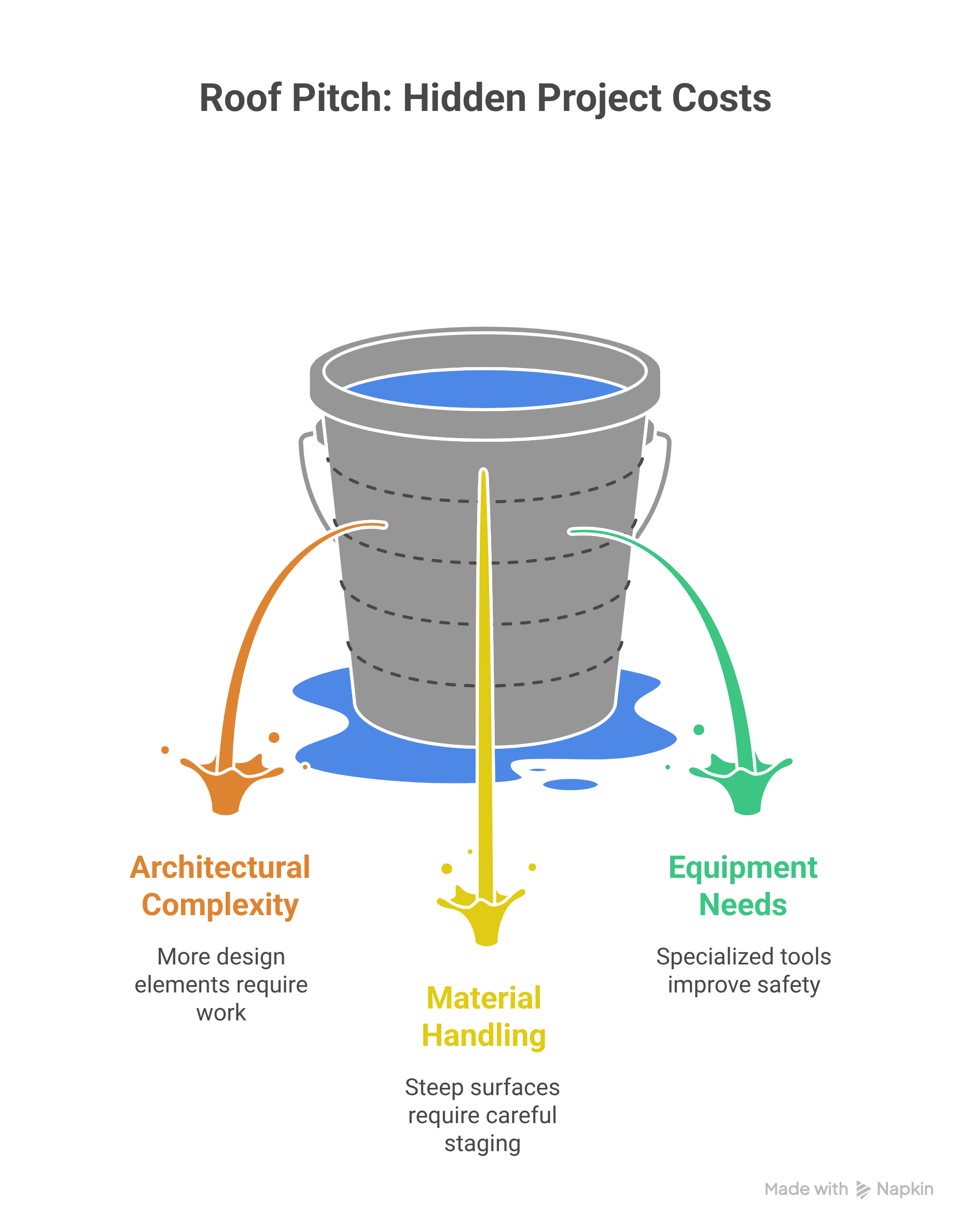
5. The Hidden Costs Roof Pitch Can Add to a Roofing Project
Roof pitch does not only influence materials and labor. It can also affect several secondary factors that quietly shape the overall cost of a roof replacement.
One of the most common is architectural complexity. Homes with steeper roofs often feature more design elements such as ridges, valleys, dormers, and intersecting roof planes. Each of these areas requires careful flashing, precise cutting of materials, and additional installation time. Even if two homes share the same footprint on the ground, the roof with more peaks and angles may require significantly more work to complete properly.
Material handling can also become more difficult as pitch increases. Moving bundles of shingles or panels across a steep surface requires careful staging and coordination among the crew. Roofing teams often need to lift materials to specific areas of the roof rather than sliding them across the surface. This adds time and planning to the installation process.
Another factor is equipment. Steeper roofs sometimes require specialized tools or support systems to move materials safely. Contractors may use roof brackets, hoists, or additional stabilizing equipment to manage the workload. While these tools improve safety and efficiency, they also become part of the overall project planning and cost.
All of these details highlight why roof pitch is more than a simple measurement. It shapes the complexity of the entire project from the first tear off to the final installation.
6. How Roof Pitch Influences Longevity and Performance
While roof pitch can increase the upfront cost of a replacement, it also plays a role in how well a roof performs over time.
Steeper roofs naturally shed water and debris more efficiently. Rain, snow, and leaves move off the roof surface quickly instead of lingering. This reduces the likelihood of standing water and moisture buildup, which are two common causes of roof deterioration.
Better drainage can translate into fewer leak related issues over the life of the roof. Materials tend to stay drier and experience less prolonged moisture exposure. For homeowners this can mean fewer repairs and potentially longer intervals between major roofing projects.
Lower pitched roofs can still perform very well when installed correctly, but they rely more heavily on proper waterproofing systems. Because water drains more slowly, the roofing layers must create a stronger barrier to prevent moisture infiltration.
Roof pitch can also influence ventilation. Steeper roof structures often allow for larger attic spaces and improved airflow. Proper ventilation helps regulate temperature and remove trapped moisture, both of which support the long term health of the roofing system.
When contractors evaluate a roof they often consider not only the replacement cost but also how the roof design will perform in the years ahead. The goal is not just to install a new roof but to create a system that protects the home reliably over time.
7. What Illinois Homeowners Should Know Before Replacing a Roof
In Illinois, weather conditions make roof design especially important. Homes regularly experience heavy rain, snow accumulation, freezing temperatures, and seasonal storms. These conditions place significant stress on roofing systems throughout the year.
Roof pitch can influence how well a home handles these environmental pressures. Steeper roofs tend to shed snow and rain more efficiently, while lower pitched roofs must rely on strong waterproofing systems to prevent moisture from sitting on the surface.
Because of these regional factors, accurate roof inspections are essential before beginning a replacement project. A professional evaluation helps determine how pitch, materials, ventilation, and structural conditions interact with the local climate.
This is where experienced exterior contractors play an important role. Companies that specialize in roofing and exterior improvements understand how Illinois weather affects different roof designs. They can recommend materials and installation methods that align with the specific pitch and structure of the home.
Sunrise Solar Exterior works with homeowners across Illinois to evaluate these factors during the planning process.
By carefully measuring roof pitch and assessing the overall condition of the structure, their team can provide recommendations that balance cost, durability, and long term performance.
8. So Does Roof Pitch Affect Roof Replacement Cost
The short answer is yes. Roof pitch has a direct impact on roof replacement cost because it influences several key parts of the project.
A steeper roof often requires more materials because the surface area increases. Installation can take longer and may involve additional safety equipment. Complex roof designs that accompany steep slopes can also add labor and planning time.
Lower pitched roofs may allow crews to work more easily, but they frequently require specialized materials and waterproofing systems to ensure proper drainage and protection.
In both cases roof pitch shapes how a contractor plans the job, how much material is needed, and how long the installation will take. That is why two homes of similar size can still receive very different roofing estimates.
Understanding this factor helps homeowners see that roof replacement pricing is not random. It reflects the real characteristics of the roof itself.
9. Final Thoughts for Homeowners Planning a Roof Replacement
Replacing a roof is one of the most important investments a homeowner can make in protecting their property.
While many factors contribute to the final price, roof pitch remains one of the most influential.
The slope of the roof affects the total surface area, the materials that can be used, the difficulty of installation, and the long term performance of the roofing system. When these elements are evaluated carefully, homeowners receive a clearer picture of what their roof actually needs.
Rather than focusing only on the price of a replacement, it helps to understand the design of the roof and how it interacts with weather, drainage, and structural features of the home.
A thorough inspection from a knowledgeable exterior contractor can provide that clarity and ensure the roofing solution is built to last.
10. Schedule a Professional Roof Evaluation
If you are considering a roof replacement and want to understand how your roof pitch may affect the project, the best first step is a professional inspection.
Sunrise Solar Exterior provides roof evaluations for homeowners across Illinois. Their team assesses roof pitch, structural conditions, ventilation, and material options to deliver a clear and accurate recommendation for your home.
Instead of guessing about costs or relying on rough estimates, you can receive expert guidance tailored to the specific design of your roof.
Contact Sunrise Solar Exterior today to schedule a roof inspection and learn how the shape of your roof influences the cost and performance of your next roofing project.
Recent Posts