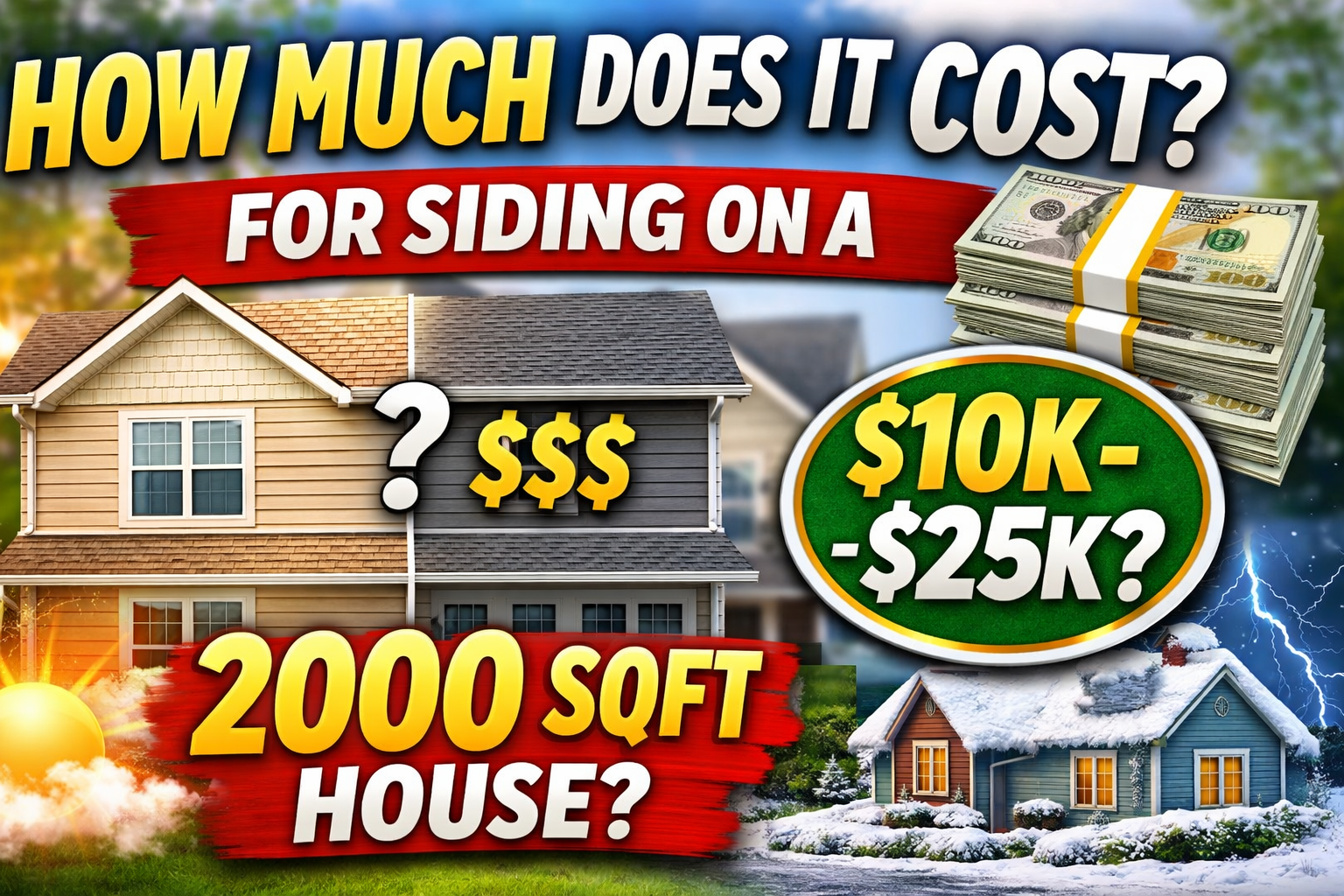
How much does it cost for siding on a 2000sqft house?
How Much Does It Cost For Siding On A 2000sqft House?
The Question That Usually Starts With a Quote
It usually begins the same way. A homeowner notices fading color, warping panels, or siding that has simply seen better days. A few calls are made. A few estimates come in. And suddenly the numbers feel all over the place.
One contractor says fifteen thousand. Another says twenty two. Someone else lands closer to ten. At that point the question is no longer just about replacing siding. It becomes about understanding what is real and what is not.
In a place like Illinois where homes take a beating from heat, cold, wind, and moisture, siding is not just cosmetic. It is protection. It is efficiency. It is part of how a home holds its value. That makes the decision more important and the pricing more confusing.
This is where experienced companies like Sunrise Exterior Solutions step in. Not by throwing out a number, but by helping homeowners understand what actually drives that number in the first place. Because once the variables are clear, the pricing starts to make sense.
The Straight Answer First What You Will Likely Pay
Let’s cut straight to it.
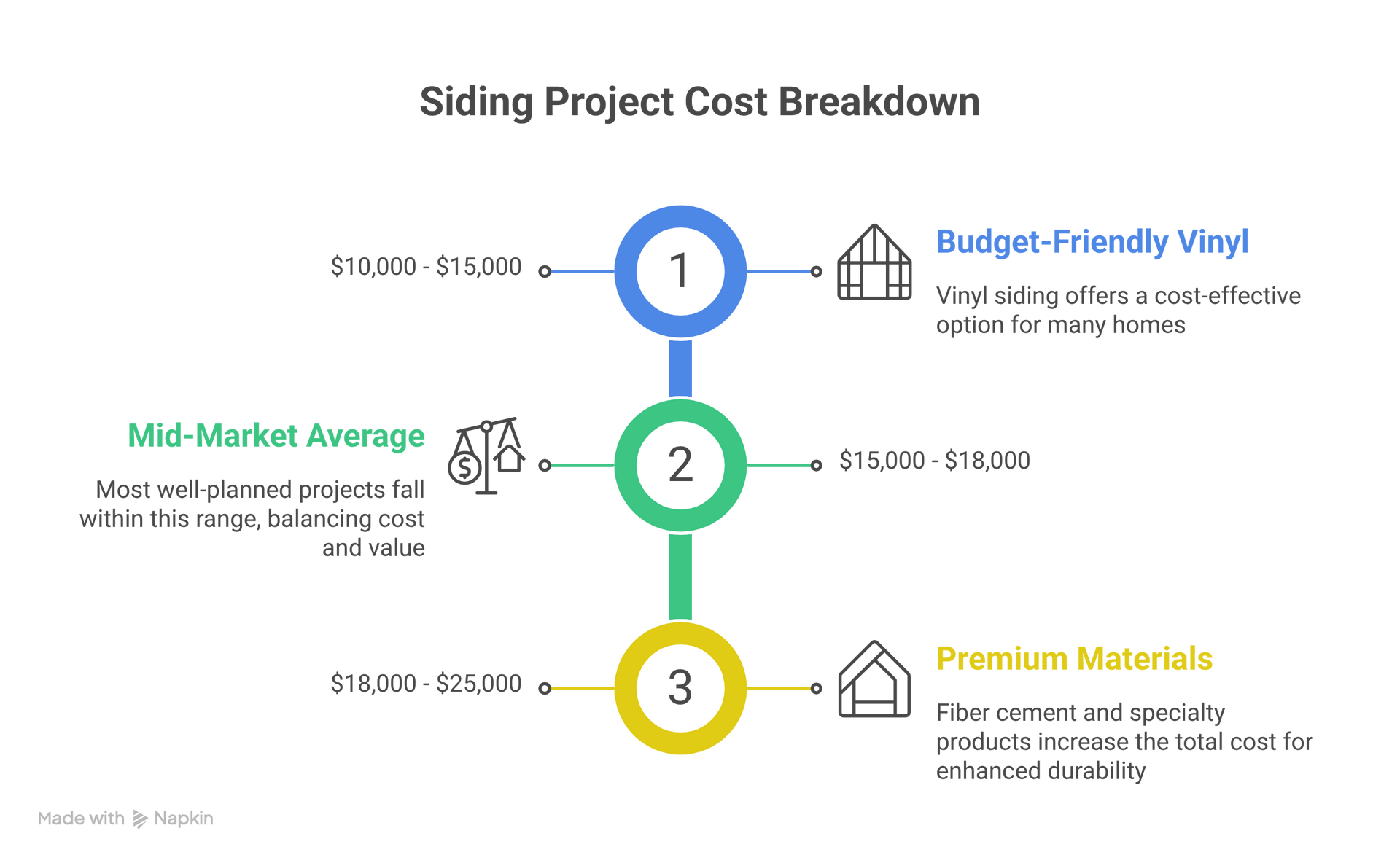
For a two thousand square foot house, siding typically costs between ten thousand and twenty five thousand installed. Most homeowners land somewhere in the middle, usually between fifteen thousand and eighteen thousand depending on the material, labor, and the condition of the home.
That range is not random. It reflects real differences in materials and project complexity. A more budget friendly option like vinyl will usually sit toward the lower end. More durable and premium materials like fiber cement or specialty products will push the total higher.
A useful way to think about it is this. The middle of the market is not the cheapest option and it is not the most expensive. It is where most well planned projects land when homeowners balance cost, durability, and long term value.
And that is exactly where many homeowners end up once they walk through the process with a contractor who is focused on getting it right rather than just getting it done.
Why the Price Range Is So Wide
At first glance, it seems simple. A two thousand square foot house should have a predictable cost. But siding is one of those projects where the surface level number rarely tells the full story.
Square footage is only the starting point. What really shapes the final price is everything layered on top of it.
Material choice is the obvious driver, but it is only one piece. Labor plays a major role, especially in regions like Illinois where weather and seasonality can influence scheduling and efficiency. Then there is the condition of the home itself. Removing old siding, repairing what is underneath, and preparing the surface properly can shift a project significantly.
Architecture matters more than most homeowners expect. A simple single story home with clean lines is faster and easier to work on. A taller home with multiple angles, dormers, and detailed trim requires more time, more precision, and more labor.
The result is this. Two homes with the same square footage can end up with very different final costs. That is why estimates can feel inconsistent at first. They are not just pricing the size of the home. They are pricing the complexity behind it.
Cost Per Square Foot How Contractors Actually Price Siding
Behind every total estimate is a more precise way contractors look at siding projects. They break it down by cost per square foot installed. This is where the numbers start to become more transparent.
For vinyl siding, the installed cost typically falls between three and twelve dollars per square foot. This makes it the most accessible option for homeowners looking to control upfront cost while still improving the appearance and protection of their home.
Fiber cement siding usually ranges from five to fourteen dollars per square foot installed. The material itself is more durable and longer lasting, but it also requires more labor to install, which pushes the cost higher.
Across the market, a common midpoint sits around eight dollars and sixty cents per square foot. When applied to a two thousand square foot home, that brings the total to roughly seventeen thousand two hundred dollars, which aligns closely with what many homeowners actually pay.
This per square foot perspective does something important. It turns a wide price range into something measurable. It allows homeowners to see how different materials and choices directly influence the final number rather than guessing at a lump sum.
Material Breakdown What You Choose Changes Everything
Once the pricing framework is clear, the next decision becomes the most influential one. The material.
Vinyl siding remains the most common starting point for many homeowners. It is cost effective, widely available, and quicker to install. For those focused on keeping the project within a tighter budget, it often delivers the best balance of affordability and appearance.
Fiber cement moves the conversation in a different direction. It is heavier, more durable, and built to handle long term exposure to the elements. In a state like Illinois where weather swings are part of the equation, that added durability can be a meaningful advantage. The trade off is a higher upfront investment driven by both material cost and labor intensity.
Then there are premium options. Brick, stone, and specialty siding materials push well beyond standard pricing ranges. These are less about entry level cost and more about longevity, performance, and visual impact.
The key is not simply choosing the cheapest or the most expensive option. It is choosing the material that aligns with how long you plan to stay in the home, how much maintenance you are willing to take on, and how you want the home to perform over time.
The Factors That Quietly Change the Final Price
Even after material is selected, there are still several variables that shape the final number.
Labor is one of the biggest. Rates can vary depending on region, demand, and the time of year. In Illinois, where exterior work is often seasonal, timing can influence both availability and pricing.
The condition of the existing siding also plays a role. Removing old materials, disposing of debris, and preparing the structure underneath can add both time and cost. If underlying issues are discovered, such as moisture damage or structural wear, those repairs need to be addressed before new siding goes on.
Home design is another factor that cannot be ignored. A simple layout with easy access is far more efficient than a multi level home with detailed trim, tight corners, and architectural features that require precision work.
These are the details that separate a rough estimate from a true project cost. And they are the reason accurate inspections matter before any final number is given.
Real World Pricing What Homeowners Actually Pay
To bring all of this into focus, it helps to look at how these variables play out in real scenarios.
A straightforward single story home using vinyl siding with minimal prep work will often land toward the lower end of the range. These projects are typically faster and require less labor, which keeps overall costs more controlled.
A two story home using fiber cement tends to fall closer to the middle or upper portion of the range. The added height, combined with the weight and installation demands of the material, increases both time and labor.
Homes with more complex designs or premium materials can move beyond the typical range altogether.
Multiple angles, detailed trim work, and specialty finishes all contribute to a higher final investment.
What these examples show is simple. The size of the home sets the stage, but the details determine the outcome.
Budget Versus Long Term Value
One of the most common mistakes homeowners make is focusing only on the upfront number.
Lower cost materials can make sense in the short term, especially for those working within a defined budget. But over time, maintenance, repairs, and earlier replacement can add up.
Higher quality materials often come with a larger initial investment, but they tend to last longer, require less upkeep, and perform better in challenging weather conditions. In climates like Illinois, where homes are exposed to both extreme heat and cold, that added durability can translate into long term savings.
The better question is not just what does it cost today. It is what will it cost over the life of the home.
Why Illinois Homes Require a Thoughtful Approach
Location plays a bigger role than many homeowners expect.
Illinois weather brings a mix of temperature swings, moisture, and seasonal extremes that put siding under constant stress. Materials expand and contract. Wind and rain test durability. Installation quality becomes just as important as the material itself.
This is where working with a company that understands the local environment matters. Sunrise Exterior Solutions approaches siding projects with those conditions in mind, helping homeowners choose options that are built to perform in this specific climate rather than relying on generic recommendations.
How to Get an Accurate Estimate Without Guesswork
Online calculators and average ranges are useful for setting expectations, but they can only go so far.
An accurate estimate comes from seeing the home, measuring it properly, and understanding the condition of what is already there. It involves identifying potential challenges before the project begins rather than after it is underway.
This level of detail is what turns a broad price range into a clear, reliable number. It also helps prevent surprises that can disrupt both budget and timeline.
Final Takeaway What You Should Plan For
For a two thousand square foot home, siding will typically fall somewhere between ten thousand and twenty five thousand installed, with many homeowners landing between fifteen thousand and eighteen thousand.
That range is not guesswork. It reflects real differences in materials, labor, and the unique characteristics of each home.
The most important takeaway is this. The right project is not defined by the lowest number. It is defined by the balance between cost, durability, and long term performance.
Get a Real Number for Your Home
Every home is different, and the only way to move from estimates to certainty is through a proper evaluation.
If you want a clear, accurate understanding of what siding will cost for your specific home, working with an experienced local contractor makes all the difference. Sunrise Exterior Solutions provides detailed assessments that remove the guesswork and help homeowners move forward with confidence.
Because at the end of the day, the goal is not just to replace siding. It is to make a decision that holds up for years to come.
Recent Posts