What is the Best time of year to replace a roof?

March 27, 2026

Share this article

What Is The Best Time Of Year To Replace A Roof?

The Question Homeowners Ask Right Before It Becomes Urgent


It usually starts with something small.


A shingle that does not look quite right. A dark spot that was not there before. Maybe a faint drip during a heavy rain that you convince yourself is nothing serious.


Then the question shows up.


Is this something I can wait on or something I need to deal with now.


For most homeowners, roofing is not top of mind until it has to be. It sits quietly overhead, doing its job, until one day it does not. That is when timing becomes more than a convenience. It becomes a decision that affects cost, stress, and how much control you have over the process.


Some people wait for the perfect season. Others react when the problem becomes impossible to ignore

The difference between those two approaches is not luck. It is timing.


And understanding when to replace a roof before it becomes urgent is what separates a planned project from an expensive surprise.


The Short Answer Fall Is Best But Timing Depends on Your Situation


If you are looking for a simple answer, here it is.


Fall is usually the best time of year to replace a roof.


Temperatures are moderate. Weather is more predictable. Materials install and seal the way they are supposed to. For both homeowners and contractors, it is the season where everything tends to work together, but that is only part of the picture.


Late spring and early fall are also strong windows, especially in places like Illinois where winters can be harsh and summers can bring heat and storms. These seasons offer a balance between workable conditions and reasonable scheduling.


The real answer comes down to more than just the calendar.


It depends on the condition of your roof, the weather patterns in your area, and how far in advance you are able to plan. A roof that is still holding up gives you flexibility. A roof that is failing does not.


That is why the best timing is not always about choosing the perfect season.


It is about understanding when waiting helps and when it starts to cost you more than acting now.


Why Fall Is Considered the Ideal Season for Roof Replacement


There is a reason roofing schedules fill up as summer fades.


Fall creates a narrow window where almost everything works in your favor.


Mild Temperatures Create Better Installation Conditions


Roofing materials respond to temperature.


When it is too hot, materials can become overly soft and harder to handle. When it is too cold, they can become brittle and less flexible.


Fall sits in the middle.


That balance allows materials to seal properly and perform the way they are designed to over time.


More Predictable Weather Means Fewer Delays


Consistency matters during a roofing project.


Fall tends to bring more stable weather patterns compared to the volatility of summer storms or the unpredictability of winter.


Fewer interruptions mean a smoother process and a tighter timeline from start to finish.


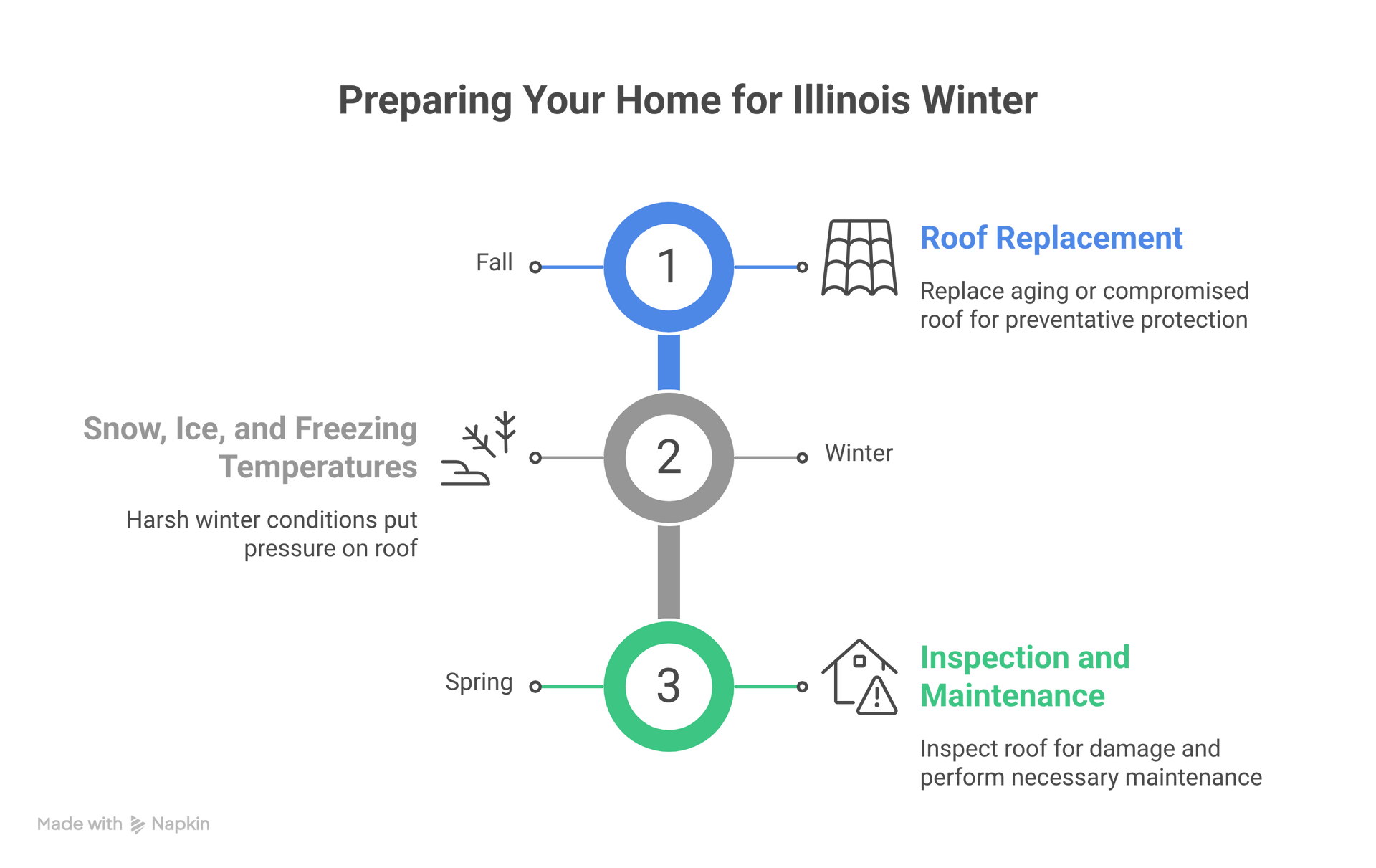
Preparing Your Home Before Winter Hits


In a place like Illinois, winter is not forgiving.


Snow, ice, and freezing temperatures put pressure on every part of your roof. Going into that season with an aging or compromised system increases the risk of leaks and structural issues.


Replacing a roof in the fall is not just convenient. It is preventative.


It gives your home a fresh layer of protection before the harshest conditions arrive.


The Catch High Demand and Limited Scheduling


There is one downside to all of this.


Everyone else knows fall is the best time too.


That means schedules fill quickly. Waiting too long can push your project out or limit your options when it comes to choosing a contractor.


The advantage goes to homeowners who plan ahead, not the ones who wait for availability.


Why Spring and Early Summer Are Strong Alternatives


If fall is the ideal, spring is the opportunity.


It is often the next best chance to take control before problems build.


Recovering From Winter Damage


Winter leaves its mark.


Snow buildup, ice, and repeated freezing and thawing cycles can weaken roofing materials over time. Spring is when those issues become visible.


Addressing them early prevents small problems from turning into larger repairs later in the year.


Comfortable Working Conditions Before Peak Heat


Late spring and early summer offer a similar balance to fall, just on the front end of the year.


Temperatures are moderate. Crews can work efficiently. Materials behave as expected.


It is a productive window before extreme heat and humidity begin to slow things down.


Better Availability Compared to the Fall Rush


Because many homeowners aim for fall, spring often comes with more flexibility.


There is more room on the schedule. More time to plan. More ability to choose a contractor based on quality instead of availability.


For homeowners who missed the fall window or want to stay ahead of potential issues, spring becomes a smart and strategic alternative.


The Bottom Line The Best Time Is When You Are Prepared


It is easy to look for the perfect season.


Fall stands out for a reason. The conditions are right. The process is smoother. The results tend to hold up exactly as expected.


But the real advantage does not come from the calendar alone.


It comes from preparation.


A roof that is still in good shape gives you options. You can plan ahead. You can choose your timing. You can work with a contractor you trust instead of whoever happens to be available.


A roof that is starting to fail changes the equation.


At that point, waiting for the ideal season can create more problems than it solves. Small issues turn into leaks.


Leaks turn into damage. What could have been planned becomes reactive.


The best time is not just when conditions are ideal.


It is when you are ahead of the problem instead of behind it.


Do Not Wait for the Perfect Season Take Control of the Timing


There is a difference between timing a project and delaying a decision.


One puts you in control. The other leaves you reacting to whatever happens next.


In a place like Illinois, where weather can shift quickly and seasons bring very different conditions, that difference matters.


That is where a company like Sunrise Exterior Solutions comes in.


It is not just about replacing a roof at the right time of year. It is about understanding your specific situation and helping you make the right call before it becomes urgent.


Whether that means planning ahead for fall, taking advantage of spring conditions, or addressing an issue before it spreads, the goal is the same.


Protect the home. Simplify the process. Get it done the right way the first time.


The smartest move is not waiting for perfect timing.


It is choosing to act before timing chooses for you.


Recent Posts

April 28, 2026
Does the color of a new roof increase home value?
April 23, 2026
How long does it take to replace siding?
April 11, 2026
How long does it take to replace a roof?
April 7, 2026
How old should a roof be before you replace it?
April 1, 2026
What is the 25% rule for roofing?
March 29, 2026
What Is The Best Time Of Year To Replace Siding?
March 29, 2026
How Much Does It Cost For Siding On A 2000sqft House?
March 15, 2026
Does Roof Pitch Affect Roof Replacement Cost?
March 1, 2026
What is The Most Durable Roofing Type?
February 15, 2026
Average cost of siding installation in 2025 How much does siding installation actually cost—and why does the answer seem to change every time you search online? Many homeowners start this process expecting a simple number, only to realize that siding prices depend on far more than square footage alone. Material choice, labor requirements, home design, and even local conditions all play a role in determining the final cost. For homeowners in St. Charles, Illinois, the question becomes even more specific. Midwest weather, local building codes, and neighborhood standards influence both material selection and installation methods. This is where working with a local contractor like Sunrise Exteriors makes a real difference. Instead of relying on generic national averages, homeowners receive guidance based on real homes, real conditions, and realistic pricing. This guide explains siding installation costs clearly so you can understand what affects the price and what to expect before requesting a quote. Siding Cost Per Square Foot by Material Material choice has the greatest impact on siding installation costs. Each option offers a different balance of price, durability, and long-term performance especially important in climates with seasonal temperature swings like northern Illinois. Vinyl siding Installed costs generally range from $3 to $12 per square foot. Vinyl remains one of the most common choices due to its affordability, low maintenance requirements, and reliable performance when properly installed. Fiber cement siding Fiber cement typically costs between $5 and $15 per square foot installed. It is valued for its resistance to moisture, fire, insects, and temperature fluctuations, making it a strong option for Midwest homes. Brick or stone veneer Brick and stone veneer fall into the premium category. Installed costs usually exceed $15 per square foot and can rise significantly depending on design details and labor requirements. Many homeowners use veneer selectively as an accent rather than full coverage to manage costs. Material pricing varies by manufacturer and availability, so local guidance is essential when comparing options. How Home Size Affects Siding Installation Costs Home size directly affects siding costs because larger exterior surfaces require more materials and more labor. As square footage increases, total project costs rise even when the same siding material is used.  Smaller homes around 1,000 square feet often remain more affordable, particularly with vinyl or fiber cement siding. Homes between 1,500 and 2,000 square feet typically see moderate cost increases as wall height and labor time grow. Larger homes of 2,500 square feet or more often experience sharper increases due to multiple stories, complex rooflines, and detailed trim work. It is also important to note that two homes with identical square footage can have very different siding costs. Window placement, entryways, architectural details, and access challenges all influence installation time and labor requirements. Real World Siding Cost Examples by Home Size Looking at typical cost ranges can help homeowners understand how siding prices scale with home size. These examples are intended for general planning purposes. Approximately 1,000 square feet: Vinyl siding remains the most budget-friendly option, while fiber cement and veneer increase costs due to heavier materials and longer installation times. Approximately 1,500 to 2,000 square feet: Costs rise steadily as material quantities and labor hours increase. At this size, many homeowners prioritize durability and long-term value. 2,500 square feet and larger: Pricing varies widely depending on layout complexity, story height, and trim detail, resulting in the broadest cost ranges. Because of these variables, estimates should always be viewed as guidelines rather than fixed prices. What Factors Increase or Decrease the Final Cost Several factors beyond material and square footage influence final siding costs: Labor and installation complexity: Multi-story homes, steep rooflines, and intricate architectural features require additional time and equipment. Removal of existing siding: Removing old or damaged siding adds to the project cost but helps prevent future moisture and structural problems. Insulation upgrades: Adding insulation during siding replacement increases upfront costs but can improve comfort and reduce long-term energy expenses. Local conditions: Seasonal weather, permitting requirements, and regional labor standards all affect pricing in St. Charles and surrounding areas. Understanding these factors helps homeowners make informed decisions before committing to a project. Can You Save Money on Siding Installation
Show More