How much is a roof on a 2000sqft house?

New The Real Cost Question Homeowners Ask First
“How much is a roof on a 2,000 square foot house?” is one of the most common home-improvement questions in the United States and for good reason. Roofing is a major investment, and the wide range of prices homeowners see online can feel confusing. One source may suggest a new roof costs under $10,000, while another claims it can exceed $20,000 for a home of the same size. The reality is that both figures can be accurate, depending on the details.
Square footage is only a starting point. Materials, labor, roof design, local climate, and contractor experience all influence the final cost. For homeowners in Illinois, especially in and around St. Charles, regional factors matter more than national averages. The guide below explains what a roof on a 2,000 square foot house typically costs using current industry data and practical, real-world considerations.
Average Cost to Roof a Two Thousand Square Foot House
In the United States, replacing the roof on a 2,000 square foot home generally costs between $7,000 and $25,000, with many homeowners paying around $9,000 to $10,000. This range usually includes labor and standard materials but does not account for extensive structural repairs or premium upgrades.
Asphalt shingles, the most commonly installed residential roofing material, typically fall in the middle of this range. A straightforward, single-story roof with a simple layout will usually cost less, while a steep or complex roof with multiple slopes, chimneys, or older decking can cost significantly more.
Homeowners in St. Charles often receives the most accurate pricing from experienced local contractors such as Sunrise Exteriors, who understand Illinois weather patterns, labor rates, and building code requirements better than national pricing tools.
What Does Two Thousand Square Feet Really Mean for Roofing Costs
Many homeowners assume that a 2,000 square foot house requires exactly 2,000 square feet of roofing materials. In practice, roofing costs are based on roof surface area, not interior living space. Because of slope, overhangs, and architectural features, the actual roof area is usually 20 to 50 percent larger than the home’s footprint.
For example, a 2,000 square foot home may require roofing materials for 2,400 to 3,000 square feet of coverage. Steeper roof pitches increase both surface area and labor time, while features such as valleys, dormers, skylights, and ridgelines add complexity. This explains why two homes with the same interior square footage can receive very different roofing estimates.
US National Roofing Costs for a Two Thousand Square Foot Home
National data consistently shows that the that the average cost to replace a roof on a 2,000 square foot home falls around $9,000 to $10,000, with a broader range extending from roughly $7,000 to the low $20,000s depending on materials, roof complexity, and regional labor rates. These figures typically include tear-off of the existing roof, installation of new materials, and standard workmanship warranties.
Asphalt shingle roofs for this home size are commonly installed for approximately $8,500 to $14,500. Costs tend to rise in regions with higher labor rates, stricter building codes, or older housing stock. Midwest pricing often remains close to the national average, though individual homes can still vary widely.
Key Factors That Can Increase or Decrease Your Roof Cost
Several variables have a direct impact on the final price of a roof replacement:
- Roof pitch: Steeper roofs require additional safety equipment, time, and labor
- Roof complexity: Multiple slopes, valleys, chimneys, and skylights increase installation time
- Number of stories: Two-story homes generally cost more to roof than single-story homes
- Tear-off vs. overlay: Removing old roofing adds labor and disposal costs but improves long-term performance
- Repairs and upgrades: Decking repairs, ventilation improvements, and code-required updates can raise costs
A thorough inspection helps identify these issues before work begins, reducing the risk of unexpected expenses.
Labor vs Materials: Where Your Money Actually Goes
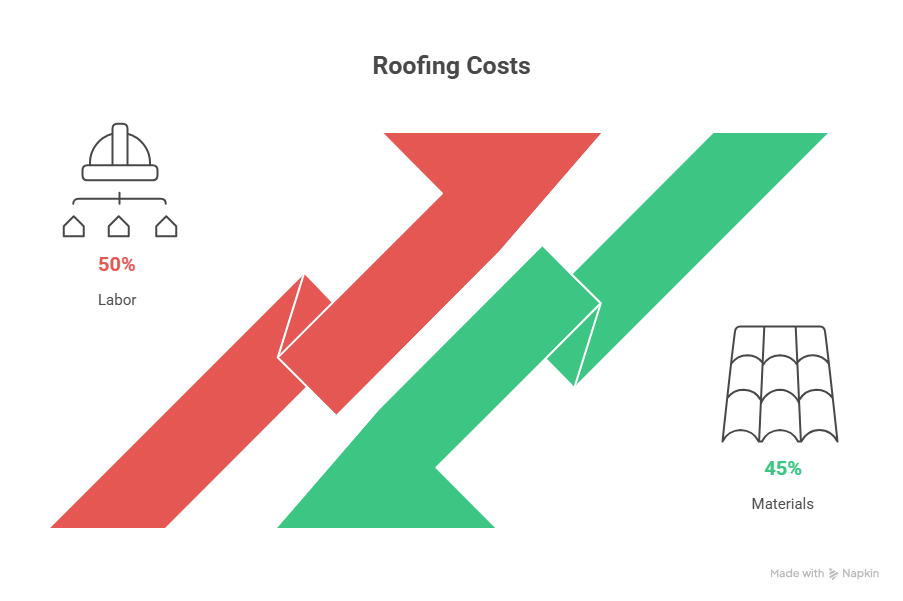
Many homeowners assume roofing costs are mostly about materials but labor often makes up the largest portion of the total price. In most roof replacements labor accounts for roughly forty to sixty percent of the cost while materials typically fall between forty and fifty percent. Skilled labor is essential for proper installation flashing and ventilation which directly affect how long your roof lasts.
Choosing the lowest bid can sometimes mean shortcuts in labor quality or materials which can lead to leaks or premature failure. Experienced roofing crews cost more because they follow proper installation standards and local codes. In Illinois where weather can be harsh, investing in quality labor is just as important as choosing the right roofing material.
Why Local Roofing Estimates Are More Accurate Than Online Calculators
Online roofing calculators can provide a rough starting point, but they rely on averages and assumptions that often overlook real-world conditions. They cannot accurately account for roof pitch, hidden damage, local labor rates, or regional building codes.
Local estimates are more precise because they are based on an in-person evaluation. A professional contractor assesses the roof structure, decking condition, ventilation, and flashing before providing a price. For homeowners in St. Charles, this localized approach delivers a far more realistic expectation and helps prevent surprises once the project is underway.
How to Budget Smartly for a Roof Replacement
Smart budgeting starts with understanding a realistic price range rather than focusing solely on the lowest quote. Homeowners should plan for potential repairs uncovered during tear-off and set aside a modest contingency budget.
When comparing estimates, look beyond the total cost. Review material quality, warranty coverage, and the full scope of work to ensure proposals are truly comparable. Financing options can help manage upfront costs, but long-term value should remain the priority. A properly installed roof protects your home for decades, making careful planning a sound investment.
Why Hiring a Local St. Charles Roofing Contractor Matters
Hiring a local roofing contractor provides advantages that go beyond price alone. A contractor based in or near St. Charles understands Illinois weather patterns including heavy snow freeze thaw cycles and summer storms. This local knowledge influences everything from material selection to proper ventilation and flashing details which directly affect roof performance and lifespan.
Local contractors are also familiar with municipal building codes and permit requirements which helps prevent delays or compliance issues. Communication is typically easier and response times are faster if issues arise during or after installation. Working with a trusted local company such as Sunrise Exteriors gives homeowners peace of mind knowing the contractor is accountable, invested in the community and experienced with the specific challenges homes in the area face.
Final Thoughts: What a Two Thousand Square Foot Roof Should Cost and Why
There is no single fixed price for a roof on a 2,000 square foot house. Costs vary based on roof size, materials, labor complexity, and location. National averages provide useful context, but they should never replace a detailed local evaluation.
For homeowners in St. Charles, the most accurate expectations come from working with professionals who understand Midwest conditions and local building requirements. By prioritizing quality materials, skilled installation, and transparent estimates, homeowners can make confident decisions that protect their homes and their investment for years to come.
Recent Posts