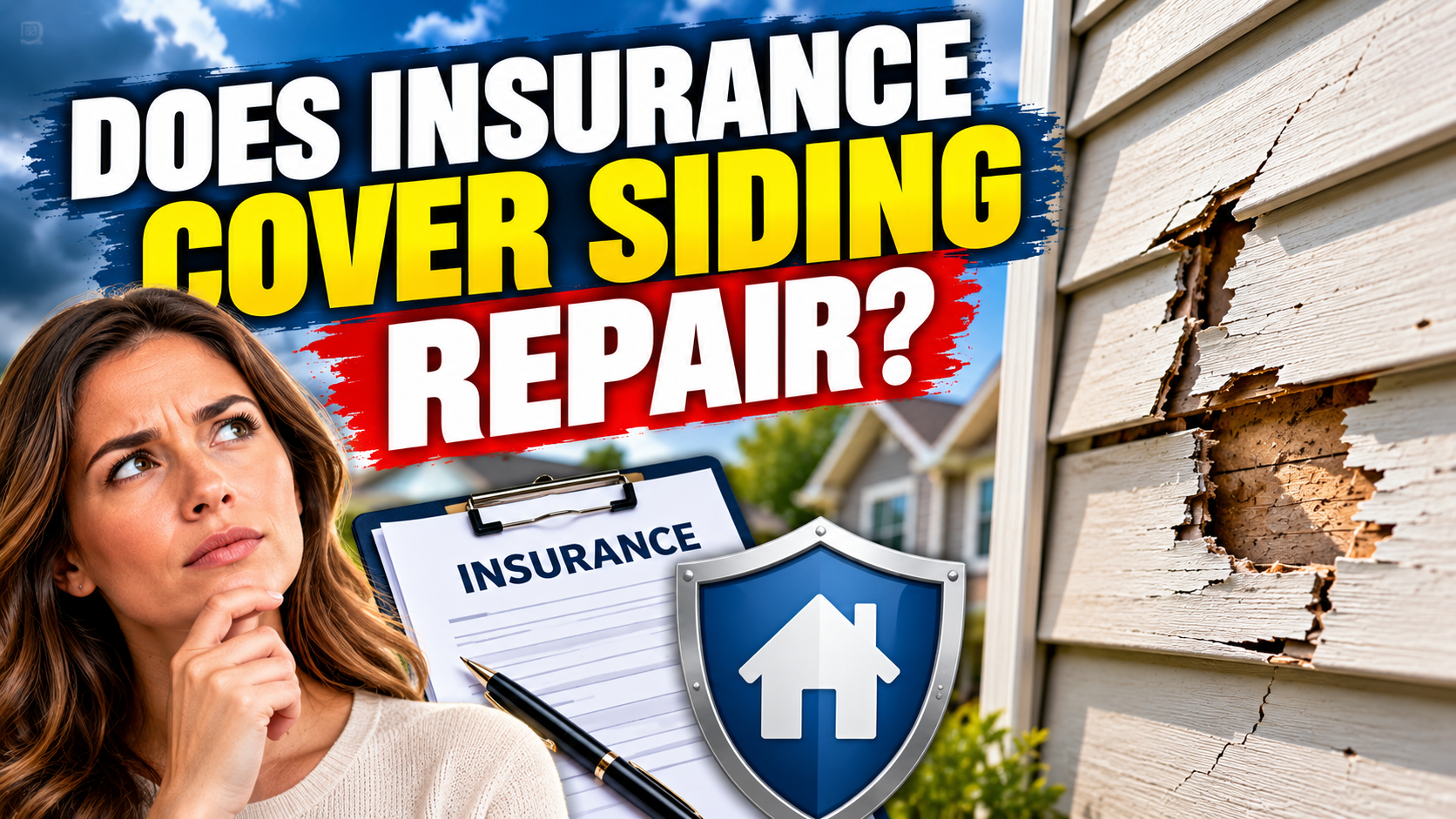
Will Insurance Pay for Damaged Siding?
Will Insurance Pay for Damaged Siding?
Will Insurance Pay for Damaged Siding?
Introduction: Will Homeowners Insurance Actually Pay for Damaged Siding?
You walk outside after a strong Illinois storm and immediately notice something is wrong.
A few siding panels are loose.
One section is cracked.
Another panel may be missing entirely.
Maybe hail left visible marks across the wall, or strong wind pulled siding away from the house.
The natural question comes quickly.
Will homeowners insurance pay for the damaged siding?
The answer is yes, it may.
But the reason the siding was damaged matters enormously.
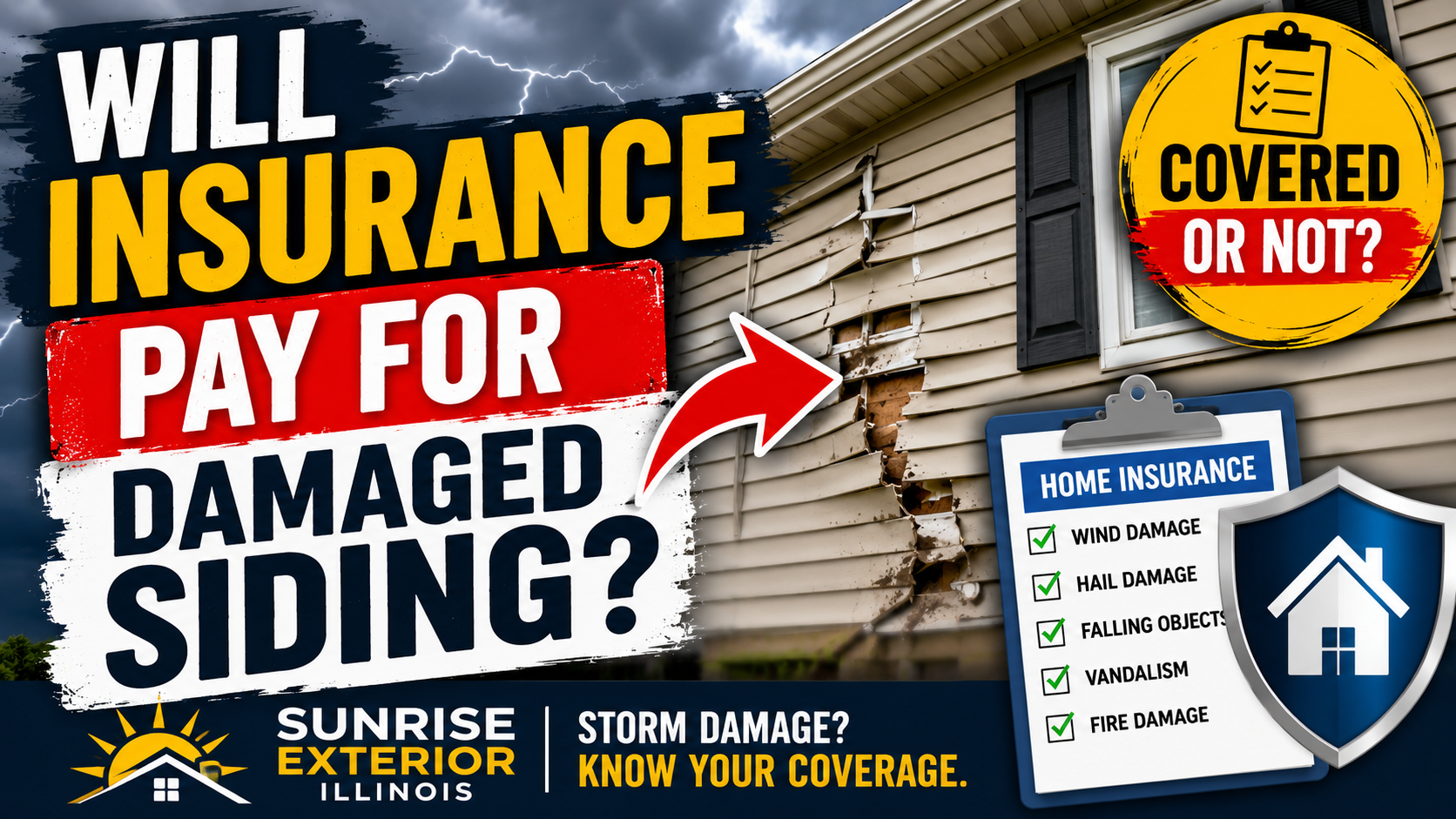
Homeowners insurance is generally designed to help with sudden and accidental losses caused by events covered under the policy. That can include wind, hail, fire, falling objects, vandalism, vehicle impact, and certain other unexpected events.
Insurance usually does not operate like a home maintenance plan.
If siding has slowly faded, cracked, warped, rotted, loosened, or deteriorated over many years, the insurer may consider that normal aging, maintenance, installation trouble, or gradual deterioration rather than a covered insurance loss.
That distinction is where many siding claims are won or lost.
Insurance Usually Covers the Event, Not the Aging
Imagine two houses with damaged siding.
The first house has relatively sound siding until a severe windstorm tears several panels from one wall.
The second house has old, brittle siding that has been cracking and loosening for years.
Both homeowners may discover missing siding after the same storm.
But the insurance questions can be completely different.
For the first homeowner, wind may be the clear cause of the damage.
For the second homeowner, the insurer may investigate whether deterioration, improper installation, or existing damage was primarily responsible.
That is why simply saying that siding is damaged is not enough.
The claim needs to answer another question.
What caused the damage?
Common Events That May Be Covered
Depending on the policy, siding damage caused by wind may be covered.
Hail may be covered.
Fire may be covered.
A tree branch hitting the house may be covered.
Damage from a vehicle striking the property may be covered.
Vandalism may be covered.
But every claim still depends on the actual insurance contract.
The deductible matters.
Exclusions matter.
Special wind and hail provisions matter.
The age and condition of the siding can matter.
Whether the damage is considered functional or merely cosmetic can matter.
Even the amount of siding the insurer agrees to repair can become part of the discussion.
Will Insurance Replace the Entire House?
Not necessarily.
This is one of the biggest misunderstandings homeowners can have after siding damage.
Insurance may approve replacement of a few damaged panels.
It may approve one section.
It may approve one wall.
It may approve several elevations.
In some circumstances, broader replacement may become necessary because matching material cannot be obtained or because a repair cannot reasonably restore the damaged area.
But a damaged section does not automatically mean the insurance company must replace every piece of siding on the house.
Policy language and repair conditions matter.
Illinois Homeowners Should Look Beyond the Visible Damage
Illinois weather can be rough on exterior materials.
Thunderstorms, high winds, tornadoes, hail, heavy rain, falling branches, freezing conditions, and winter weather can all affect different parts of the home.
That means siding damage should rarely be viewed in isolation.
A storm that damages siding may also affect gutters, fascia, soffits, windows, flashing, roofing, trim, or the materials underneath the siding.
That is where a professional exterior assessment can be useful.
Sunrise Exterior can help Illinois homeowners evaluate siding and related exterior components, identify what appears damaged, document visible conditions, and provide a detailed estimate for necessary repair work.
The insurance carrier still determines whether the policy covers the loss.
But homeowners are in a much stronger position when they understand what is physically wrong with the house before repairs begin.
What Determines Whether Insurance Covers Siding Damage?
The siding material itself is usually not the most important question.
The cause of the damage is.
A house can have vinyl siding, fiber cement siding, engineered wood siding, or another exterior material and still face the same basic insurance question.
Was the damage caused by an event covered under the policy?
That sounds simple.
Insurance claims rarely are.
Start With What Caused the Damage
Suppose wind tears several siding panels from the house.
If wind is covered under the policy and no relevant exclusion applies, the damage may qualify for coverage.
Now imagine the siding has gradually rotted because water has been leaking behind it for several years.
Even though the siding needs replacement, the insurer may classify the problem as gradual deterioration or maintenance related damage.
The finished repair could look nearly identical in both situations.
The insurance outcome could be completely different.
Cause comes first.
Five Questions Usually Matter
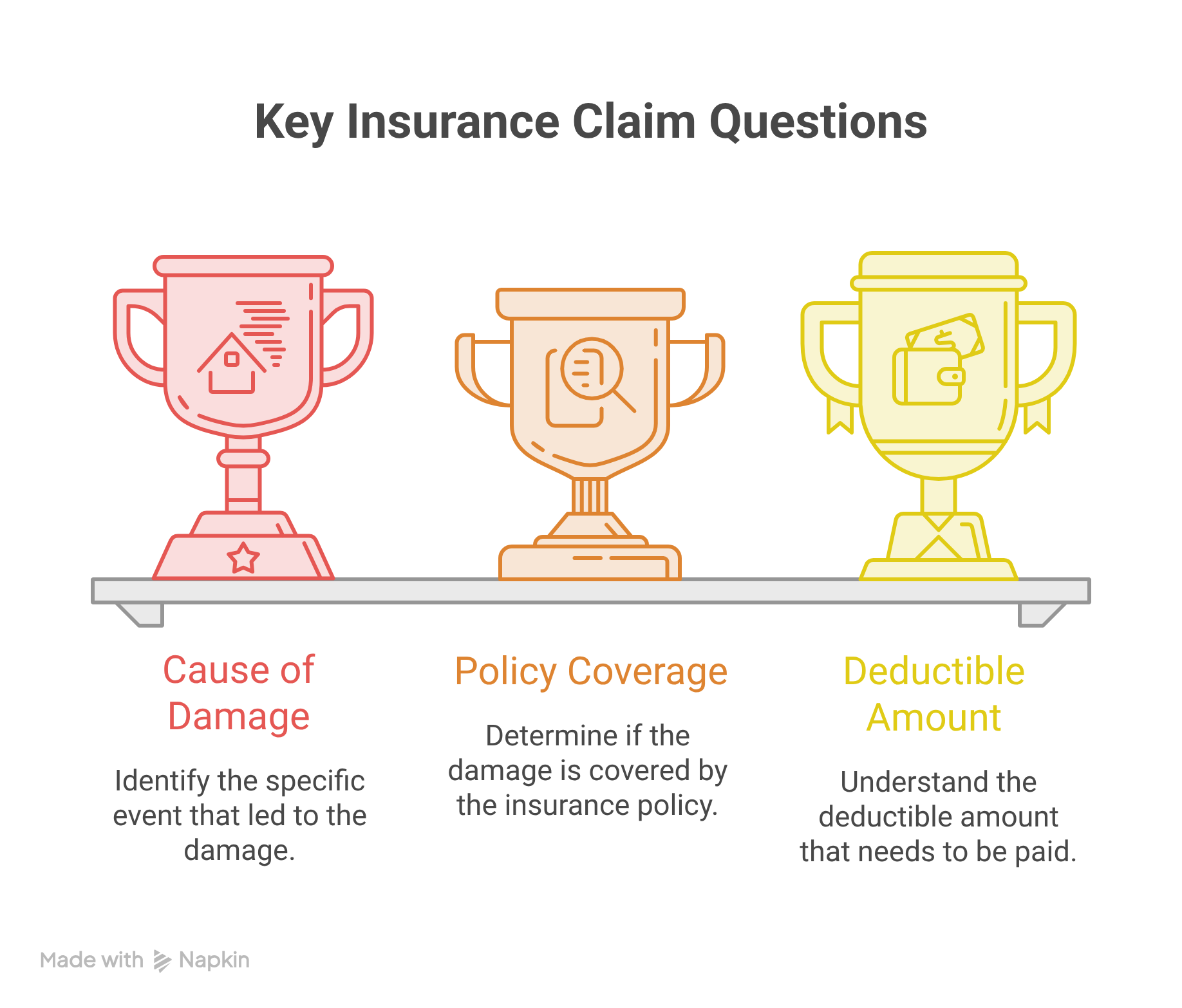
The first question is what caused the damage.
Was it wind, hail, fire, impact, vandalism, water, deterioration, installation failure, or something else?
The second question is whether that cause is covered by the policy.
The third question is whether an exclusion limits or eliminates coverage.
The fourth question is how much the deductible is.
The fifth question is what the policy says about repair, replacement, depreciation, matching, and related costs.
Those five questions can shape almost everything that happens next.
The Deductible Can Change the Entire Claim
Even when the damage is covered, the deductible still applies.
Suppose siding repairs are estimated at 4,000 dollars.
If the deductible is 2,500 dollars, the potential insurance payment may be much smaller than the homeowner initially expects.
Some policies also use special deductibles for wind or hail.
These may be calculated differently from a standard flat deductible.
A percentage deductible can become significant on a home with a large dwelling coverage amount.
That is why homeowners should understand the deductible before assuming that filing a claim will result in a meaningful payment.
Policy Language Matters More Than Assumptions
Two homeowners on the same street can experience the same storm and receive different insurance outcomes.
Why?
Their policies may not be identical.
One may have replacement cost coverage.
Another may have actual cash value coverage.
One may have a cosmetic damage exclusion.
Another may not.
One may have additional coverage for building code requirements.
Another may have limited protection for those costs.
One policy may contain specific language about matching.
Another may approach matching differently.
That is why the declarations page is only the beginning.
Homeowners may also need to review the policy forms, endorsements, exclusions, deductible provisions, and any special language applying to exterior surfaces.
Functional Damage and Cosmetic Damage Are Not Always Treated the Same
This can become especially important with hail.
Imagine hail leaves visible marks on siding but does not puncture, crack, loosen, or compromise the material.
The homeowner sees damage.
The insurer may ask whether the siding still performs its intended function.
Some policies contain provisions that treat cosmetic damage differently from functional damage.
This does not mean visible damage never matters.
It means the exact policy wording matters.
The Condition of the Siding Before the Storm Can Matter
Insurance adjusters may look at the siding age and condition.
They may examine whether panels were already loose.
They may look for fading, brittleness, previous cracking, rot, poor fastening, or improper installation.
They may compare the damage pattern with known storm conditions.
They may also look at weather information, neighboring properties, impact marks, fastener patterns, and previous photographs.
That is why documentation can become so important.
Photos taken before the storm may help establish the previous condition of the siding.
Photos taken immediately afterward may help establish what changed.
Good Documentation Does Not Guarantee Coverage
It does something equally important.
It makes the facts clearer.
A contractor such as Sunrise Exterior can document the visible damage, identify what needs repair, measure affected areas, evaluate related exterior components, and provide a detailed construction estimate.
But the contractor does not determine insurance coverage.
The insurance company interprets the policy.
Keeping those roles separate helps homeowners avoid unrealistic promises while still getting the information they need to understand the physical condition of their home.
And when siding damage happens after an Illinois storm, understanding those facts early can make the entire repair process considerably easier.
When Will Homeowners Insurance Usually Cover Damaged Siding?
Homeowners insurance is generally built around a simple idea.
Something unexpected happens.
Your home is damaged.
The policy may help pay for the resulting loss if the event is covered.
That distinction is important because insurance is designed primarily for sudden and accidental damage rather than predictable deterioration.
If siding slowly fades over fifteen years, that is one situation.
If a violent storm tears siding from the house in fifteen minutes, that is something very different.
Sudden Damage Has a Better Chance of Being Covered
Common events that may result in covered siding damage include windstorms, tornadoes, hail, fire, smoke, lightning, falling trees, falling branches, vehicle impact, and vandalism.
Certain sudden accidental losses may also qualify depending on exactly what happened and what the policy covers.
But even when the cause sounds like a commonly covered event, homeowners should not assume coverage is guaranteed.
The policy still controls the claim.
Wind and Storm Damage
Imagine a severe storm moves through an Illinois neighborhood.
Before the storm, the siding is attached and functioning normally.
Afterward, several panels are missing and another section has been pulled loose from the wall.
That creates a relatively clear question for the insurer.
Did covered wind cause the damage?
If the answer is yes and no relevant exclusion applies, the siding repair may qualify for coverage after the deductible and other policy provisions are considered.
Hail Damage
Hail can create a different type of siding claim.
Depending on the siding material and severity of the storm, hail may leave cracks, punctures, dents, chips, or other impact damage.
The insurer may examine whether the damage affects the siding's function or only its appearance.
That distinction can matter because some policies contain special provisions concerning cosmetic damage.
Falling Trees and Branches
Storms can also send branches or entire trees into the side of a house.
The visible siding damage may only be the beginning.
An impact could potentially affect trim, windows, gutters, house wrap, sheathing, roofing, or even structural components.
Homeowners should document the entire affected area rather than focusing exclusively on the most obvious broken siding panel.
Fire, Vandalism, and Vehicle Impact
Storms are not the only events that can damage siding.
Fire and smoke may damage exterior materials.
A vehicle could strike part of the house.
Vandalism could damage siding or other exterior components.
These events may potentially fall within homeowners coverage depending on the circumstances and policy terms.
Coverage Is Never Automatic
This point deserves repeating.
A covered type of event does not automatically mean every dollar of resulting work will be paid.
The insurer may investigate the cause.
The deductible will usually apply.
Depreciation may affect the initial payment.
Some damage may be excluded.
The approved repair scope may differ from the contractor's proposed scope.
Matching can become an issue.
Code requirements can add another layer.
That is why the most useful question is not simply, does insurance cover siding?
The better question is, does my policy cover this specific siding damage caused by this specific event?
Will Insurance Pay for Wind Damaged Siding?
Wind is one of the most important causes of siding damage for Illinois homeowners.
A powerful thunderstorm does not need to remove an entire wall of siding to create a problem.
Sometimes the damage is dramatic.
Panels are scattered across the yard.
Corners are ripped away.
Large sections are exposed.
Other times, wind damage is subtle.
A panel may have lifted.
A fastener may have torn through the material.
One section may have shifted just enough to compromise how it connects with the surrounding siding.
Wind Damage Can Look Different From House to House
The severity of damage depends on several factors.
Wind speed matters.
Wind direction matters.
The siding material matters.
Installation quality matters.
The age and condition of the siding matter.
The shape and exposure of the house can matter too.
One side of a property may experience significant damage while another appears untouched.
That is why inspecting each elevation can be useful after a serious storm.
Signs of Possible Wind Damage
Missing siding is the obvious sign.
Loose panels are another.
Homeowners may also notice lifted sections, displaced panels, cracking near attachment points, torn fasteners, bent trim, or sections that no longer sit correctly against the house.
Some damage may be difficult to see from the ground.
That does not mean homeowners should start pulling panels away from the house themselves.
The goal is to document the condition without creating additional damage.
The Insurance Company May Ask Whether the Damage Is Really New
This is where wind claims can become complicated.
Suppose siding was already brittle before the storm.
Maybe several panels were loose.
Maybe installation problems existed for years.
Then a major storm arrives.
The homeowner discovers damage the next morning.
The timing suggests wind.
But the insurer may still investigate whether wind actually caused the damage or whether existing deterioration and installation problems were primarily responsible.
That is why the condition of the siding before the storm can become important.
Evidence Can Help Tell the Story
Photographs taken before and after the storm may be useful.
Weather information may be useful.
Damage to neighboring properties may provide context.
The insurer or contractor may examine fasteners, impact patterns, displaced panels, gutters, roofing, windows, trim, and other exterior components.
A contractor can also document where damage appears and explain what would be required to repair it.
Inspect More Than the Siding
Strong wind rarely respects product categories.
A storm that damages siding may also affect the roof.
Gutters may loosen.
Soffits and fascia may be damaged.
Flashing may move.
Windows or trim may be affected.
Tree branches may strike several areas of the property.
For Illinois homeowners, Sunrise Exterior can evaluate siding alongside related exterior components so the physical scope of the damage is easier to understand.
That does not mean Sunrise Exterior decides what insurance owes.
The insurer makes the coverage determination under the policy.
But a detailed exterior inspection can help homeowners understand what was damaged, what needs repair, and whether problems extend beyond the siding they first noticed.
After a major Illinois windstorm, that bigger picture can matter considerably.
Will Insurance Pay for Hail Damaged Siding?
Hail can damage far more than a roof.
Depending on the siding material and storm intensity, hail can cause cracks, dents, punctures, chips, and visible impact marks.
If hail is a covered cause of loss under the homeowners policy, resulting siding damage may be covered.
But there is an important distinction.
Functional Damage Versus Cosmetic Damage
A cracked or punctured panel is different from a small surface mark that changes appearance without affecting performance.
Some policies contain provisions that limit coverage for cosmetic damage.
That makes photographs, inspection findings, and the actual policy language especially important.
Homeowners should also inspect nearby gutters, roofing, windows, screens, and trim since hail damage may appear across several exterior components.
Will Insurance Pay if a Tree Damages the Siding?
When a tree or large branch strikes a house, siding may only be the damage you can see first.
The impact could also affect sheathing, house wrap, trim, windows, gutters, roofing, or structural materials underneath.
If falling object damage is covered under the policy, resulting siding damage may potentially qualify for coverage.
Document the affected area before cleanup whenever practical.
Take wide photographs showing where the tree or branch landed, then capture closer images of damaged siding and surrounding components.
What Types of Siding Damage Are Usually Not Covered?
Homeowners insurance is not designed to replace siding simply because it has reached the end of its useful life.
Problems caused by normal aging, fading, long term moisture, rot, insects, poor maintenance, improper installation, manufacturing defects, workmanship problems, and gradual deterioration are commonly treated differently from sudden covered losses.
Flood damage is also generally excluded from standard homeowners insurance.
Maintenance Still Belongs to the Homeowner
This distinction matters.
If gutters have leaked against the same wall for years and the siding eventually rots, replacing that siding is generally a maintenance issue rather than a sudden insurance loss.
If a storm suddenly tears otherwise functional siding from that same wall, the insurance question is different.
A Storm Does Not Automatically Make Old Siding Damage Covered
Timing alone does not prove cause.
If siding was already brittle, cracked, loose, or deteriorated before a storm, an insurer may investigate how much of the observed damage actually resulted from the weather event.
Adjusters may consider siding age, previous condition, installation patterns, weather reports, photographs, fasteners, nearby damage, and signs of wind or hail impact.
This is why homeowners should avoid describing every problem discovered after a storm as storm damage.
Accuracy matters.
How Much Does the Insurance Deductible Matter?
A lot.
Suppose the approved siding damage totals 4,000 dollars and the applicable deductible is 2,500 dollars.
That leaves approximately 1,500 dollars before considering other policy adjustments.
Some policies may have separate wind or hail deductibles.
Percentage deductibles can become particularly significant.
For example, a 2 percent deductible applied to 300,000 dollars of dwelling coverage would equal 6,000 dollars.
Understanding the deductible early can help homeowners evaluate the financial reality of a claim.
Replacement Cost Versus Actual Cash Value
How the policy values damaged siding can dramatically affect the payment.
Replacement cost coverage generally considers the cost of replacing damaged property with material of similar kind and quality, subject to the policy terms.
Actual cash value generally accounts for depreciation.
Older siding may therefore produce a substantially smaller initial payment.
Some replacement cost claims may also withhold depreciation initially and release eligible recoverable depreciation after repairs are completed and documented.
Homeowners should ask the adjuster whether depreciation was applied, whether it is recoverable, and what must be submitted to recover it.
Will Insurance Replace All the Siding on the House?
Not automatically.
The insurer may approve individual panels.
One section.
One wall.
Several elevations.
Or, depending on the circumstances, a broader replacement.
The extent of approved work can depend on the physical damage, policy language, material availability, repair feasibility, matching requirements, and applicable rules.
A storm damaging one wall does not automatically create a whole house siding replacement.
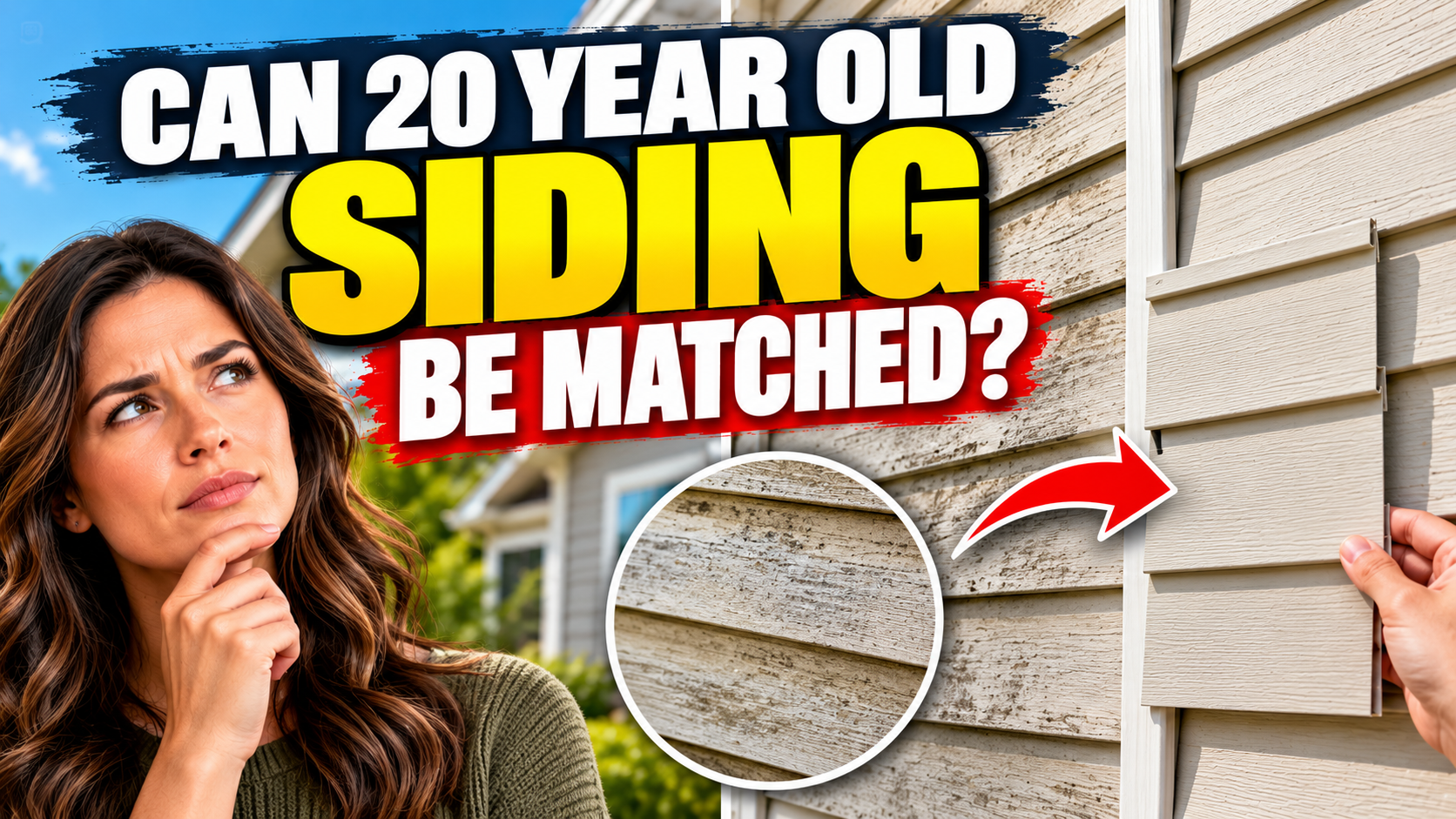
What Happens if the Original Siding Is Discontinued?
This is where siding claims can become complicated.
The damaged siding may be twenty years old.
The manufacturer may no longer produce it.
The profile may have changed.
The original color may be unavailable.
Even if a similar product exists, years of sunlight may have changed the appearance of the existing material.
A Mismatch Does Not Automatically Mean Full Replacement
Whether additional siding must be replaced can depend on policy wording, applicable law, material availability, and whether a reasonable repair can be completed.
Useful evidence can include product samples, manufacturer information, supplier statements, photographs, measurements, and contractor documentation explaining why the existing material cannot be reasonably matched.
Does Insurance Have to Match Existing Siding in Illinois?
Matching questions deserve particular attention because the answer may depend on the specific policy, circumstances of the loss, repair feasibility, and applicable Illinois requirements.
Homeowners should avoid assuming that any visible difference automatically requires replacement of every elevation.
Instead, ask the insurer to explain the approved repair scope and relevant policy provisions in writing.
If matching material cannot be found, documentation from suppliers and contractors can help establish exactly what is available.
What if Only One Side of the House Is Damaged?
Insurance may approve repairs only to the damaged elevation.
Whether that is practical depends on the siding.
Can matching material be obtained?
Can damaged panels be removed without harming surrounding material?
Will the repaired wall have a substantially different appearance?
Does the policy address matching?
These questions should be answered before assuming either a small repair or complete exterior replacement is required.
What if the Siding Damage Is Only Cosmetic?
Visible damage and functional damage are not always treated identically.
A hailstorm might leave dents or surface marks while the siding remains attached and continues performing its intended function.
Some policies contain cosmetic damage provisions that can affect how this type of loss is handled.
Read the policy carefully and ask the insurer for a written explanation when cosmetic damage is excluded or limited.
Will Insurance Pay for Siding That Has Rotted?
Usually not when the rot developed gradually.
Long term moisture exposure, neglected maintenance, and deterioration are commonly treated differently from sudden accidental losses.
More importantly, rotted siding is often evidence of a larger moisture problem.
The source could involve gutters, flashing, roof drainage, windows, or another exterior component.
Replacing the visible siding without correcting the moisture source can simply hide the problem temporarily.
Sunrise Exterior can help Illinois homeowners evaluate these related exterior components and determine what actually needs attention.
What if Bad Installation Caused the Siding Damage?
Improper installation creates another complicated situation.
Siding may buckle, loosen, crack, or fail because it was fastened incorrectly or installed without proper clearances.
These workmanship issues are generally different from sudden storm damage.
A storm can make the situation more complicated if existing installation problems contributed to the failure.
Previous invoices, warranties, photographs, and installation records may help establish the history of the siding.
Will Insurance Cover Hidden Damage Behind the Siding?
Sometimes the real damage does not become visible until siding is removed.
Contractors may discover damaged sheathing, wet insulation, compromised house wrap, framing damage, or moisture intrusion underneath.
If that concealed damage resulted from the same covered event, it may potentially become part of the claim depending on the policy.
Document newly discovered conditions before continuing extensive removal when practical and give the insurer an opportunity to inspect.
What About Building Code Upgrades?
Repairing siding can sometimes trigger requirements that did not exist when the house was originally built.
The project may require updated weather barriers, flashing, sheathing, insulation, or other construction details.
Insurance does not necessarily pay every additional expense created by newer building requirements.
Ordinance or law coverage may help with certain eligible costs when it is included in the policy.
Homeowners should check whether they have this coverage and what limits apply.
What Should You Do Immediately After Siding Damage?
First, protect the property from additional damage.
Then document everything.
Photograph every affected elevation.
Capture close images of cracks, missing panels, dents, punctures, loose material, damaged fasteners, and related exterior problems.
Photograph gutters, roofing, trim, windows, soffits, and fascia when they appear affected.
Keep receipts for reasonable temporary repairs.
Avoid throwing damaged materials away before inspection whenever practical.
Why Preexisting Photos Can Be Extremely Helpful
The best photograph after a storm shows the damage.
The best photograph before a storm shows what changed.
Older real estate listing photographs, personal pictures, security camera footage, previous inspection photographs, and home improvement records may help establish the condition of the siding before the reported loss.
That can be particularly valuable when questions arise about deterioration or previous damage.
Review Your Insurance Policy Before Assuming Anything
Look beyond the headline coverage amount.
Review dwelling coverage, covered causes of loss, exclusions, wind and hail provisions, deductibles, cosmetic damage language, replacement cost provisions, actual cash value provisions, matching language, ordinance or law coverage, deadlines, and endorsements.
If something is unclear, ask.
Getting an explanation in writing can be particularly useful when coverage or repair scope becomes disputed.
How to Report a Siding Insurance
Claim
Prepare the basic facts.
Policy information.
Date of loss.
Suspected cause.
Photographs.
Video.
Damage description.
Temporary repair receipts.
Contractor estimates.
Information about related exterior damage.
Accuracy is essential.
Do not exaggerate the loss or describe old deterioration as new storm damage.
A credible claim begins with credible documentation.
Why You Should Get a Detailed Siding Contractor Estimate
A useful estimate should explain the work rather than simply provide one large number.
It can identify materials, labor, removal, disposal, trim, flashing, house wrap, sheathing, affected elevations, and other necessary components.
It can also distinguish visible storm damage from unrelated deterioration when possible.
Sunrise Exterior can help Illinois homeowners inspect siding, document physical conditions, and develop a detailed repair scope.
The contractor explains the construction needs.
The insurance company determines coverage.
That distinction protects everyone involved.
What Should You Compare Between the Contractor and Adjuster Estimates?
Do not compare only the final totals.
Compare what each estimate actually includes.
Look at siding quantities, affected elevations, trim, corners, soffits, fascia, flashing, weather barriers, disposal, labor, taxes, related damage, potential code work, depreciation, and the deductible.
A difference in price may actually be a difference in scope.
Understanding that distinction makes the conversation much more productive.
What Should You Do if the Siding Claim Is Denied?
Start by asking for the decision in writing.
Identify the policy provision supporting the denial.
Then compare that explanation with the photographs, contractor findings, weather information, product information, and other available evidence.
If relevant information was overlooked, homeowners may request a reinspection.
For larger disputes, additional options may include the policy's dispute process, the state insurance department, a licensed public adjuster, or an insurance attorney.
A denial is not automatically wrong.
But homeowners should understand why the claim was denied.
What if Insurance Pays Less Than the Contractor Estimate?
A difference between estimates does not automatically mean either party made a mistake.
The difference may involve labor, material pricing, quantities, depreciation, code requirements, matching, repair methods, or the amount of damage included.
Compare the documents carefully.
If legitimate work appears missing, supporting photographs, measurements, supplier information, and contractor explanations can help clarify the disagreement.
Common Siding Insurance Scenarios at a Glance
Scenario
Typical Coverage Tendency
Main Issue to Check
Wind removes siding during covered storm
More likely covered
Wind coverage and deductible
Hail cracks siding
More likely covered
Functional versus cosmetic damage
Tree strikes house
Potentially covered
Extent of impact damage
Siding fades over time
Usually not covered
Normal aging
Long term gutter leak causes rot
Usually not covered
Maintenance and gradual moisture
Bad installation causes buckling
Usually not covered
Workmanship
Flood damages siding
Usually excluded from standard policy
Separate flood coverage
Storm damages part of old siding
Potentially covered
Repair scope and matching
Original siding is discontinued
Depends
Policy and matching requirements
Hidden sheathing damage is discovered
Potentially covered
Cause of concealed damage
Common Mistakes Homeowners Make After Siding Damage
Waiting too long to photograph the damage can make documentation harder.
Throwing damaged material away can eliminate useful evidence.
Making extensive permanent repairs before inspection may complicate the process.
Assuming every problem discovered after a storm was caused by the storm can create credibility issues.
Another mistake is assuming insurance automatically owes complete siding replacement.
And homeowners should be cautious around
The blog is already finished through Section 32 and the very short conclusion in my previous response.
The final section is:
Insurance May Pay for Damaged Siding, but the Cause Comes First
Will insurance pay for damaged siding?
It may when a covered event such as wind, hail, fire, or falling debris causes sudden damage. Aging, rot, poor maintenance, and gradual deterioration are generally different matters.
For Illinois homeowners, the smartest first moves are simple.
Document the damage, protect the home, understand the policy, and get the exterior properly inspected.
Sunrise Exterior can help determine what the siding actually needs so homeowners can move from storm damage to a clear repair plan.
Recent Posts