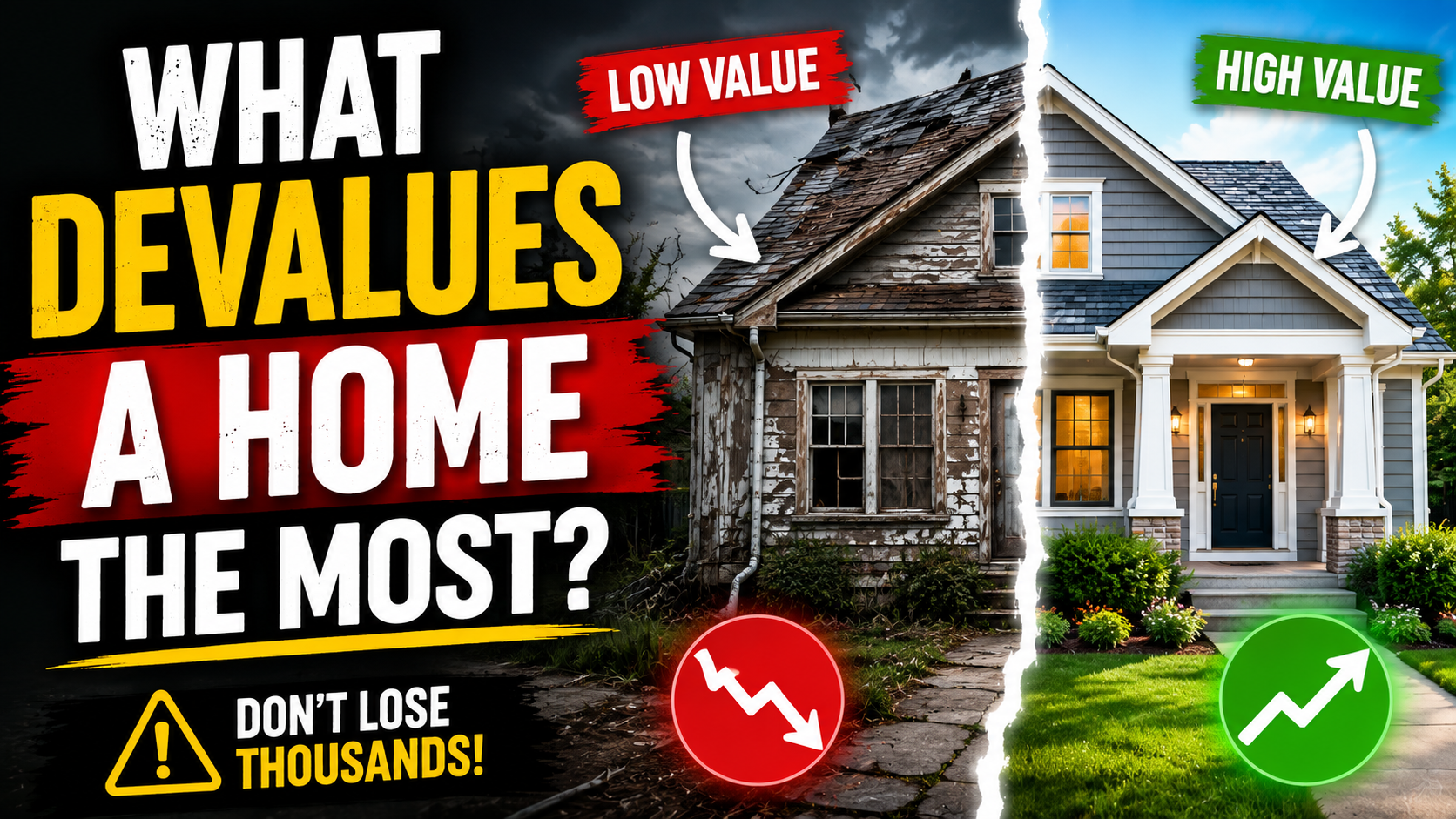
What Decreases Property Value the Most
What Decreases Property Value the Most
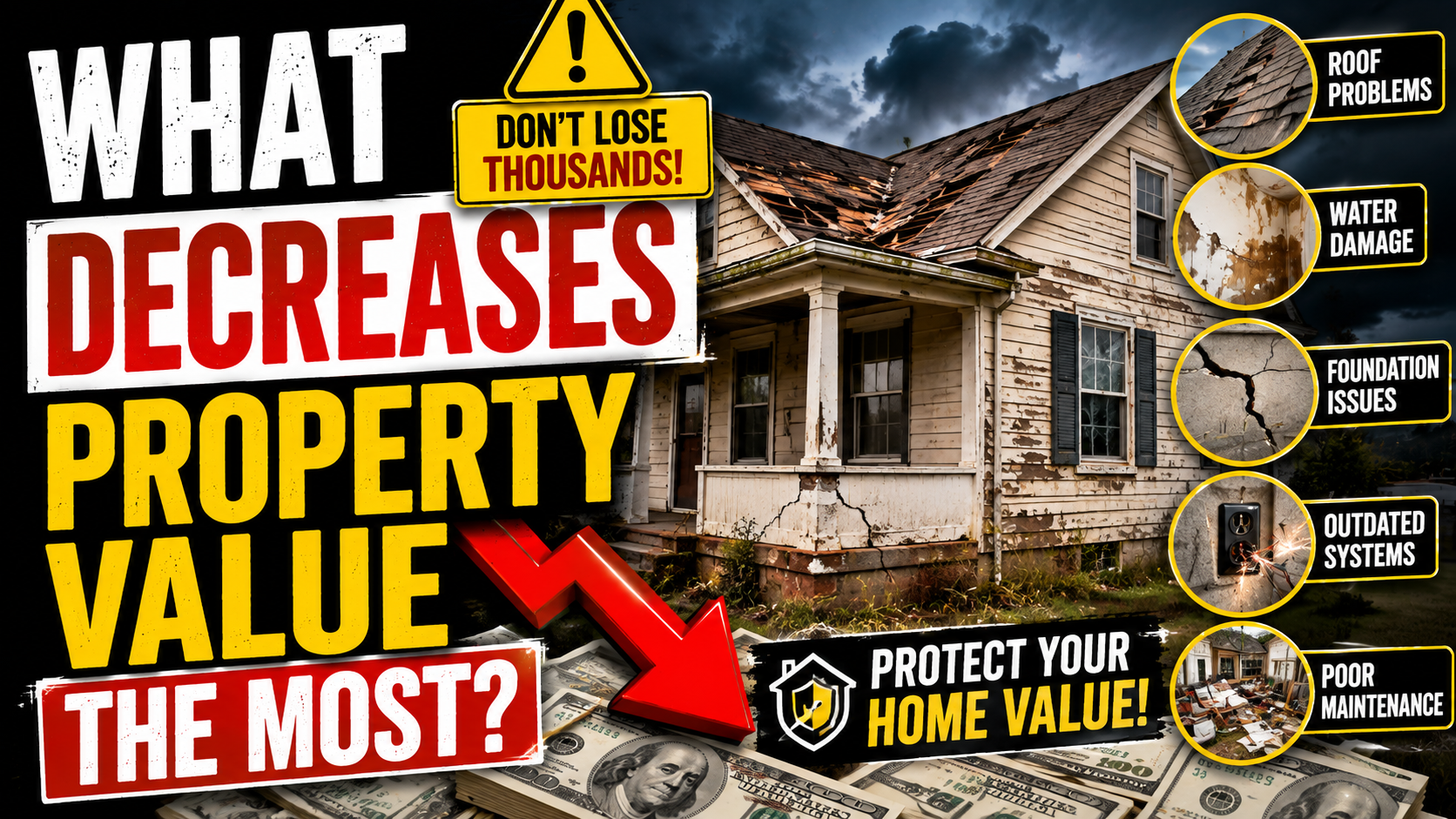
The Biggest Property Value Killers Are Usually Not Cosmetic
Homeowners love to worry about the visible stuff.
The old countertops.
The dated bathroom tile.
The paint color that somehow looked fashionable ten years ago.
The worn flooring.
Those things can absolutely affect how buyers feel about a home.
But they are rarely the biggest threats to property value.
The problems that tend to hit value hardest are usually the ones that create fear, uncertainty, expense, or a smaller pool of willing buyers.
That means location problems, structural damage, water intrusion, a failing roof, severe deferred maintenance, unsafe systems, environmental hazards, legal complications, and unpermitted construction can matter far more than an outdated kitchen.
A buyer can repaint a bedroom.
They can replace countertops.
They can swap out light fixtures.
What they do not want is to discover that the roof is leaking into the attic, the basement takes on water, the foundation is moving, or an addition was built without proper approval.
That is where property value can start taking a much more serious hit.
Buyers Do Not Just Price the Repair
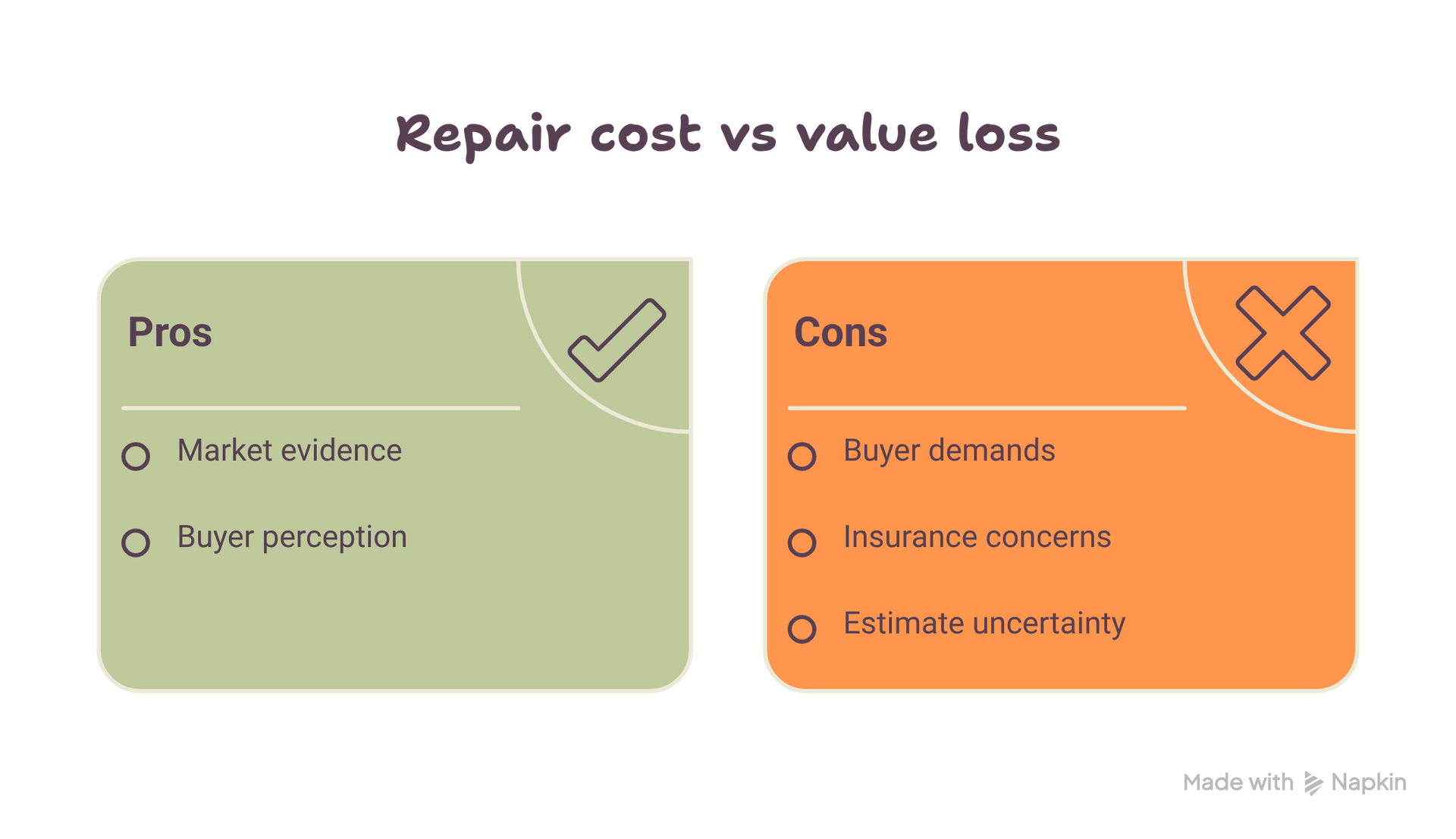
One of the most important things homeowners should understand is that buyers do not always subtract only the estimated cost of fixing a problem.
They also price the uncertainty surrounding it.
Imagine a buyer sees a ceiling stain.
Maybe the repair costs 2,000 dollars.
Or maybe the roof has been leaking for years.
Maybe insulation is wet.
Maybe framing has deteriorated.
Maybe mold is developing behind the drywall.
Suddenly, the buyer is not thinking about one repair.
They are thinking about everything they cannot see.
That fear can affect the offer much more than the visible problem alone.
The same thing happens with foundation cracks, damaged siding, failing gutters, unsafe electrical systems, and poorly documented renovations.
Once buyers start wondering what else might be wrong, confidence falls quickly.
And when confidence falls, offers often follow.
Serious Problems Can Also Affect Financing and Insurance
Some property issues create more than negotiation problems.
They can interfere with the transaction itself.
Structural concerns may require additional evaluation.
Unsafe electrical conditions may concern insurers.
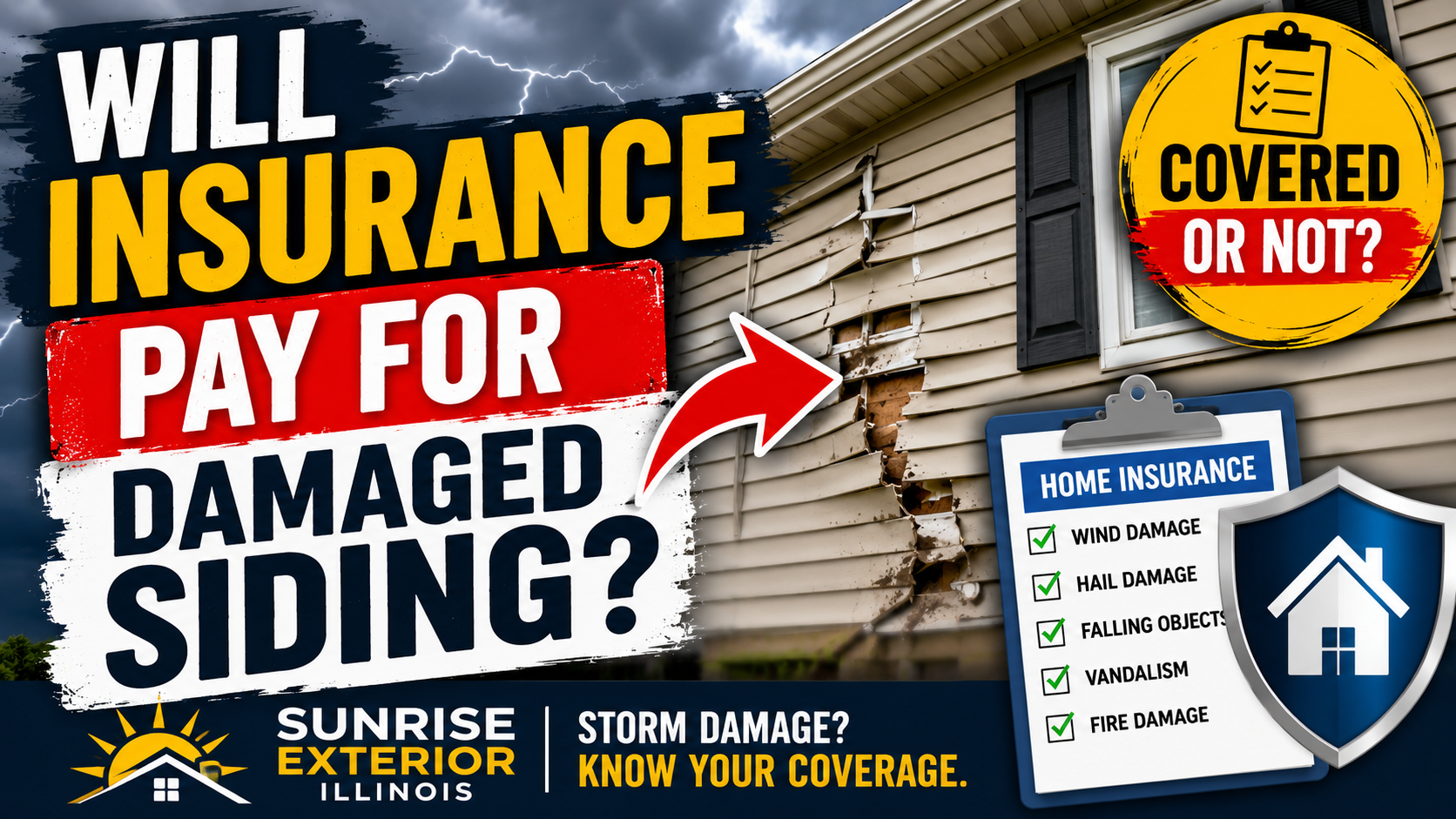
A badly deteriorated roof may create insurance problems.
Unpermitted additions may raise appraisal or lending questions.
Environmental hazards may require further investigation.
That means certain defects can reduce more than the price.
They can reduce the number of people who are realistically able or willing to buy the property.
A smaller buyer pool usually means less competition.
Less competition can mean weaker offers.
Location Can Be the Hardest Problem of All
Many property problems can eventually be repaired.
Location is different.
You can replace a roof.
You can repair siding.
You can correct drainage.
You can update plumbing.
You cannot move a highway away from the backyard.
You cannot eliminate nearby industrial noise.
You cannot completely remove flood risk simply by remodeling the kitchen.
That is why location can have such a powerful effect on property value.
A beautifully renovated home can still struggle if buyers strongly dislike where it sits.
Meanwhile, a modest home in a desirable area may retain strong value despite dated finishes.
Illinois Homes Have Another Major Variable
For homeowners in Illinois, exterior condition deserves special attention.
Illinois houses experience rain, snow, wind, storms, freezing temperatures, summer heat, and repeated seasonal changes.
Those conditions place constant pressure on roofing, siding, gutters, flashing, windows, doors, trim, and drainage systems.
A minor exterior weakness can become an interior problem surprisingly quickly.
A roof leak can become ceiling damage.
A clogged or failing gutter can contribute to water near the foundation.
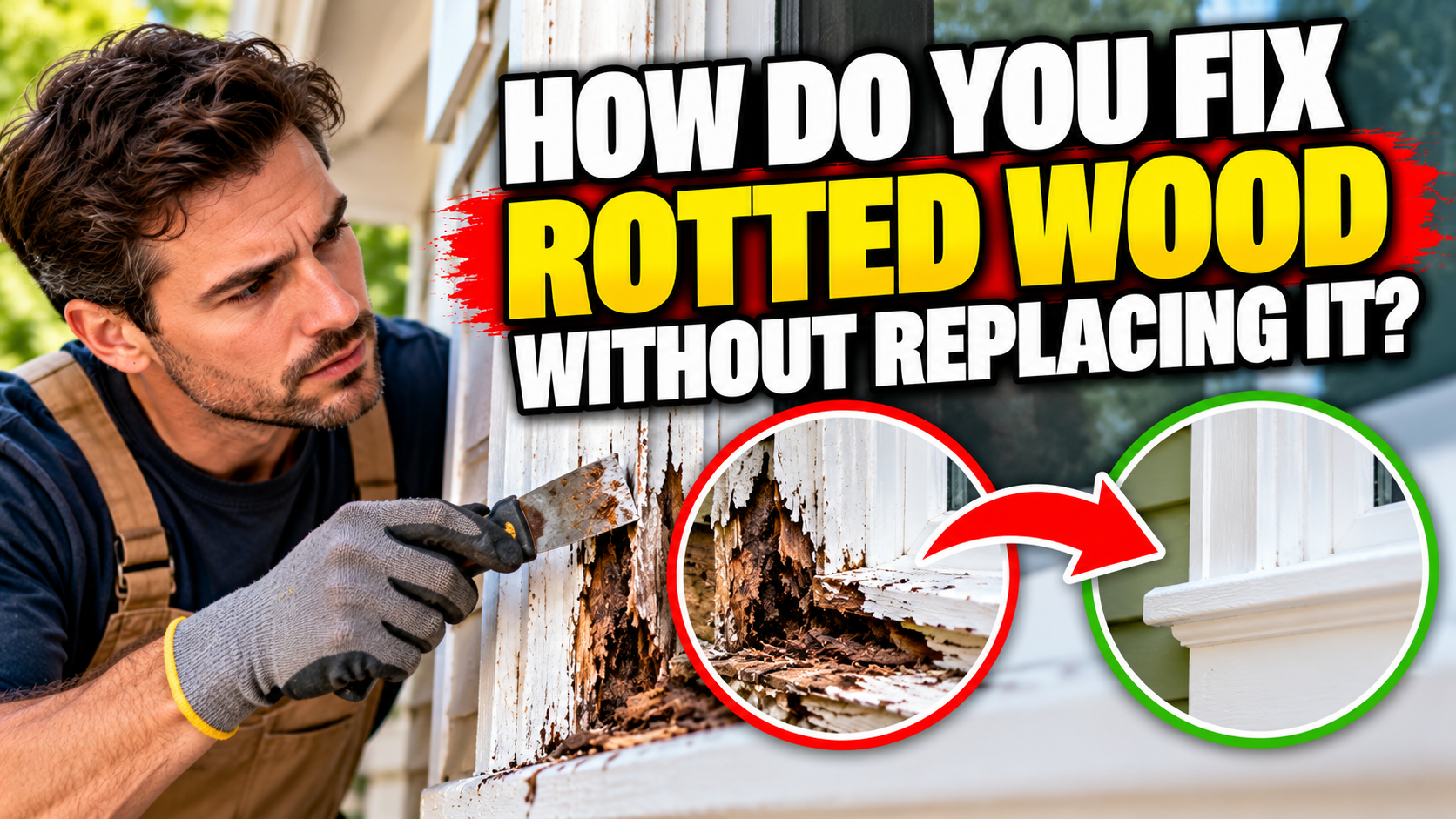
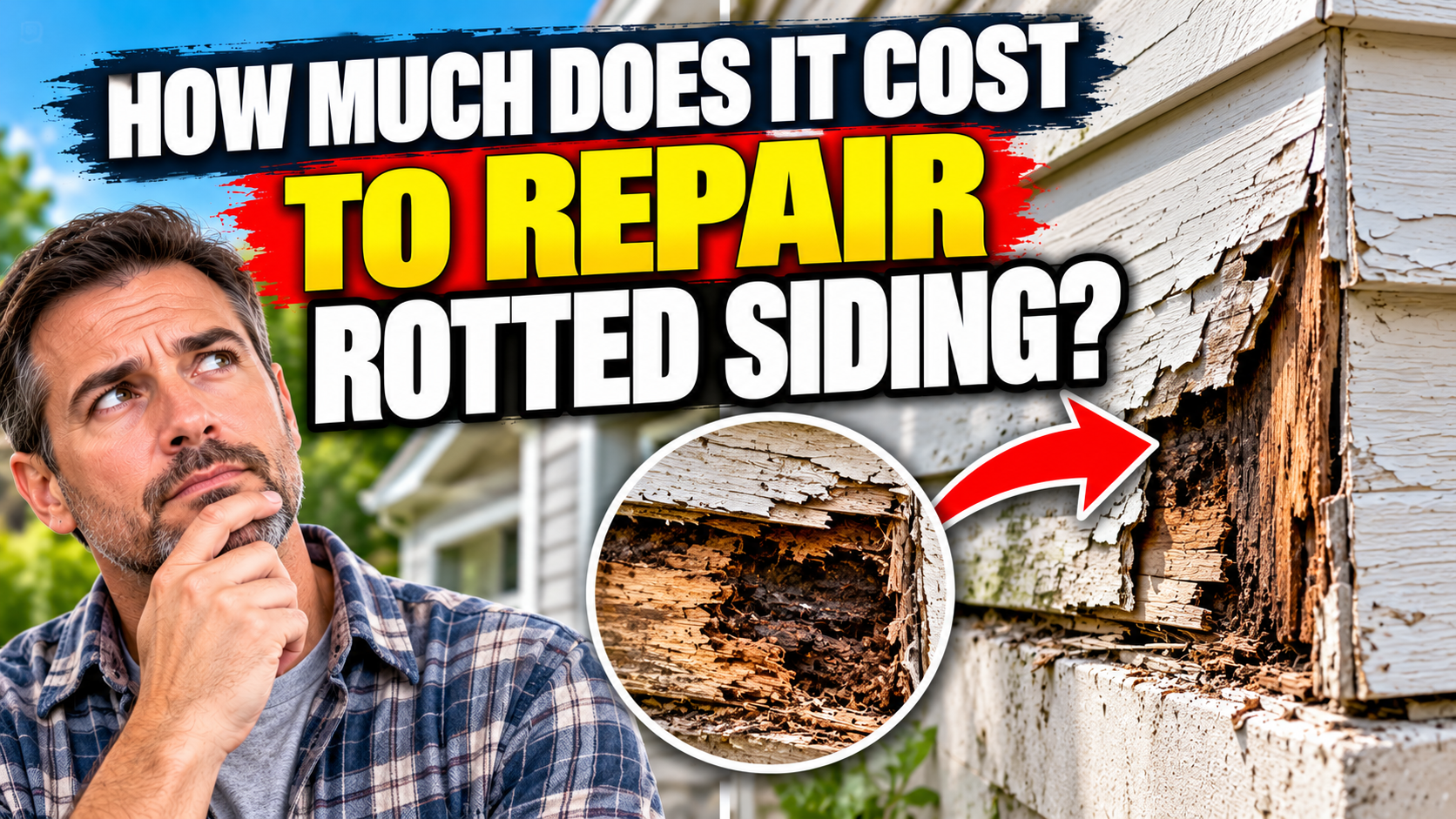
Damaged siding can allow moisture into wall assemblies.
Failed flashing can create hidden deterioration around windows, doors, chimneys, or roof transitions.
That is why an Illinois home improvement company such as Sunrise Exteriors can play an important role in protecting property value.
The goal is not simply making the exterior look newer.
It is helping the house continue doing the job buyers expect it to do.
Keep water out.
Protect the structure.
Reduce visible deterioration.
Preserve confidence.
Because when buyers see a home that looks protected and maintained, they are less likely to start mentally subtracting money before they even walk through the front door.
How Is Property Value Actually Reduced?
There is no universal formula.
A leaking roof does not automatically reduce every home by the same amount.
Foundation damage does not always equal a fixed percentage loss.
An outdated electrical system does not produce one predictable deduction.
Property value depends on the market.
That means location, comparable sales, property type, condition, buyer demand, repair cost, financing, insurance, and neighborhood expectations all influence how strongly a problem affects value.
Appraisers Look at Market Reaction
An appraiser does not normally start with the homeowner's repair estimate and simply subtract that amount from the value.
Instead, the analysis focuses heavily on comparable properties and how the market reacts to differences between them.
Fannie Mae appraisal guidance emphasizes that adjustments should reflect actual market reaction.
That distinction matters.
Suppose two similar houses recently sold nearby.
One was well maintained.
The other had significant roof deterioration.
If buyers consistently pay less for homes with similar roof problems, that market evidence can help support a value adjustment.
The construction invoice alone does not determine the answer.
Buyers do.
Repair Cost and Value Loss Are Not Always the Same
Imagine a roof needs 15,000 dollars of work.
It might seem logical to assume the house is worth exactly 15,000 dollars less.
But buyers may react differently.
Some might subtract approximately the repair cost.
Others may demand more because they do not want the inconvenience.
They may worry that additional damage exists.
They may be concerned about obtaining insurance.
They may fear the estimate will increase once work begins.
That uncertainty can push negotiations beyond the visible repair amount.
The opposite can also happen.
A defect may cost a great deal to correct while having a smaller effect on resale value if buyers do not react strongly to it.
This is why market evidence matters more than simple arithmetic.
Buyers Are Really Asking Five Questions
When buyers discover a serious property problem, they usually begin asking some version of the same questions.
How much will this cost?
How quickly does it need to be fixed?
What else could be damaged?
Can I insure this house?
Can I finance this house?
The more uncomfortable those answers become, the more pressure there may be on value.
A cosmetic issue usually produces a simpler calculation.
A buyer sees dated paint and thinks about repainting.
A buyer sees active water intrusion and starts thinking about roofing, insulation, drywall, mold, framing, drainage, and hidden damage.
That is a completely different psychological equation.
Condition Changes How Buyers Compare Homes
Property value is relative.
Buyers compare.
A home with a healthy roof, dry basement, maintained siding, functioning systems, and good documentation competes differently from a similar property with multiple unresolved problems.
Even if both homes have the same number of bedrooms and bathrooms, their perceived risk can be very different.
That difference can affect offers.
It can affect time on market.
It can affect inspection negotiations.
It can affect whether certain buyers walk away entirely.
One Major Problem Can Be Easier Than Ten Smaller Ones
Interestingly, a long list of small maintenance problems can sometimes create almost as much concern as one obvious large issue.
A buyer sees peeling paint.
Then damaged siding.
Then a loose gutter.
Then a leaking faucet.
Then a cracked window.
Then deteriorated trim.
None of those items may be catastrophic alone.
Together, they tell a story.
The house may not have been maintained carefully.
That is when buyers start looking harder.
And once they start looking harder, they may become suspicious of every unfamiliar sound, stain, crack, or repair.
Documentation Can Protect Confidence
Records matter.
Permits matter.
Invoices matter.
Service history matters.
Warranties matter.
A buyer may feel very differently about an older furnace that has been professionally maintained than one with no service history at all.
The same applies to roofing, siding, windows, plumbing, electrical work, drainage improvements, and previous repairs.
Documentation helps transform uncertainty into information.
Information is easier to price.
Uncertainty is where buyers often become conservative.
Exterior Condition Can Influence the Entire Value Conversation
For Illinois homeowners, the exterior frequently becomes one of the first places buyers form an opinion about maintenance.
They see the roof before the kitchen.
They see the siding before the bathroom.
They see the gutters, trim, windows, doors, driveway, and landscaping before stepping inside.
If those areas appear neglected, buyers may enter the house already expecting problems.
That is why Sunrise Exteriors can fit naturally into a property value protection strategy.
Addressing roofing, siding, gutters, windows, doors, and related exterior concerns can do more than improve appearance.
It can reduce uncertainty.
And reducing uncertainty can be one of the most important things a homeowner can do when protecting market value.
Location Problems Can Decrease Property Value More Than Almost Anything Else
There is one property problem no contractor can fully renovate away.
Location.
A homeowner can replace a roof, rebuild a deck, update plumbing, install new siding, and remodel every room in the house.
But if the property sits next to a loud highway, beneath a busy flight path, beside an industrial facility, or in an area with persistent flooding concerns, those disadvantages can remain.
That is why location can reduce property value more than many physical defects.
Buyers Pay for the Surroundings Too
When buyers purchase a house, they are not buying the structure alone.
They are also buying the street.
The neighborhood.
The commute.
The parking situation.
The noise level.
The nearby land uses.
The local amenities.
The perceived convenience.
The surrounding environment becomes part of the property.
A beautifully renovated interior cannot completely cancel out an external condition that buyers strongly dislike.
Common Location Problems That Can Hurt Value
Some of the most significant location concerns include persistent traffic noise, railroad noise, aircraft noise, nearby industrial activity, limited parking, poor access to major roads or transportation, flood exposure, environmental concerns, nuisance properties, and weak neighborhood demand.
Planned development can matter too.
A homeowner may love the current view behind the property.
If future zoning allows a large commercial project nearby, buyers may react differently.
The same can happen when neighborhood services decline or when local infrastructure appears poorly maintained.
Location Problems Can Shrink the Buyer Pool
This is where value pressure begins.
Some buyers may tolerate highway noise.
Others will not consider the property at any price they feel is reasonable.
Some buyers may accept limited parking.
Others will eliminate the house immediately.
A smaller buyer pool creates less competition.
Less competition can weaken negotiating power.
That does not mean every imperfect location becomes difficult to sell.
It means the property may need to compete differently.
Price, condition, presentation, and the strengths of the home become even more important.
A Modest House in a Strong Location Can Beat a Luxury House in a Difficult One
Imagine two properties.
One has a newly remodeled kitchen, luxury bathrooms, expensive flooring, and custom finishes.
But it backs directly onto a heavily traveled road.
The other is more modest inside but sits on a quiet street in an area buyers strongly prefer.
The second property may still attract stronger demand.
That illustrates a fundamental truth about real estate.
You can improve a house enormously.
You cannot always improve what surrounds it.
Condition Matters Even More When Location Is Not Perfect
If a homeowner cannot change the location, the controllable parts of the property become more important.
That includes exterior condition.
A house already facing a location disadvantage does not benefit from adding visible maintenance problems on top of it.
Damaged siding, failing gutters, roof deterioration, peeling trim, or neglected windows can make a buyer feel that the property has too many compromises.
This is where Sunrise Exteriors can support Illinois homeowners.
You may not be able to move the highway.
You can make sure the house itself feels protected, maintained, and cared for.
That distinction can matter when buyers are deciding whether the remaining tradeoffs are worth accepting.
Foundation and Structural Damage Can Trigger Serious Buyer Fear
Few phrases make buyers more nervous than structural problem.
Not because every crack means the house is failing.
It does not.
The fear comes from uncertainty.
How serious is the movement?
How much will it cost?
Will the repair solve the problem?
Is there hidden damage?
Will a lender care?
Will an insurer care?
Could the problem return?
Those questions can put immediate pressure on property value.
Structural Problems Feel Expensive Before Anyone Knows the Price
A damaged countertop has a visible boundary.
A structural concern often does not.
A buyer may see a large foundation crack and wonder whether the issue affects one section of wall or the entire house.
They may notice a sloping floor and question whether settlement is minor or ongoing.
They may see a sagging roofline and wonder whether framing has deteriorated.
That uncertainty can make buyers cautious very quickly.
Warning Signs Buyers May Notice
Potential structural warning signs can include large or expanding foundation cracks, bowed basement walls, significant settlement, uneven floors, doors and windows that suddenly stick, separation between walls and ceilings, sagging rooflines, structural wood deterioration, or failing retaining walls.
Termite or other insect damage can create additional concerns when structural wood has been affected.
None of these signs should automatically be treated as proof of catastrophic failure.
They should be treated as reasons to investigate.
Not Every Crack Means the Foundation Is Failing
Homes move.
Materials expand and contract.
Concrete can crack.
Older houses often show evidence of settlement.
The important question is whether the condition is cosmetic, stable, or structurally significant.
That is why suspicious movement should be evaluated by a qualified professional rather than hidden with patching compound and paint.
A cosmetic repair may improve appearance.
It does not answer the buyer's underlying question.
Why did the crack happen?
Structural Problems Can Affect More Than the Offer Price
Serious defects can influence several parts of a transaction.
Buyers may request large credits.
Inspectors may recommend further evaluation.
Lenders may require repairs.
Insurance may become more complicated.
Some buyers may walk away entirely.
Others may only proceed if the price reflects the perceived risk.
That can shrink the buyer pool to investors, cash purchasers, or buyers willing to take on significant repairs.
Once that happens, marketability can change dramatically.
Water and Structural Problems Often Appear Together
Foundation concerns do not always begin with the foundation itself.
Poor drainage can keep water around the structure.
Failing gutters can dump water close to the house.
Improper grading can direct runoff toward the basement.
Roof drainage can become foundation drainage.
That connection matters.
A homeowner may see a gutter problem as a minor exterior inconvenience.
Over time, uncontrolled water can contribute to much larger concerns around the building.
This is another reason exterior maintenance deserves attention before visible damage becomes severe.
Fix the Cause, Not Just the Evidence
If structural movement is related to drainage, moisture, or exterior water management, repairing the visible crack without correcting the source may not solve the larger problem.
The same principle applies to many home repairs.
A stain is evidence.
A crack is evidence.
Rot is evidence.
The real value protection comes from understanding why the problem developed.
For Illinois homeowners, Sunrise Exteriors can play a supporting role when roofing, gutters, siding, flashing, or exterior drainage conditions are contributing to water exposure around the property.
The goal is not to diagnose structural engineering problems from the exterior.
It is to help prevent exterior weaknesses from adding unnecessary stress to the house.
Because when buyers see a structural concern, they do not see one crack.
They see a question mark.
And in Here is the continuation from Section 5 through the short conclusion, keeping the same style and avoiding all hyphen and dash punctuation.
Water Intrusion Can Turn One Defect Into Several
Water is one of the most expensive visitors a house can have.
It rarely arrives alone.
A roof leak can damage insulation, drywall, framing, paint, flooring, and electrical components. Basement seepage can create odors, damaged finishes, mold concerns, and questions about drainage.
This is why buyers often react strongly to moisture.
They are not simply looking at the stain.
They are wondering what exists behind it.
Common sources include roof leaks, failed flashing, clogged gutters, poor grading, foundation seepage, plumbing leaks, flooding, humidity, and inadequate ventilation.
The smartest response is to correct the source before repairing the evidence.
Painting a ceiling stain while the roof continues leaking solves nothing.
For Illinois homeowners, roofing, siding, gutters, flashing, windows, and exterior water management deserve particular attention. Sunrise Exteriors can help homeowners evaluate exterior weaknesses that may allow moisture to become a much larger interior problem.
Mold Can Reduce Buyer Confidence Quickly
Mold gets attention because it introduces another layer of uncertainty.
Where did the moisture come from?
How long has it been there?
How far has it spread?
Will it return?
Mold is often a symptom of a moisture problem rather than an isolated event.
That means successful correction usually begins by finding and stopping the water source.
Professional remediation may be appropriate depending on the situation, followed by documentation showing what was corrected.
A previous mold problem does not automatically destroy property value forever.
An unresolved moisture problem is much more concerning.
Trying to hide stains or visible growth can make matters worse because buyers may begin questioning what else has been concealed.
Trust matters during a property transaction.
A Failing Roof Can Become a Major Property Value Problem
Buyers rarely get excited about paying for somebody else's roof.
If a roof is obviously near failure, the buyer may immediately begin calculating replacement cost.
Then come the other questions.
Has it leaked?
Is the attic damaged?
Is insulation wet?
Is there hidden rot?
Will insurance cover the property?
How quickly will replacement be necessary?
That uncertainty can become a significant negotiating problem.
Signs such as active leaks, damaged or missing shingles, deteriorated materials, failed flashing, sagging areas, attic staining, poor previous repairs, and ventilation problems deserve attention.
A new roof does not automatically increase the sale price by its full installation cost.
But a failing roof can suppress marketability.
Correcting the problem may therefore restore confidence and value rather than simply adding a luxury feature.
For Illinois properties exposed to snow, rain, storms, wind, freezing temperatures, and summer heat, roof condition should not be an afterthought.
Sunrise Exteriors can help homeowners evaluate roof condition and determine whether maintenance, repair, or replacement deserves consideration.
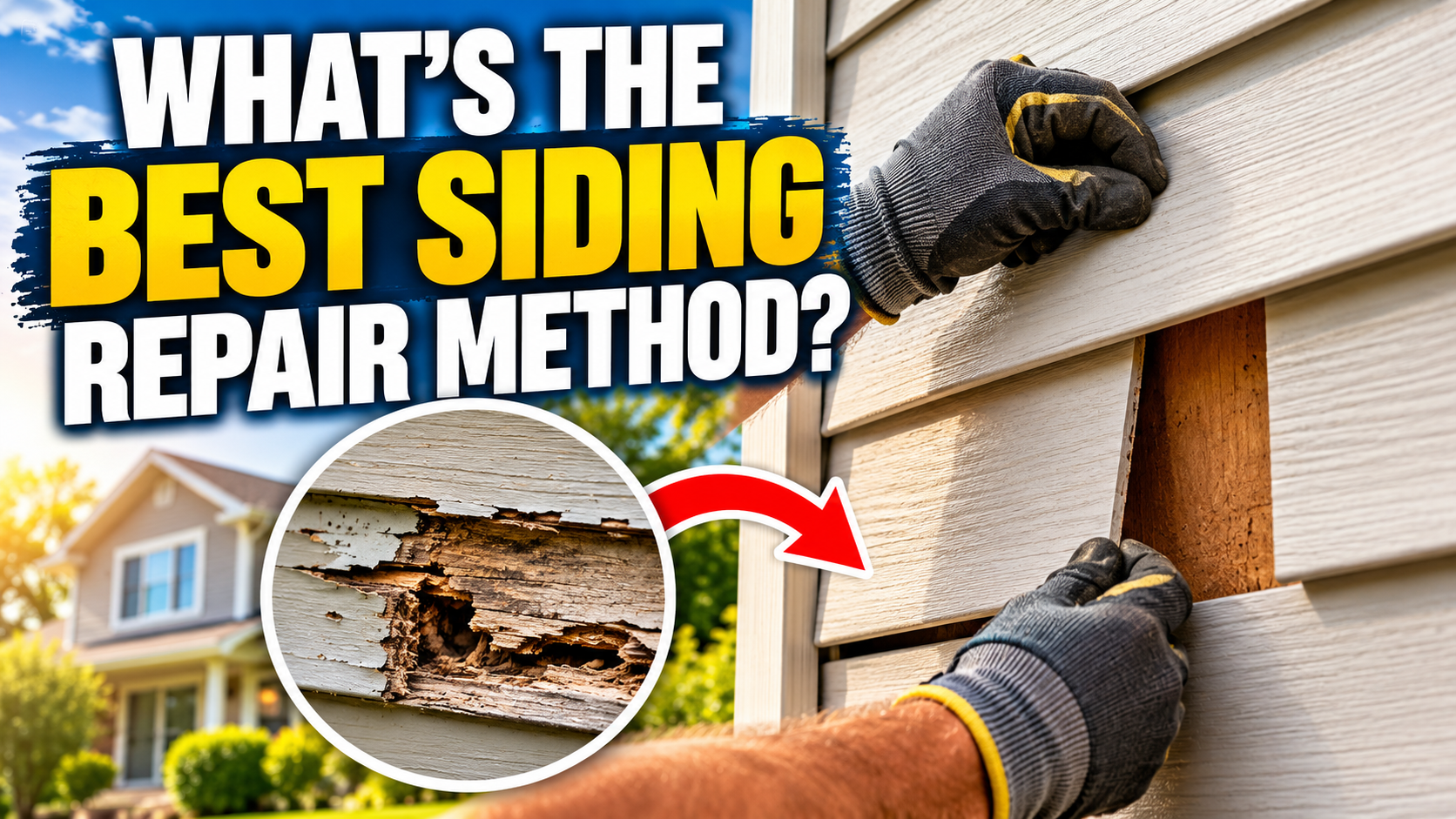
Damaged Siding and Exterior Deterioration Can Signal Bigger Problems
Siding has two audiences.
The weather.
And the buyer.
It helps protect the structure while also forming a large part of the home's appearance.
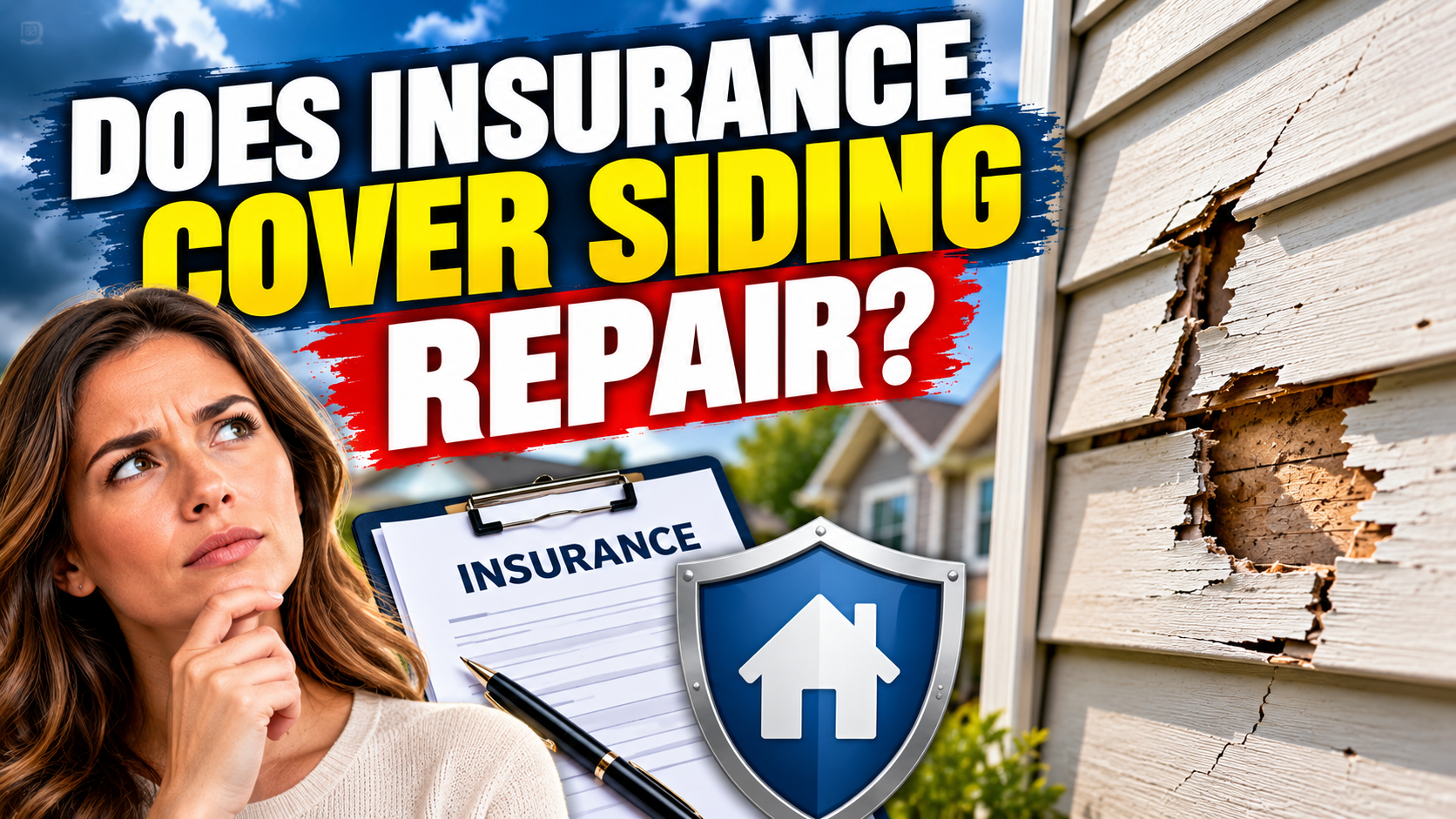
When siding is cracked, warped, loose, rotting, stained, or visibly deteriorated, buyers may see more than an appearance problem.
They may wonder whether moisture has reached the materials underneath.
They may also question how carefully the rest of the property has been maintained.
That is why exterior condition can influence buyer confidence before the front door opens.
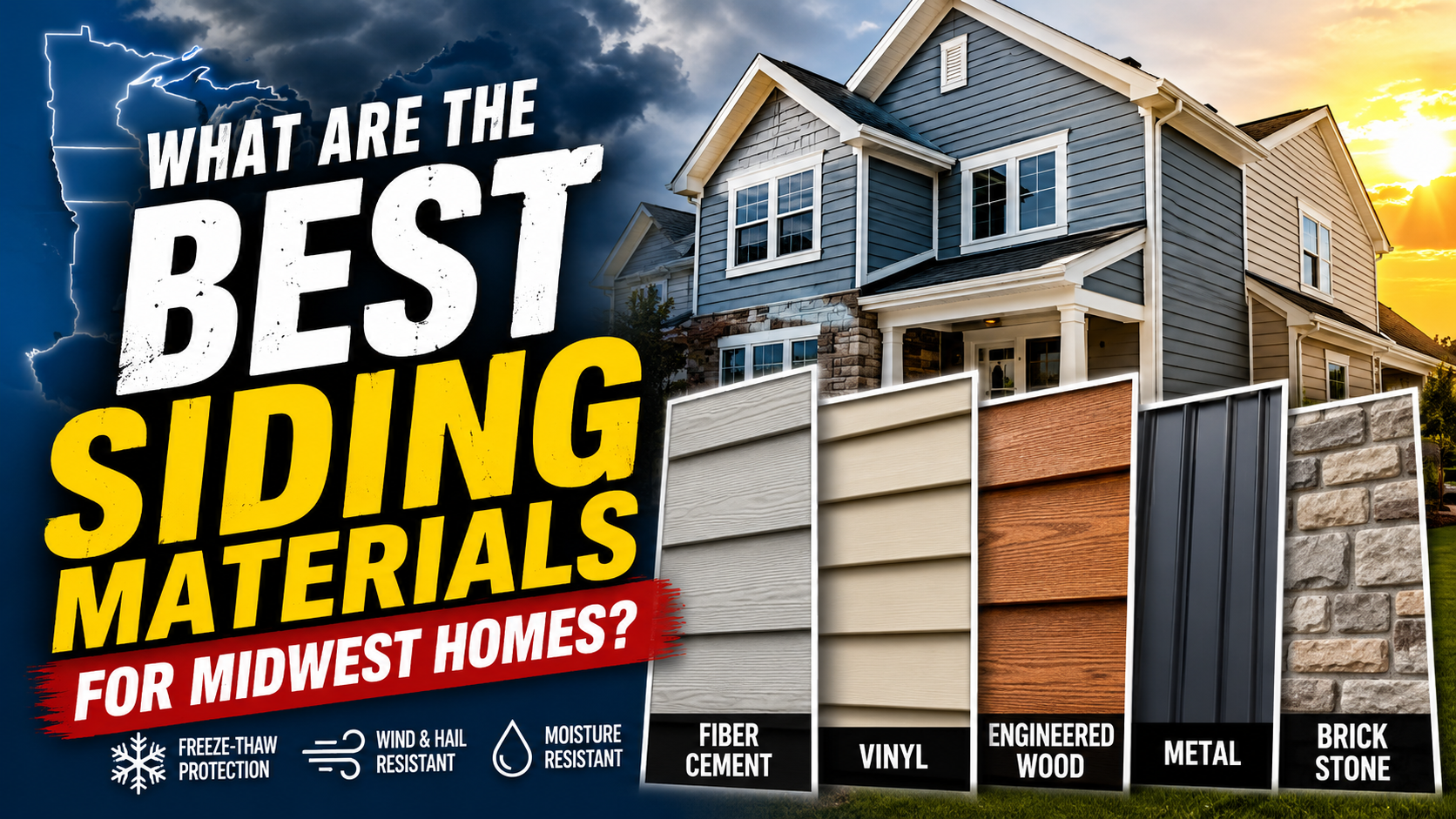
For Illinois homeowners, maintaining siding and related exterior materials can help protect against weather exposure while supporting curb appeal.
Sunrise Exteriors fits naturally into this conversation because exterior maintenance is not simply about making a house look newer.
It is about helping the protective shell continue doing its job.
Unsafe Electrical, Plumbing, and HVAC Systems Can Shrink the Buyer Pool
Old does not automatically mean defective.
A maintained older furnace may continue operating reliably.
Older plumbing may remain functional.
An established electrical system may be perfectly serviceable.
The concern begins when systems become unsafe, unreliable, damaged, poorly modified, or close to failure.
Buyers may become concerned about unsafe wiring, repeated breaker trips, improper electrical work, leaking pipes, corrosion, sewer problems, failing heating equipment, broken air conditioning, or unsafe venting.
These problems can influence more than comfort.
They can affect inspections, insurance, negotiations, and sometimes financing.
Documentation helps.
Service records, permits, warranties, installation dates, and invoices can show buyers that older equipment has been maintained rather than ignored.
Severe Deferred Maintenance Creates the Neglected House Effect
One loose gutter may not scare anyone.
Neither may one dripping faucet.
But combine damaged siding, rotten trim, broken windows, peeling paint, leaking plumbing, unsafe stairs, failing gutters, damaged doors, and neglected landscaping.
Now the house tells a story.
And it is not a reassuring one.
A long collection of small problems can make buyers suspect larger hidden problems.
They begin wondering whether the roof was maintained.
Whether the plumbing was serviced.
Whether water problems were ignored.
Whether electrical repairs were done properly.
Visible neglect creates invisible questions.
That is why routine maintenance can have such an important role in protecting property value.
Safety and Environmental Hazards Can Create Serious Market Resistance
Some property problems move beyond appearance and convenience.
They become health and safety questions.
Radon, lead hazards, damaged asbestos materials, exposed wiring, gas leaks, unsafe stairs, unstable decks, serious mold, contaminated soil, and carbon monoxide concerns can all change how buyers evaluate a property.
These issues may also introduce inspection, disclosure, insurance, or financing considerations.
The correct response is usually information.
Test when testing is appropriate.
Use qualified professionals.
Correct identified problems properly.
Keep documentation.
A known problem with a documented solution can be easier for a buyer to understand than a suspicious condition surrounded by uncertainty.
Unpermitted Work Can Turn an Attractive Renovation Into a Liability
A finished basement can look fantastic.
An addition can be beautiful.
A converted garage can provide useful space.
But finished does not necessarily mean legal.
If required permits were never obtained, buyers may start asking uncomfortable questions.
Was the electrical work inspected?
Was the plumbing approved?
Does the bedroom legally qualify as a bedroom?
Does the addition comply with zoning?
Can the finished area be represented as living space?
Could the local authority require corrections?
Unpermitted work can transform what appears to be an improvement into a source of uncertainty.
Before selling, homeowners should understand the permit history of significant renovations and seek appropriate local professional guidance when problems exist.
Legal and Title Problems Can Stop a Sale Before Condition Even Matters
Sometimes the house is perfectly fine.
The paperwork is not.
Liens, boundary disputes, encroachments, easements, unpaid taxes, code violations, shared access disputes, ownership questions, and restrictions on property use can all complicate a transaction.
Solar systems can create another layer when ownership, financing, or transfer obligations are unclear.
Buyers want to understand what they are purchasing and what rights or obligations come with it.
When those answers become complicated, marketability can suffer.
A title company, attorney, or other appropriate professional can help identify and resolve legal concerns before they become last minute surprises.
Poor Layout Can Quietly Decrease Property Value
A renovation can cost a fortune and still make the house worse.
Remove a useful bedroom to create an enormous primary suite and some buyers may see fewer bedrooms rather than more luxury.
Convert a garage where parking is scarce and buyers may miss the garage more than they appreciate the additional room.
Remove too much storage and everyday life becomes harder.
Create rooms that can only be accessed through other bedrooms and privacy suffers.
Function matters.
Buyers generally want homes that make daily life easier.
A dramatic design may photograph beautifully while appealing to fewer people.
That is why renovations should be considered in the context of local buyer expectations rather than personal taste alone.
Overly Personalized Renovations Can Make an Expensive House Harder to Sell
There is nothing wrong with creating a house you love.
Problems arise when homeowners assume every buyer will pay extra for the same preferences.
A permanent theater may delight one buyer and feel like wasted space to another.
An elaborate hobby room may have enormous personal value but limited market value.
The same applies to unusual layouts, highly themed interiors, excessive built ins, enormous pools, complicated landscaping, and luxury materials far beyond neighborhood standards.
Project cost and added value are not the same thing.
National remodeling research repeatedly demonstrates that many expensive projects recover only part of their cost at resale.
Quality matters.
So does restraint.
Poor Energy Performance Can Become a Growing Buyer Concern
A house has two prices.
The purchase price.
And the cost of living in it.
Drafty windows, poor insulation, inefficient heating and cooling, inadequate attic ventilation, aging water heating equipment, and high utility bills can influence buyer perception.
Energy improvements may strengthen comfort and efficiency.
But homeowners should not assume installation cost automatically becomes property value.
The market decides how much buyers value those features.
Climate, utility rates, equipment quality, documentation, and local demand all matter.
Solar Ownership Problems Can Complicate a Sale
Solar can be an attractive feature.
The paperwork can be less attractive.
Buyers may want to know whether panels are owned, financed, leased, or controlled through another agreement.
They may ask about remaining balances, transfer requirements, warranties, installation records, and equipment condition.
Unclear ownership can create unnecessary friction.
Homeowners should preserve solar agreements and supporting documents so potential buyers understand exactly what comes with the property.
Clarity protects confidence.
Poor Curb Appeal Can Reduce Value Before Buyers Walk Inside
The showing begins at the curb.
Buyers notice overgrown landscaping, damaged driveways, cracked walkways, peeling exterior finishes, broken fencing, dirty siding, sagging gutters, damaged doors, and neglected entrances.
None of those problems may compare with structural damage.
But together they can influence expectations.
A neglected exterior makes buyers wonder whether the inside has been neglected too.
The good news is that curb appeal does not require luxury.
Cleaning, trimming, basic repairs, maintained landscaping, functional lighting, and a healthy exterior can make a significant difference in presentation.
Market Conditions Can Reduce Property Value Even When Nothing Is Wrong With the House
Sometimes property value falls for reasons completely outside the front door.
Mortgage rates rise.
Local employment weakens.
Inventory increases.
Buyer demand falls.
Insurance becomes more expensive.
Property taxes increase.
New construction creates competition.
Neighborhood preferences change.
A well maintained house can still lose value when the broader market moves against it.
Property value is ultimately an estimate of what buyers are willing to pay at a particular moment.
That number can change even when the house does not.
What Usually Does Not Decrease Property Value as Much as Homeowners Fear?
Not every imperfection deserves panic.
Dated paint is not structural damage.
Older countertops are not water intrusion.
A functional older bathroom is not a failing roof.
Outdated light fixtures are not unsafe wiring.
Ordinary cosmetic wear can affect presentation, but buyers usually understand that finishes can be changed.
The distinction is simple.
Cosmetic problems tell buyers they may want to renovate.
Serious defects tell buyers they may have to repair.
That difference matters enormously.
The Biggest Property Value Problems at a Glance
| Problem | Why Buyers Care | Best First Response |
| Location disadvantage | Cannot easily be corrected | Understand local market reaction |
| Structural problems | Potentially expensive and uncertain | Obtain qualified evaluation |
| Water intrusion | May indicate hidden damage | Find and correct the source |
| Failing roof | Creates immediate expense and risk | Inspect and address condition |
| Unsafe systems | Can affect safety and insurability | Use qualified professionals |
| Deferred maintenance | Suggests broader neglect | Prioritize important repairs |
| Environmental hazards | Creates health and safety concerns | Test and address appropriately |
| Unpermitted work | Creates legal and appraisal questions | Verify records and requirements |
| Poor layout | Reduces functionality | Preserve useful space |
| Legal problems | Can complicate ownership and closing | Obtain appropriate professional guidance |
| Exterior deterioration | Signals maintenance and moisture concerns | Evaluate and repair affected components
What Should You Fix First to Protect Property Value?
Start with what can hurt the house.
Safety and structural integrity come first.
Active water and moisture problems follow closely.
Then look at roofing and exterior protection.
Address significant electrical, plumbing, heating, and cooling concerns.
Resolve permit and legal problems.
Catch up on deferred maintenance.
Improve curb appeal.
Leave purely cosmetic upgrades until the fundamentals are under control.
The principle is simple.
Do not spend heavily making a house prettier while something important is actively damaging it.
Why Illinois Homeowners Should Pay Particular Attention to the Exterior
Illinois weather gives the exterior plenty of work.
Rain arrives.
Snow accumulates.
Temperatures freeze.
Summer heat follows.
Wind and storms put materials under pressure.
Then the cycle repeats.
Roofing, siding, gutters, flashing, trim, windows, and doors form the barrier between those conditions and everything inside the house.
When that barrier begins failing, exterior problems can become interior problems.
A roof leak becomes ceiling damage.
A gutter problem contributes to water around the foundation.
Damaged siding allows moisture where it should not be.
Failed flashing creates hidden deterioration.
Prevention is rarely exciting.
Neither is paying for damage that could have been prevented.
How Sunrise Exteriors Can Help Protect Property Value
Protecting property value does not mean replacing every exterior component because it looks old.
It means understanding condition.
Sunrise Exteriors can help Illinois homeowners evaluate important exterior areas including roofing, siding, gutters, windows, doors, and related components.
The useful questions are straightforward.
What is working properly?
What needs maintenance?
What can be repaired?
What has deteriorated enough that replacement should be considered?
That approach helps homeowners prioritize problems before spending heavily on cosmetic improvements.
A healthy exterior supports curb appeal.
More importantly, it protects the structure underneath it.
That is where exterior maintenance becomes part of property value protection rather than simply home decoration.
Property Value Falls Fastest When Buyers See Risk
So, what decreases property value the most?
Usually, it is risk.
Location problems, structural damage, water intrusion, failing roofing, unsafe systems, severe neglect, environmental hazards, legal complications, and unpermitted work can hurt value because they create uncertainty and shrink the buyer pool.
Homeowners cannot control everything.
But they can protect the fundamentals.
Keep water out.
Maintain the structure.
Address safety concerns.
Protect the roof and exterior.
Resolve serious problems before spending heavily on cosmetics.
For Illinois homeowners, Sunrise Exteriors can help with an important part of that equation by evaluating and improving the exterior components responsible for protecting the house from the conditions outside.
Because protecting property value often begins with protecting the property itself.
real estate, expensive question marks can reduce value quickly.
Recent Posts