What are the best siding materials for Midwest homes?
What are the best siding materials for Midwest homes?
Introduction: Why Midwest Weather Is So Hard on Siding
Midwest weather does not play nice with home
One season brings freezing snow and ice. The next delivers heavy rain, humidity, hailstorms, and scorching heat.
In places like Illinois, a home can experience dramatic temperature swings in a matter of weeks. That constant expansion, contraction, moisture exposure, and storm impact slowly wears down siding year after year.
That is why choosing the right siding material matters so much more in the Midwest than it does in milder climates.
A siding product might look beautiful on day one, but if it cannot handle moisture, wind, or freeze thaw conditions, homeowners often end up dealing with cracking, warping, fading, leaks, or expensive repairs much sooner than expected.
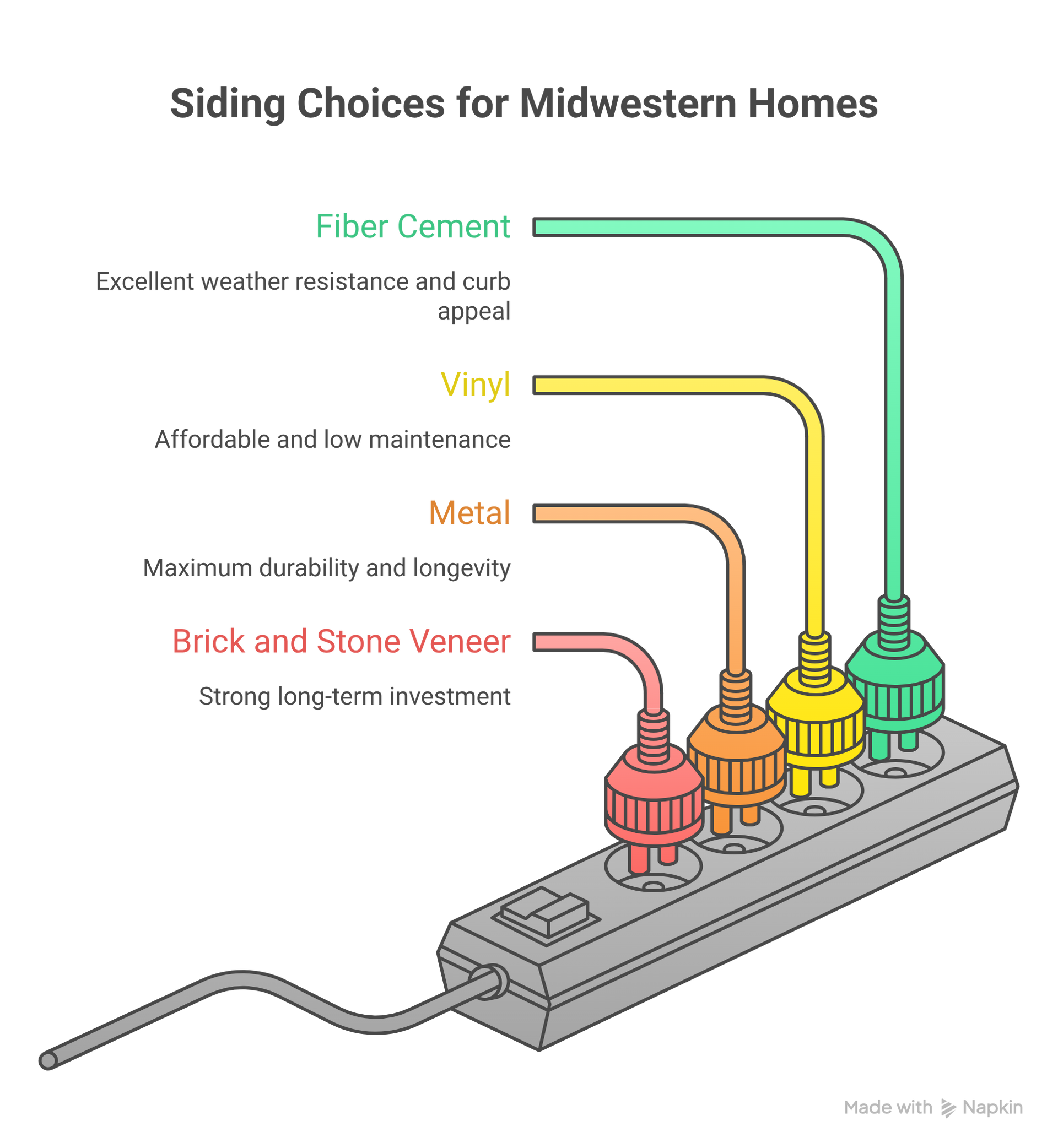
For most Midwest homes, the safest overall choice is usually fiber cement siding because it performs extremely well against harsh weather while still offering strong curb appeal. Vinyl siding remains the most popular budget friendly option because it is affordable and low maintenance. For homeowners focused on maximum durability and longevity, metal siding or brick and stone veneer are often the strongest long term investments.
The challenge is that every home has different priorities.
Some homeowners care most about upfront cost. Others want the lowest maintenance possible. Some prioritize appearance while others simply want siding that survives Midwest storms without constant repairs.
That balance between durability, appearance, maintenance, and budget is what ultimately determines the best siding choice.
This is also why experienced Midwest exterior contractors spend so much time evaluating both the home and the climate before recommending materials. Companies familiar with Illinois weather patterns, such as Sunrise Exterior, understand that siding in the Midwest is not just about appearance. It is about long term protection against some of the toughest seasonal conditions in the country.
What Midwest Homes Need From Siding Materials
Midwest homes demand more from siding than homes in many other regions.
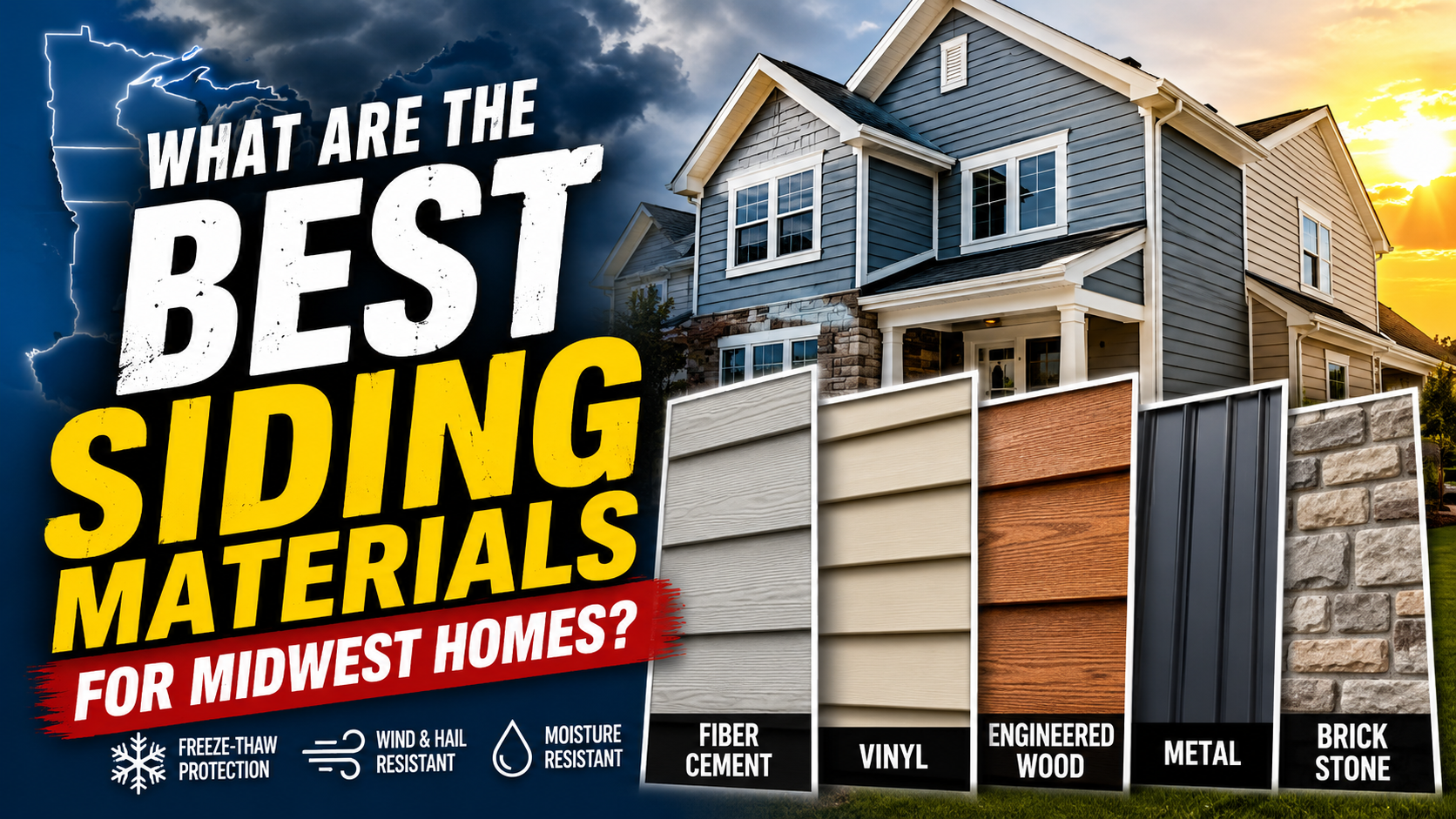
A siding material here has to survive freezing winters, humid summers, strong winds, pounding rain, hailstorms, and constant temperature changes. Materials that perform well in mild climates can struggle quickly when exposed to Midwest conditions year after year.
One of the biggest concerns is moisture resistance.
Snow, rain, and humidity create constant exposure to water. If moisture gets trapped behind siding or absorbed into weak materials, it can lead to rot, mold, swelling, or structural damage over time. This becomes even more dangerous during winter when trapped moisture freezes and expands.
That freeze thaw cycle is one of the most destructive forces for exterior materials in the Midwest.
Small cracks can widen. Weak siding can warp. Paint can peel. Over time even minor damage becomes much more expensive if the siding material cannot handle repeated freezing and thawing.
Wind and hail resistance also matter heavily in Illinois and surrounding states.
Strong storms regularly test a home exterior. Lightweight or poorly installed siding can loosen, crack, or break during severe weather. More durable materials such as fiber cement, metal, and certain engineered products tend to hold up better under these conditions.
Temperature swings create another challenge.
Midwest homes often experience bitter cold winters followed by intense summer heat. That constant shift causes siding materials to expand and contract repeatedly. Lower quality materials may eventually crack, buckle, or lose their shape if they are not designed for those conditions.
Energy efficiency is also part of the equation.
The right siding system can help support insulation performance during both hot summers and freezing winters.
That can improve comfort inside the home while potentially reducing energy costs over time.
But even the best siding material can fail if installation is poor.
Proper flashing, moisture barriers, ventilation, and installation techniques are critical in Midwest climates. A high quality product installed incorrectly can still lead to water intrusion and long term exterior damage.
That is why many homeowners choose contractors with specific experience handling Midwest weather conditions. Companies like Sunrise Exterior understand how regional climate affects siding performance and why installation details matter just as much as the material itself.
Fiber Cement Siding: The Best Overall Option for Midwest Homes
If there is one siding material that consistently rises to the top for Midwest homes, it is fiber cement.
There is a reason so many exterior professionals recommend it across Illinois and the surrounding Midwest region. Fiber cement is built to handle the exact conditions that destroy weaker siding materials over time.
Cold winters. Humid summers. Heavy rain. Hail. Wind. Sudden temperature swings. Fiber cement performs well through all of it.
Unlike some materials that expand heavily during temperature changes, fiber cement remains more stable through seasonal shifts. It also resists moisture far better than traditional wood products, which helps reduce the risk of swelling, warping, and rot.
That matters in the Midwest where freeze thaw cycles constantly test a home exterior.
Fiber cement is also resistant to insects and pests, which adds another layer of long term protection for homeowners who want durability without constant upkeep. Many homeowners also appreciate that it offers the appearance of painted wood siding without many of the weaknesses associated with real wood.
Another reason fiber cement stands out is versatility.
It works well on traditional Midwest homes, modern builds, farmhouses, craftsman designs, and higher end custom exteriors. Whether a homeowner wants a classic neighborhood look or a cleaner modern aesthetic, fiber cement usually fits naturally.
Its durability often translates into strong long term value as well.
While the upfront investment is usually higher than vinyl siding, many homeowners see fiber cement as a smarter long term choice because it can hold up better over time with fewer major issues.
Of course, no siding material is perfect.
Fiber cement is heavier than many alternatives, which means installation requires more labor and experience. It also costs more upfront than basic vinyl siding. But for many Midwest homeowners, the tradeoff is worth it because of the protection and longevity it offers.
This is one reason experienced exterior companies often recommend fiber cement for homes facing tough weather exposure. Contractors familiar with Illinois storms and seasonal conditions, such as Sunrise Exterior, understand why homeowners increasingly prioritize durability and long term performance over simply choosing the cheapest material available.
Vinyl Siding: The Most Popular Budget Friendly Choice
Vinyl siding continues to dominate neighborhoods across the Midwest for one simple reason.
It gives homeowners a practical, affordable exterior option that requires very little maintenance.
For many families, that combination is hard to ignore.
Modern vinyl siding has improved significantly over the years. Higher quality products are far more durable than older generations and can perform surprisingly well in Midwest climates when installed correctly. They resist moisture, never require painting, and are relatively easy to maintain compared to many other exterior materials.
That makes vinyl especially attractive for homeowners who want a clean appearance without constant upkeep.
Another major advantage is cost.
Vinyl is usually the most affordable siding option upfront, which makes it accessible for homeowners trying to improve curb appeal or replace aging siding without taking on the higher cost of premium materials like fiber cement or brick veneer.
There is also a wide range of colors, textures, and styles available today.
Some vinyl products are designed to mimic wood grain or more upscale finishes, allowing homeowners to improve the look of their home while staying within budget.
Still, vinyl siding does come with limitations.
Extreme Midwest weather can expose weaknesses in lower quality products. Strong hail impacts may crack panels, while dramatic temperature swings can sometimes cause cheaper siding to warp or become brittle over time. Wind damage can also become an issue if installation is rushed or improper.
That is why product quality and installation matter so much.
Well installed premium vinyl siding often performs far better than bargain products installed carelessly. Proper insulation, fastening methods, and moisture management all influence how well vinyl holds up over the long run.
For homeowners focused on affordability, low maintenance, and overall practicality, vinyl remains one of the strongest siding choices available. And when installed by experienced Midwest exterior professionals like Sunrise Exterior, modern vinyl siding can offer dependable protection while still delivering strong curb appeal.
Choosing the Right Siding for Long Term Midwest Protection
Choosing the right siding for a Midwest home is about more than appearance. The material has to survive freezing winters, humid summers, hail, wind, rain, and constant temperature swings year after year.
That is why fiber cement continues to stand out as the best overall siding option for many Midwest homeowners.
It delivers an excellent balance of durability, weather resistance, curb appeal, and long term value. Vinyl remains the strongest budget friendly choice, while metal and brick or stone veneer offer exceptional durability for homeowners focused on maximum protection.
The best siding ultimately depends on the home, the budget, and the level of maintenance a homeowner is comfortable with long term.
But no matter which material is chosen, proper installation is critical. Even the highest quality siding can fail if it is not installed correctly for Midwest weather conditions.
That is why many Illinois homeowners work with experienced exterior companies like Sunrise Exterior. A contractor who understands Midwest climate challenges can help homeowners choose siding that not only looks great today, but continues protecting the home for years to come.
Recent Posts