What are the signs you need a new roof?
What are the signs you need a new roof?

Most Roof Problems Start Long Before a Major Leak
Most roofs do not suddenly fail overnight.
The process is usually much slower than homeowners expect. Small warning signs begin appearing months or even years before serious damage becomes impossible to ignore. A few missing shingles here. Some discoloration there. Maybe a small leak that seems harmless at first.
Because the damage develops gradually, many homeowners delay taking action until the problem becomes expensive, stressful, and urgent.
That is where roofing issues become dangerous.
A roof is not just another cosmetic feature on the house. It is the barrier protecting everything underneath it from rain, snow, wind, moisture, and changing temperatures throughout the year. Once the roofing system begins breaking down, water intrusion and structural damage can spread far beyond the roof itself.
For homeowners in Illinois, those risks become even more serious because roofs constantly deal with snow, humidity, storms, ice buildup, and aggressive freeze thaw cycles that place stress on roofing materials year after year.
The good news is that roofs usually give warning signs before major failure happens. The key is recognizing those signals early enough to prevent much larger problems later.
The Short Answer: Visible Wear and Recurring Problems Usually Mean the Roof Is Nearing Repl
acement
The most common signs you may need a new roof are curling or missing shingles, granules collecting in gutters, water stains inside the home, moss or algae growth, sagging roof sections, and recurring leaks that keep coming back after repairs.
In many cases, homeowners notice one issue first and assume it is isolated. But roofing problems often connect together beneath the surface.
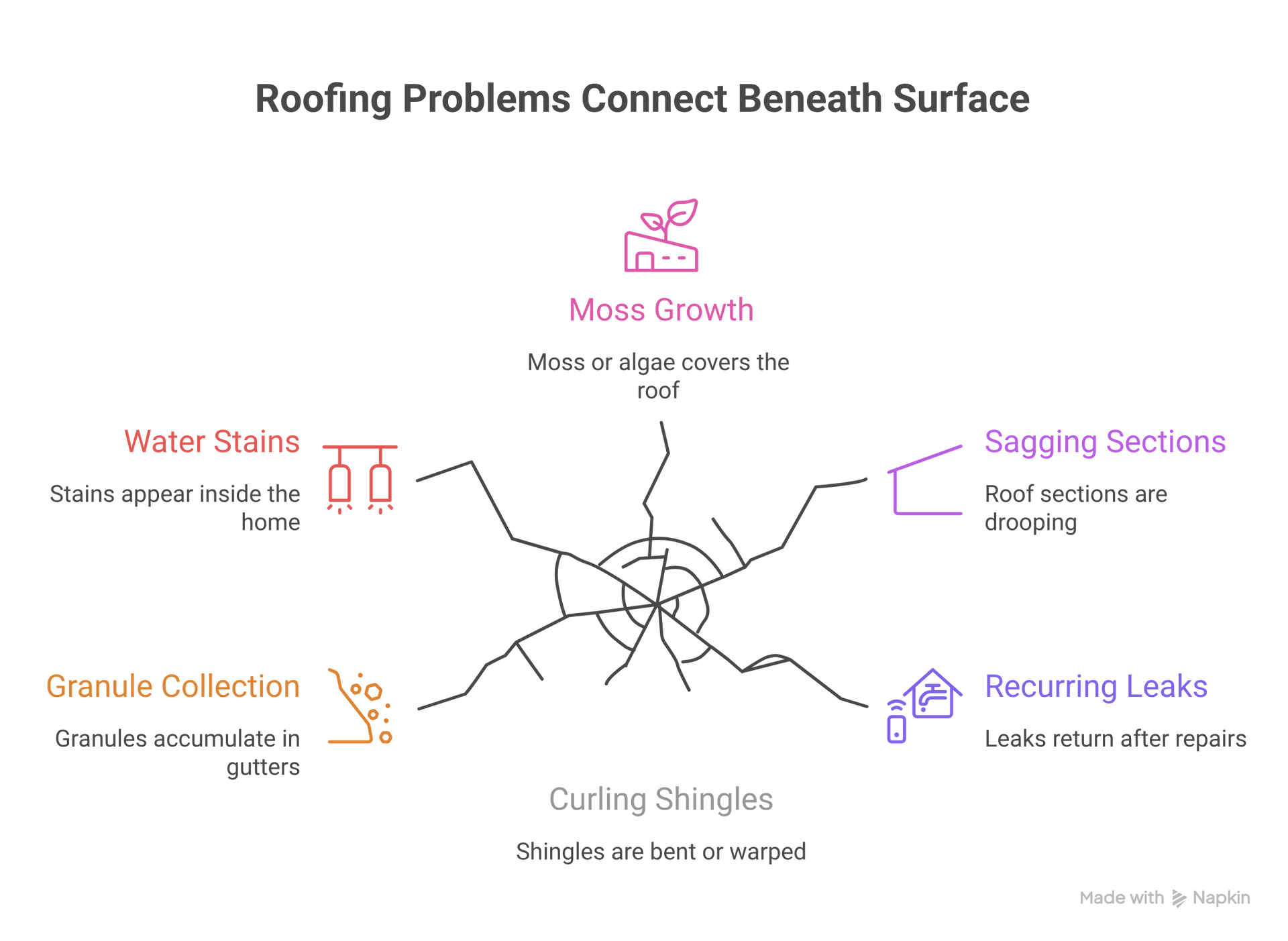
For example, curling shingles may indicate aging and weather damage. Granule loss may signal the roof is losing its protective outer layer. Interior water stains may mean moisture has already worked its way beneath the roofing system. When several of these warning signs appear together, repairs may no longer be the most effective long term solution.
Age matters too.
Many asphalt roofs begin showing significant wear around the twenty year mark depending on material quality, installation quality, weather exposure, and maintenance history. Even if the roof still looks relatively normal from the ground, age combined with visible deterioration often signals the roof is approaching the end of its useful lifespan.
This is one reason experienced companies like Sunrise Exterior recommend inspections when homeowners begin noticing visible wear instead of waiting for severe leaks or structural damage to appear.
The earlier roofing problems are identified, the more options homeowners usually have before damage spreads deeper into the home.
Curling, Cracked, or Missing Shingles
One of the clearest signs a roof is nearing the end of its life is visible shingle damage.
Shingles are designed to create a protective barrier against moisture, wind, heat, and changing weather conditions. When they begin curling, cracking, buckling, or disappearing entirely, the roof becomes far more vulnerable to water intrusion and long term structural problems.
Curling shingles are especially common on aging asphalt roofs. Over time, exposure to sunlight, moisture, temperature swings, and severe weather slowly weakens the material. The edges begin lifting or warping, which reduces the roof’s ability to properly shed water.
Cracked shingles create similar risks. Even small fractures allow moisture to work beneath the roofing surface where hidden damage can begin spreading underneath the visible layers of the roof.
Missing shingles are even more serious because sections of the roof may become directly exposed to wind and rain. After storms, homeowners sometimes notice patches where shingles have completely detached from the roofline.
In Illinois, strong winds, snow, ice, and freeze thaw cycles can accelerate this kind of wear much faster than many homeowners expect.
When large areas of the roof begin showing visible shingle deterioration, repairs may only serve as temporary patches rather than long term solutions.
Granules in the Gutters: One of the Most Overlooked Warning Signs
Many homeowners clean their gutters without realizing they are looking directly at one of the biggest warning signs of roof aging.
Asphalt shingles are coated with protective granules that help shield the roof from sunlight, weather exposure, and surface deterioration. Those granules are extremely important because they help extend the life of the roofing material itself.
As roofs age, shingles gradually begin shedding those granules.
At first the loss may seem minor. But when gutters and downspouts begin collecting large amounts of gritty granule debris, it usually means the shingles are wearing down and losing their protective outer surface.
Once that protective layer weakens, the roof becomes far more vulnerable to cracking, moisture penetration, and weather related damage.
This is why granule loss matters so much. It is often one of the earliest visible indicators that a roof may be approaching the later stages of its lifespan even before major leaks appear inside the home.
Homeowners sometimes overlook this sign because the roof can still appear relatively normal from the ground.
But excessive granule loss combined with aging shingles often points toward a roofing system that is steadily breaking down beneath the surface.
That is one reason experienced companies like Sunrise Exterior often inspect gutters and drainage areas carefully during roof evaluations. Small details can reveal much larger roofing problems developing over time.
Water Stains Inside the Home
Sometimes the clearest signs of roof failure do not appear on the roof at all. They appear inside the house.
Water stains on ceilings or walls are one of the biggest red flags homeowners should never ignore. Even small discoloration spots can signal that moisture is already finding its way beneath the roofing system and into the structure of the home.
In many cases, leaks travel before becoming visible. Water may enter through damaged shingles or flashing, move through attic spaces, and eventually appear far away from the original entry point. That is why even minor stains deserve attention.
Other warning signs can include peeling paint, damp attic insulation, musty smells, or visible moisture around rafters and roof decking. Some homeowners even notice sunlight coming through attic boards, which often indicates openings or structural gaps in the roof system itself.
Once moisture enters the home consistently, the risk expands beyond roofing damage alone. Mold, wood rot, insulation problems, and interior structural deterioration can all become much more expensive to repair over time.
Moss, Mold, and Algae Growth
Moss and algae may look harmless from the ground, but they often point toward deeper moisture related roofing issues.
Algae streaks commonly appear as dark discoloration running across sections of the roof. Moss is more concerning because it can trap moisture directly against roofing materials for extended periods of time.
That constant moisture exposure slowly weakens shingles and accelerates deterioration underneath the surface.
In shaded or humid environments, moss growth can become especially aggressive if left untreated for years.
Moisture retention combined with freeze thaw cycles can slowly damage roofing materials and shorten the lifespan of the roof.
This becomes particularly important in Illinois where seasonal moisture, snow, and humidity create conditions that can speed up roof aging significantly over time.
While moss or algae alone does not always mean immediate replacement is necessary, widespread growth combined with aging shingles and other warning signs often signals the roof may be deteriorating faster than homeowners realize.
Small Warning Signs Usually Become Bigger Problems Later
Most roofs give homeowners warning signs before major failure happens.
Curling shingles, granules in gutters, interior water stains, moss growth, recurring leaks, and sagging rooflines are all signals the roofing system may be reaching the end of its useful life. The mistake many homeowners make is assuming small problems will stay small.
Roof damage rarely works that way.
What begins as minor wear can slowly turn into moisture intrusion, structural damage, mold growth, and expensive interior repairs if left unchecked for too long.
That is why early inspections matter so much. Companies like Sunrise Exterior help homeowners identify roofing issues before they become far more serious and costly problems throughout the rest of the home.
In many cases, acting earlier saves homeowners far more money and stress than waiting until a roof failure becomes impossible to ignore.
Recent Posts